Connect with us

Questions of the Day Program

Jessica Chomik-Morales from MIT wants the Mi Última Neurona podcast to become a movement.
Published

on

In this QOTD conversation, I interview Jessica Chomik-Morales, host of the Spanish neuroscience podcast Mi Última Neurona based in Cambridge, Massachusetts. Jessica shares her ongoing journey at MIT as a graduate student and the origin story of a podcast that makes neuroscience accessible to the Spanish-speaking community.

Jessica reflects on building the podcast, balancing science with personal stories to engage audiences: ‘People love a good story. You could have the best, most interesting science, but if the person isn’t moving in some way, it usually doesn’t perform well.’ She also discusses the unique challenges of finding Spanish-speaking neuroscientists doing relevant research for her podcast.

As Jessica shares, her ultimate goal is for the podcast to be a movement in Latin American neuroscience, even hoping to expand it into a TV show. ‘I’d love to become the face of neuroscience in Latin communities.’

Below is the transcript of our conversation:

  1. Jessica Chomik-Morales, welcome to Questions of the Day.

  2. I’m so happy to be here. Thanks for having me.

  3. I came across your Spanish-language neuroscience podcast, Mi Última Neurona, while exploring YouTube. I was impressed and wanted to learn more. How and why did you start it?

  4. The name in Spanish could equate to “my last brain cell.” At the time, I was starting as a postbaccalaureate researcher here at MIT, and the learning curve was pretty steep. I was under a lot of stress. I really felt like I only had one of my brain cells working. That’s where the name came from.

    But the reason for the actual show was my mom. I’ve told this story many times: she really thought I was a neurologist. She kept asking me, “When are you going to start your career? When are you going to start seeing patients?” I had cousins send me MRI images or EEG recordings of their kids, asking, “Can you tell me if this looks normal to you?” I was like, “Well, no, guys. I study the brain. I don’t treat it.”

    I wanted to get more in touch with the Latin community here at MIT. As it turns out, there aren’t very many Latinos in STEM in general, and even fewer in neuroscience. So I rounded up everybody I could and started talking to them: “What do you do? Tell me as if you were telling your grandma back in Puerto Rico, Colombia, or Mexico.”

    That project picked up more and more of a following, and I realized that people actually care about this and are interested. Neuroscience isn’t something we frequently talk about in Latin communities. But as information becomes more accessible, more people are getting interested in it.

  5. Before we go deeper into the podcast, tell us about your background and your graduate studies at MIT.

  6. I actually transitioned careers from cognitive neuroscience, which is what my bachelor’s degree and my three years as a scientist here at MIT were all about, into a master’s in science journalism. I feel that I’m making more of an immediate impact in my community doing that work.

    As a graduate student, I’m taking classes on all the different ways one can communicate science: investigative reporting, where you get to the bottom of a phenomenon happening in a community and figure out why it’s happening; writing opinion pieces; creating documentaries; podcasting; and, of course, news articles.

    I’m getting formal training in how to effectively and efficiently communicate these very dense topics that make a lot of people’s eyes glaze over when they read the headlines.

  7. So you’re in the writing program?

  8. That’s right. Yes.

  9. There are a lot of podcasts. Beyond conducting your interviews entirely in Spanish, what makes yours different?

  10. I think my answer would be that I’m relatively young in this field. People who have lecture series online, or even podcasts, often have PhDs or have been tenured professors. There’s Andrew Huberman, a very famous neuroscience professor at Stanford, who has this huge platform where he goes very in depth into the biology of several neuroscientific topics.

    But what makes mine different is that, one, as you said, it is completely in Spanish. There is no other podcast in the sphere of neuroscience in this style. This is the only one.

    Another reason is that, because I’m so young and naive, I come from this perspective of asking dumb questions. I’m always asking dumb questions. I’m not an expert, even in cognitive neuroscience, which is my background. Whenever I interview people working at the different levels at which you can study the brain or central nervous system, I’m asking the questions the audience would want to know more about.

    Yes, tell me about your really interesting protein or this really cool region of the brain. But also, how the hell are you measuring this? What are you doing? Why is this important? How does this relate back to me or humanity as a whole? I think a lot of my listeners appreciate that.

    Another thing is that I always ask for these scientists’ stories. I want to know what their struggles were to get where they are. I don’t just want to know what they’re doing now or why they’re great now. I want to know what town they came from.

    Some scientists I interview came from affluent families in big cities like Buenos Aires or Mexico City. Others come from rural areas of our Latin American countries where there weren’t resources, and they were still able to get to the professorships they’re in now and create this awesome science.

    I think there’s this myth floating around that, to do good science or be someone in academia, you have to go to the US or Europe. You have to leave your home country. Time and time again, throughout my interviews, I’m proving that’s not the case. These scientists are proving that’s not the case. They’re doing research in their home countries, and they’re also doing it in Spanish. They’re publishing, trying to make science more accessible, and using advanced technologies.

    Some of the most incredible labs I’ve ever seen have actually been in Mexico City, and at a top-tier institution in Querétaro. I was beside myself. So I think that’s where it’s a little different: the personal stories of these scientists are also interleaved.

  11. You explore both the science and the personal stories. That reminds me of Wei Ji Ma’s Growing Up in Science talks at NYU, where scientists begin with their human stories. Are your guests Spanish-speaking scientists based in Spanish-speaking countries?

  12. The first season was all in Cambridge because the scientists were easy to reach. But I got sponsorship from several departments here at MIT, so for the second season I went to Puerto Rico. I went around the island to four or five cities, I think, to interview scientists there.

    I wanted to see: we have people who immigrated from their countries to do science here, so let’s go to a US territory. It’s still going to be different. The resources they have will be different. What’s happening over there? How are they doing it there?

    Those episodes became popular. As the podcast grew in listeners, MIT continued its funding, and I was able to travel to seven countries in Latin America to interview neuroscientists: Mexico, Peru, Colombia, Chile, Argentina, Uruguay, and Paraguay, which is my home country.

  13. That sounds like both a lot of fun and a lot of work.

  14. It was. It was incredible.

  15. What feedback have you been getting from your audience? What stands out?

  16. Oh my gosh. I think I’ve only gotten two haters in my whole time doing this, and I don’t think a lot of internet people can say that. I feel very fortunate. The listener feedback is why I’m now dedicating my life to communicating science, for now. I don’t know—maybe it’ll change. But I’ll give you two anecdotes.

    On the Latin American tour, the final stop was my home country. It was very difficult to find neuroscientists there. I only know of three, and at the time I didn’t know of any. This was after trying to get in contact with universities and speaking to a lot of people, and it was pretty disheartening.

    When I went down there, I was invited to give talks at medical schools. At the second medical school, they were neurology students, but I was telling them what it is to study the brain as opposed to treating it. It was like news.

    I had promoted this event publicly on the podcast website. The last person in line to ask questions after my talk was a woman who was very sheepish. She approached and said, “It’s nice to meet you. I’ve actually traveled two hours to come listen to you.” I was about 23 at the time. I was like, “Me, of all people? I don’t know anything.”

    She said that, because of an episode I had published—a conversation with a neuroscientist about autism—a lot of things started clicking for her. She went and got a diagnosis at 32 years old and was diagnosed with autism after struggling for so long: having trouble interacting socially, wondering if there was something wrong with her, and why she couldn’t understand jokes, for instance.

    That was very impactful for me. She’s a teacher, and she told me that, because of this, she now teaches her students about neurodiversity. She’s always on the lookout: Are there students struggling to pay attention? Are there students who are hyperactive or falling behind in some activities? Why is that? What can we do to support these kids?

    These are conversations that don’t happen in Latin America. They’re starting to now, but growing up, even for me with immigrant Latin parents, it was, “You sit down and do your work, and you’d better not be hyperactive.” That was really moving.

    The other anecdote is about a girl from Colombia who saw one of my TikTok videos. I was talking about the university in South Florida where I got my degree, and that I was now at MIT. She said, “I’m studying psychology. I’ve always been interested in the biological basis of behavior. Maybe I should study neuroscience. I’m going to apply to the same school you went to.”

    She was accepted. I went down to my school to give a talk and happened to run into her. There was this feeling of personal fulfillment: I’ve done something for some people. Maybe it was only a handful, but I’ve changed somebody’s life for the better. So the feedback I get is very, very good.

  17. Tracking impact can be difficult. How do you approach it, and how do you communicate it to funders such as McGovern and others interested in your work?

  18. There are definitely numbers. You can look at how many listeners and followers I have across platforms.

    The third season is a style shift from the first two. The first two were audio only and very produced, with audio engineering, sound effects, and background sound—very Radiolab-esque, because that was my inspiration.

    In the third season, I thought it was important for people to be able to put faces to these scientists. There’s not as much production anymore; it’s more of a straightforward conversation. But now you can see who’s talking and what they look like. People, especially kids, can visualize, “This person looks like me,” or, “This person talks with the same accent I do.”

    On YouTube, I think we have about 1,200 followers. On Spotify, we have much more—I think it’s closer to 16,000. Then we have our Instagram followers.

    We look at all of those numbers, and also how long people listen to each episode. Are most people only listening to the first 15 minutes, if that, or are the majority staying until the end? About 65% of my listeners stay until the very end, which I think is pretty good. My episodes are about an hour long.

  19. If they’re sticking around, the content must be engaging.

  20. It must be, yeah. These are long episodes. They’re not 20 or 15 minutes; they’re usually at least an hour. That’s a pretty good sign for me.

  21. Those two anecdotes point to meaningful changes in people’s lives. Have you considered surveys to capture that kind of impact?

  22. Yes. Thank God I have a social media manager who helps me with audience engagement now, because it’s a full-time job, especially when you have to navigate the algorithms.

    She does polls: “What do you want to learn about next?” “Which topics in this episode resonated with you most?” “What did you find most interesting?”

    We also had a giveaway of a handmade item that an Indigenous person made in Paraguay. They’re Guaraní, and they have this threading called ñandutí. It means “spider web” in Guaraní, which is our second native language.

    The giveaway wasn’t just, “Anyone who likes the podcast gets it.” It was, “Which episode was your favorite, and why?” In those comments, when people were tagging their friends and trying to win it, we learned a lot about what people are really motivated by.

    What I saw was that people love a good story. You could have the best, most interesting science or cool new technology, but if the person telling you about it isn’t moving, convincing, or inspiring in some way, those episodes usually don’t perform that well.

    In fact, one of my best-performing episodes is with Josefina Cruzat, a computational neuroscientist from Chile. One clip went viral: she said she went into a computational neuroscience lab not knowing how to code. That is mind-blowing, even to me. You’re going into a computational neuroscience PhD not knowing how to code! But she did it. She was able to learn, and that was inspiring for listeners.

    We got a lot of feedback: “This episode really inspired me because of this,” or, “I really liked the way this neuroscientist portrayed his findings.”

  23. How have you learned to do this work? What have you drawn from formal training and from experience?

  24. A lot of it was—I hate to say it—intuitive. I listened to a lot of Radiolab. That really inspired me as an undergraduate. When I was at Northeastern for my first year, I would go on my daily walks through Fenway Park, listening to those stories, completely absorbed.

    I was in this other world created through sound alone, with no visual input. My brain was creating an imaginary scenario. I was listening to voices explain this cool octopus or something, and somehow I learned.

    We’re pattern recognizers. That’s what humans are. Somehow I recognized these patterns: to keep a viewer or listener engaged, you need dynamic movement. You need to build a soundscape. Every podcast has a different way of doing this, a different style, but you need to keep somebody there by inching them along the narrative.

    A lot of it also comes from reading a lot growing up. Now I’m learning more formally, which is what I needed. I’m still going to play with my podcast style and find the best way.

    Writing is something I really needed to improve. If you’re a good writer, if you know how to put your thoughts on paper in a cohesive, efficient way, and if you’re able to convey something complex through your writing in an artistic way, then I think everything else falls into place.

  25. You started, learned on the job, and adapted along the way. Waiting to have every resource or qualification in place can itself become a barrier.

  26. What have been the biggest challenges in doing this work?

  27. Time management. There are a lot of steps. When I started, I was fortunate to have a good friend from undergrad help me with audio. I’m not an audio designer. I know the basics from YouTube videos, but really cleaning up the audio so the voice is crisp is another thing. Nobody wants to listen to crackling in the background or something that sounds like a phone call. It’s much easier to listen to a narrator whose voice you like, too.

    I didn’t have that learning curve because somebody was there. But there’s also storyboarding an episode and finding people to interview. That was one of the greatest challenges with both the Latin American tour for season three and my most recent tour in Spain, which we recorded in August and which is going to come out January 1.

    It’s about finding Spanish-speaking neuroscientists—that’s so niche—who are also doing interesting things. By “interesting,” I’m not saying other things aren’t interesting. I mean interesting to the public. There might be protein crystallizations that are amazing, new, relevant, and important. But it’s much harder to build a story about protein crystallization than about learning differences among people with autism, or aspects of Alzheimer’s—things we can connect back to people.

    There are many filters. You have to be Spanish-speaking. Your work has to relate to neuroscience in some way, whether from an engineering perspective, designing tools that help neuroscientists, being a neuroscientist, or working with the brain in a medical field. It all has to come back to that, because that’s my niche.

    Then you have to do interesting stuff, and on top of that, you have to be good at talking. I’ve learned that the hard way through podcasts. Sometimes people pass all those filters, but they’re not very outgoing, so you have to draw out their personality. Part of that is being a good interviewer, which I’ve learned by doing. How do you make somebody feel comfortable being themselves while talking about their science and really projecting who they are?

    After that, are they doing good science? Are they being published in reputable journals? What’s their methodology? It would be tragic to highlight somebody doing bad science. That would reflect poorly on me and on other science communicators. You have to be very careful about that.

    It’s something we’re trained in through my program. Even if I’m not an astrophysicist, what can I look for in the methodology to fact-check and make sure things were done appropriately? Are the variables controlled? You have to actually go and do the work and make sure.

    At the end of all that, I interviewed 33 neuroscientists on the Latin American tour, which is a lot. Of course, I went to a lot of different places. But it wasn’t 33 at the beginning; it was more like 100 or 200 people. Dr. Héctor de Jesús-Cortés, the podcast’s scientific advisor, and I sifted through so many people to get down to those 33. Of those 33 recordings, only 29 are going to be published. There are many steps. It’s a lot of work.

  28. You go deep into the science, entirely in Spanish, and you’ve built a careful review process. You’re also not doing this alone. How did you build your team?

  29. This is something life has taught me. I don’t necessarily think of it as a business practice, though I’m sure they teach it in business school: if you have people who believe very strongly in the same goal, it’s going to be much easier to work together than if you’re just paying somebody to do something.

    I had to learn that in many different ways. I’m not a natural leader. I wasn’t trained to be a producer, but I did learn. I know something about how people work.

    I thought, “I don’t know how to do audio, but my friend does. He’s pretty good at it, we get along, and he’s from Puerto Rico. Let me ask him, and we’ll talk about it.” Then it was, “This is what I can do. I don’t have that many resources, but we both believe in the same thing. Okay, you’re on my team.”

    Then I talked with Héctor. He’s a strong proponent of diversity and equity, especially in the Latin community, and he’s doing huge things in Puerto Rico now, too. He said, “I believe in your project.” He was a postdoc at MIT, a more senior neuroscientist, and he offered to help with that aspect.

    Then I was overwhelmed by social media. I’m not the influencer type. I don’t have that constantly “on” personality. I needed somebody to make sure the DMs were checked, that we were posting, and that we were keeping up with the algorithm and audience influxes. Somebody could do that. She’s from Chile, she also believes in the project, and she’s affiliated with universities.

    Then there’s a video editor. I could learn, and I have—I know how to do it—but I can’t do both the big picture and all the details. For me, it’s really important to have a team that believes very passionately in the same goal. There are times when the money may run out, but passion doesn’t.

  30. How do you see the podcast’s long-term sustainability while you’re in school? You’ve completed your third season, with the next one coming in January.

  31. The Spain tour. Yes.

  32. I’m excited. For people who don’t speak Spanish, English captions helped me follow along.

  33. We’re actually adding our own English captions. ChatGPT is much better than whatever generator they have, so we’re going to upload those. That was feedback I got from my English-speaking friends: “We’d love to support you, but we don’t understand what you’re saying.”

  34. What advice would you give people who want to communicate science in their own local languages? We’ve spoken with African podcasters and researchers about the importance of reaching audiences in those languages.

  35. Most scientific publications are in English. I think it’s 98%.

  36. What advice do you have for navigating those language barriers?

  37. It is very useful to be bilingual in your native language and English. I think that gives me an edge. I grew up speaking only English to my dad and only Spanish to my mom, so I’m truly bilingual. I understand just as much in English as I do in Spanish. That has allowed me to be a bridge between an English-speaking academic world and a Spanish-speaking layperson trying to digest science.

    You don’t have to be a scientist by training to translate science, but you have to be good at translating scientific jargon into lay terms and also from one language to another.

    My advice is to read a lot. I wish I could say, “Do this one trick, and overnight you’ll be better at communicating.” But the truth is, the more input you have—let’s take a large language model, for instance. It’s a bell curve, right? There can be too much training, where it’s unnecessary and inefficient. But there is a point of training you have to reach, even for a large language model, so that you know what patterns to pick up on.

    You’re noticing not only how things are spoken about and done in the scientific community, but also how people consume science. You have to be at both ends: How is it being produced? What are the patterns there? How are people consuming it? If you know a lot about science but nothing about the audience, that’s not helpful, or vice versa.

  38. Knowing your audience means spending time understanding what they need. Looking back, is there anything you would do differently when launching the podcast?

  39. No. I would not have learned the lessons I’ve learned had I not made those mistakes. They had to be made.

  40. So the mistakes were an important part of the process.

  41. Always. If you asked that same question about my life, I would say the same thing.

  42. Without those mistakes, you wouldn’t have learned the lessons.

  43. Exactly. It’s not enough for your parents or educators to tell you, “Look, you’re going to make a mistake if you do this.” It really isn’t.

  44. That comes back to starting, continuing to learn, and growing the show over time.

  45. Before the show, we were talking about professors and academics in their 80s or even 90s who are still working and still have labs. What I said was, “Well, you can’t retire from thinking.” You’re always learning something.

  46. What do you hope the podcast becomes over the next few years?

  47. I’m hoping it becomes much more than a podcast. I don’t want to say “just a podcast.” It’s important. It’s done a lot. But I want it to be a movement in neuroscience. I’d love to become the face of neuroscience being done in Latin communities.

    I’d also love for the podcast to be a resource for students, even in the classroom. Perhaps there’s a way to make the episodes shorter, maybe a spin-off series, where it’s more fun to learn about neuroscience than flipping through your textbook. You could say, “Here’s this podcast. Go listen to it, and tell us what you liked about it.”

    It would be great to have a show, a TV show of some sort. I think my next five-year plan is to have a TV show.

  48. You heard it here first. Jessica Chomik-Morales, thank you so much.

  49. Thank you.

What follow-on actions did the insights above spark for you?
44 follow-on actions documented thus far
37% of the first 120 Overall goal: 1,000

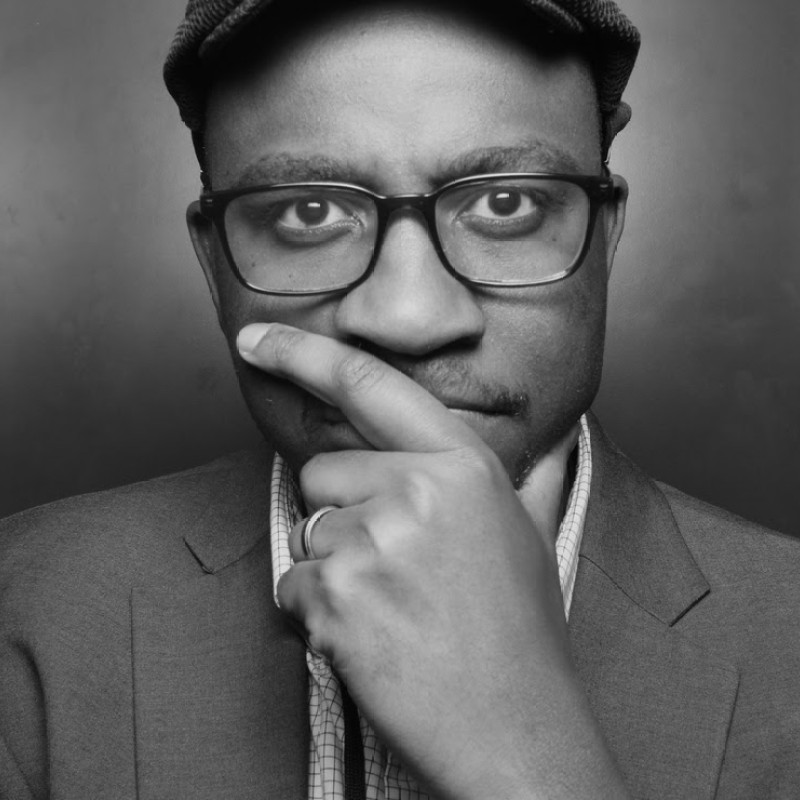
Fanuel Muindi is a former neuroscientist turned civic science archivist and documentarian. He is a professor of the practice in the Department of Communication Studies within the College of Arts, Media, and Design at Northeastern University, where he leads the Civic Science Media Lab. Dr. Muindi received his Bachelor’s degree in Biology and PhD in Organismal Biology from Morehouse College and Stanford University, respectively. He completed his postdoctoral training at MIT.

Continue Reading
Advertisement
Photo from CSML Images
csmlimages Learn more

Contact

Menu

Designed with WordPress