The Observer
Peer teaching as empowerment? Exploring NeuroBoricuas with Dr. Christian Bravo-Rivera
In brief: Dr. Bravo-Rivera discusses how he founded NeuroBoricuas, an education movement dedicated to training the next generation of neuroscientists in Puerto Rico, and the lessons they are learning from the work.

How do we make science communication empowering? As an aspiring science communicator. I was told we need to break away from the deficit model of science communication, which assumes that the main barrier is a lack of knowledge that experts need to fill. Instead, the point is to utilize more dialogic approaches that invite audiences to contribute their own knowledge, ask questions, and actively participate in the exchange. However, I rarely heard about empowerment, specifically how to support participants in taking the lead in engaging their own communities through science.
When I read the 2025 eNeuro article authored by Dr. Christian Bravo-Rivera titled “NeuroBoricuas: A Culturally Rooted Approach to Neuroscience Outreach and Research Training,” I was drawn to the way NeuroBoricuas uses peer teaching to challenge the expert model of science communication. The article sparked several questions. For example, how are high school and university students supported as teachers? What challenges has the approach encountered? And how does the team define impact, and what types of data are being documented?
In this digest, I examine the article and speak with Dr. Bravo-Rivera about NeuroBoricuas to better understand and put into context the lessons the team is learning from the work.
My actionable takeaways:
- Do not underestimate your students: “The philosophy is as soon as you learn it, you can teach it,” Bravo-Rivera says. Watching students troubleshoot equipment and lead a demonstration prompted him to give them greater teaching responsibilities.
- Empower students: Dr. Bravo-Rivera describes NeuroBoricuas’ core idea as “peer teaching as empowerment.” In the paper, he describes high school students organizing engagement events, leading journal clubs, and even training their teachers to use neuroscience equipment.
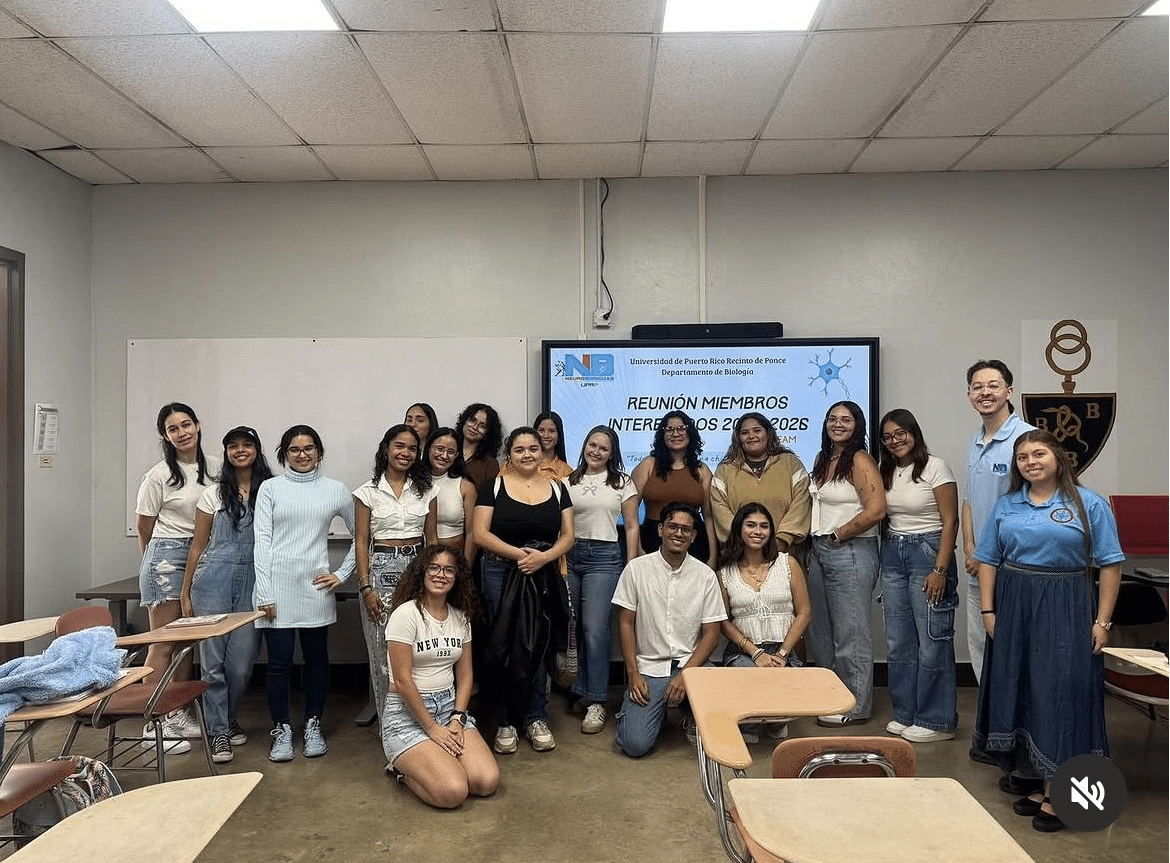
NeuroBoricuas is an educational movement spanning 12 chapters and five clubs across Puerto Rico, aimed at educating and promoting the training of neuroscientists on the island. Dr. Christian Bravo-Rivera founded the movement as a postdoc and detailed the founding of the movement in “NeuroBoricuas: A Culturally Rooted Approach to Neuroscience Outreach and Research Training.” He and his colleagues traveled three hours across Puerto Rico to his former school to lead neuroscience activities for Brain Awareness Week (BAW), a global campaign that occurs every third week of March to educate others about brain science. However, Dr. Bravo-Rivera would soon be graduating from the lab, and someone would have to take over BAW activities. A thought occurred to him during one of the visits:
“Why not train the high school students themselves to take ownership of BAW, rather than parachuting in for a single day of demos?”
This became the guiding principle of NeuroBoricuas. In his words, he connects the idea to holiday traditions such as parranda:
In Puerto Rico, traditions such as food, music, and parrandas are not handed down as lectures but as lived experiences where everyone takes part and contributes… we equip local students to become teachers and ambassadors within their own schools and neighborhoods. In this way, neuroscience knowledge is passed down like parranda traditions: learned in community, carried forward with pride, and made stronger with every new voice that joins in.
Currently, there are high school and university chapters that work together to teach neuroscience. The program also provides equipment through a collaboration with Backyard Brains. In addition, he also started the Bravo Lab Immersive Summer Program (BLISP) to introduce undergraduates to research and mentoring for graduate school. There is also a bridge program between UCLA and University of Puerto Rico so students can explore different labs outside of the island. They also do science demonstrations at local festivals in PR.
Many aspects of the NeuroBoricuas are scalable to other programs. Peer teaching can be applied in many contexts. A program like BLISP can also be applied at any institution to give students hands-on science. However, the cultural grounding needs to be based in the local community and not just copying Puerto Rican traditions.
I asked Dr. Bravo-Rivera about how they define impact and what the team is doing to document it. The program has not conducted a formal evaluation. However, they have recently started collecting data on participation in application workshops and how many students apply to and are accepted into summer programs. For now, much of the evidence is observational, including students teaching in other communities, pursuing neuroscience projects, and applying to summer or graduate programs:
Defining impact
“Students that are developing an enthusiasm for neuroscience and teaching neuroscience and out of their own volition, going to other communities and schools to teach neuroscience…I have seen also an increase in interest in high school students in doing scientific fairs related to neuroscience and approaching science labs. There’s also been a marked increase in students that go to summer programs or apply to grad school.”
“It’s kind of like…planting a seed and not knowing exactly…what you’re gonna get. But after it’s done, you know it’s grown.”
Giving students responsibility
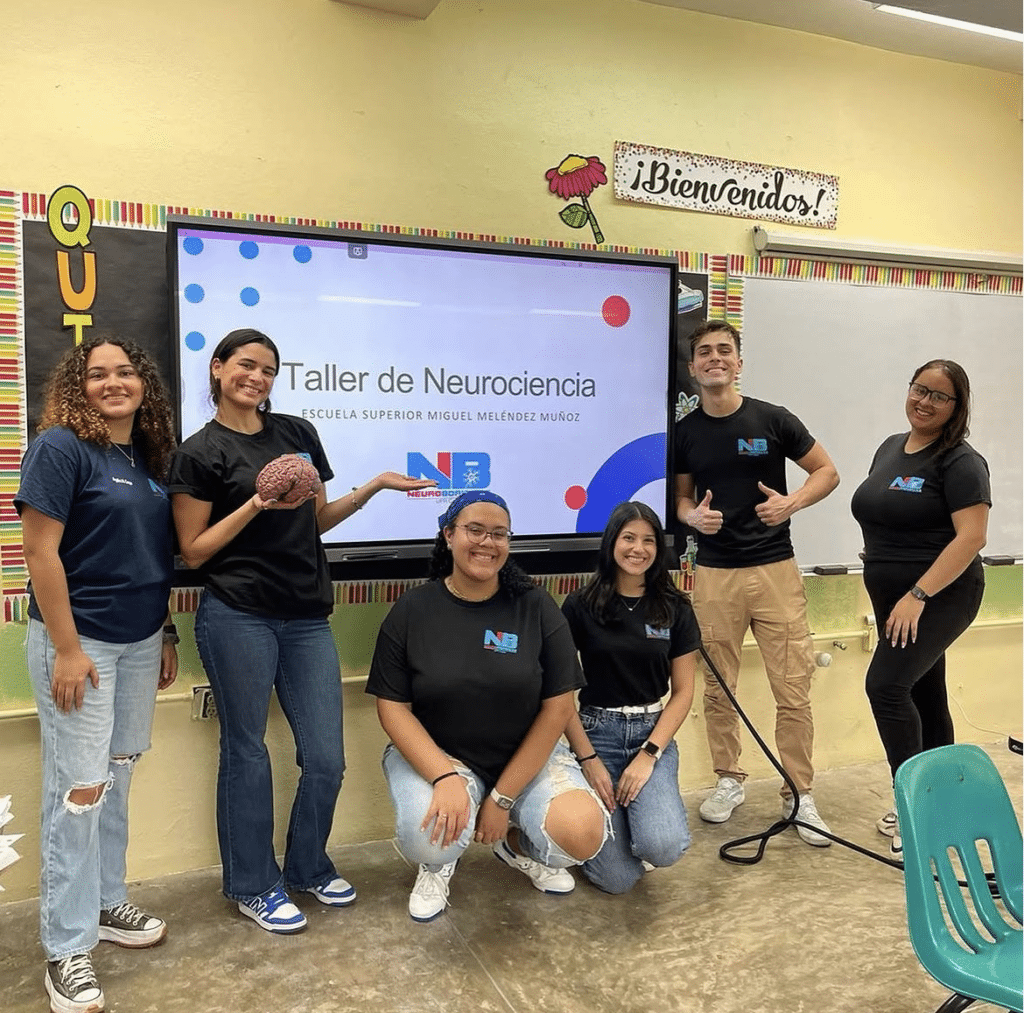
Dr. Bravo-Rivera initially planned to focus on training teachers to incorporate neuroscience into their classes. But watching a student troubleshoot equipment during a demonstration changed his expectations. He then encouraged students to lead the demonstrations themselves. He says he was initially nervous about how it would go.
“But initially, what I thought was, we have to mostly train the teachers on how to teach neuroscience, how to incorporate neuroscience teaching in their class. And we got the kids…the crowdfunded kit from Backyard Brains. I remember when I’m teaching them how to use it, they had an issue with one of the things…Then one of the other students started reading the manual…And by the end, by the time I finished with the other demo, he said, oh, I got this to work. And I realized, these kids can handle this equipment even better than I do…You know, the president was going to visit the school lab to, you know, to see the new neuroscience lab. And I said, like, the kids should present everything. So instead of us coming, there’s like, this is what this thing can measure and all that the students should be the ones doing. And they were so enthusiastic. They did it perfectly…that’s where we realized like this is going to work…”
Challenges in practice
There have been challenges. Dr. Bravo-Rivera described the administrative bureaucracy in Puerto Rico and difficulty keeping clubs active. While students in the program can determine what they want to learn, there are times when they need guidance. One instance involved concerns about the scientific credibility of potential guest speakers, which prompted more guidance on selecting suitable experts. The team also introduced succession guidance after some clubs became inactive when their members graduated.
Compensating teachers and volunteers was another concern. Bravo-Rivera said their willingness to participate without pay allowed the work to proceed, though financial support remained desirable.
Following students’ curiosity
In the article, Dr. Bravo-Rivera mentions the role of NeuroBoricuas and BLISP: “If NeuroBoricuas lit the spark of curiosity, BLISP was designed to carry it into deeper training.” So, I asked how he would know if NeuroBoricuas lit curiosity in its participants. One interesting observation was that the students themselves seemed to be promoting curiosity by running chapters, bringing in speakers, and attending conferences.
He emphasized that the main problem is finding opportunities for students who want to participate in research labs, as few labs on the island are open to students. This led to the creation of BLISP, a summer internship program in his lab. There were 200 applicants.
“If we’re only selecting 10, we’re like selecting 5% of the pool like it cannot be…shouldn’t be this hard to get to this program. And then we say like, let’s open it up virtually and let’s do all the videos by Zoom.”
We also talked about other ways that the program lit curiosity and motivated students to get involved. Not much funding is available to cover gas expenses for travel, but he said students will drive long distances to teach. He discussed the collaboration with Backyard Brains to bring equipment to a local high school. He shared an example of one high school student who used equipment from Backyard Brains to create a repellent to target grasshoppers affecting his family’s crops.
“His family works with crops in…his town, and they have a big grasshopper issue that they would eat the crops….So he wanted to develop a repellent…He started mixing like nicotine with garlic, trying a lot of different mixes and seeing how they affected the firing in using the systems on the leg of the grasshopper, and found this mix that would induce neurofatigue
And he thought like if this induces neurofatigue, it might repel the grasshoppers and then show that indeed that thing he makes would repel grasshoppers. And because it was all plant-based substances, they could spray it on the crops without any issue. So, he used the equipment right away to address a problem close to his family and his community…There is no PI involved…They can develop research proposals….We have to stop underestimating these students.”
We also talked about measuring curiosity. To him, it is important to cast a wide net. If one person becomes motivated after giving a demonstration, it is worth it to him.
Building belonging online
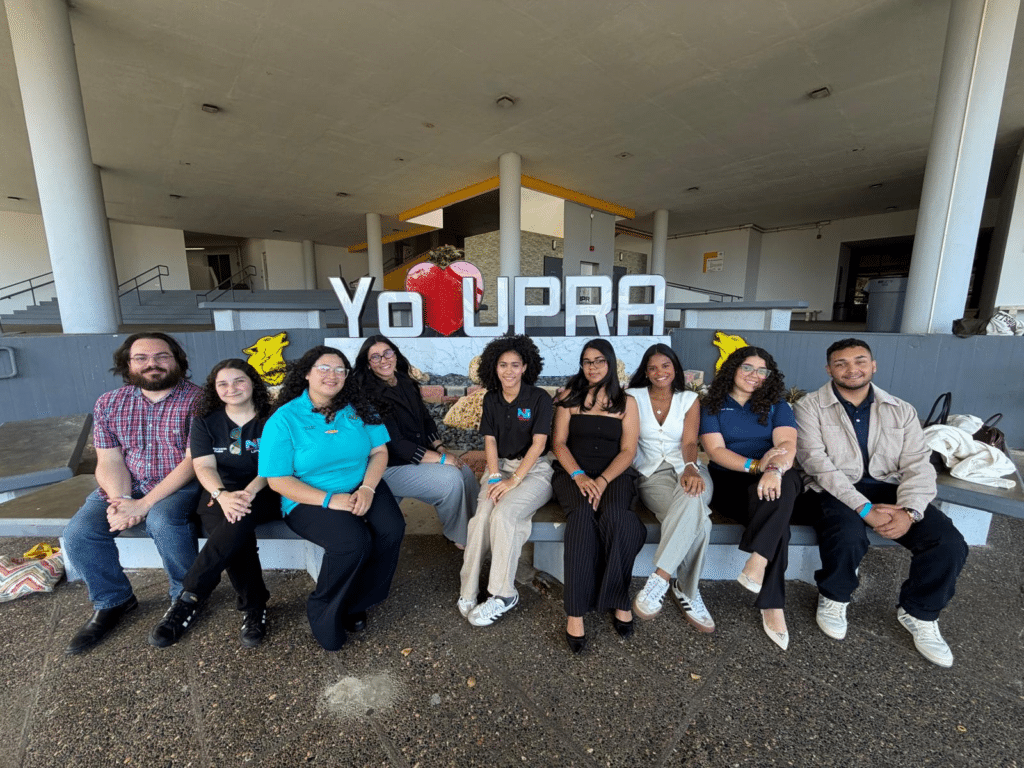
Dr. Bravo-Rivera seeks to make the space feel like family.
“So I guess by being very informal on myself. So I’m never doctor. I’m always Christian. I speak very plainly…Also in my meetings, my students participate a lot. And I have like first-year undergrads that are…that participate and they…they’re seeing, oh, that this is like undergrad…that’s having this turn at this lab meeting speaking. I can see myself, I can relate. So they can see that they don’t have to become grad students or professors to have something important to say at the table. So I think that…they do feel, empowered about it.”
Lab members are expected to support and cheer on undergraduates. His lab shares videos via WhatsApp. Even if students are not selected for BLISP, he says that they are always welcome to visit the space.
Maintaining community connections
We also discussed community building as NeuroBoricuas forms collaborations with universities on the mainland.
“The problem is that…there are not a lot of very good opportunities for people in Puerto Rico after [undergrad], or at least they’re not very competitive with offers they might get elsewhere, like in Florida or Texas.
So we do have a lot of talent drain or brain drain where they leave the island…So a lot of these people, the diaspora,…they yearn for Puerto Rico, and they do feel sometimes guilty, like I feel guilty that I’m in a place that have all these resources, but the people that stay behind in Puerto Rico don’t have the resources that I have.
This is basically what happened with Gimarie and that program at UC Irvine, where she said, what can I do for the people in Puerto Rico? And I said, does your neuroscience program have a seminar that they present on Zoom?…Send me the Zoom link, and that would be so meaningful for the students to join in.
And that’s where she said… I can see now there’s a lot of things that we can do. I’m not only going to share the neuroscience seminar link, I’m going to ask the people to present for the NeuroBoricuas. And she said it was so easy for her…to find people interested in participating, postdoc faculty, grad students.
With Manuella Yassa, they identify funds to fund a travel award for one of the NeuroBoricuas to go participate in their Center for Neuroscience for Emotional Learning and Memory conference…said that they can come they can present a poster …they also have their summer program and they have like protected spaces for NeuroBoricuas…She didn’t do it with a bunch of Puerto Ricans…There’s people passionate about…the democratization of science and that easily participate.
But indeed, the main people that have taken this to the States or other places are Puerto Ricans with a thirst like, how can I give back and how can I serve Puerto Rico from where I am at now?”
Lessons for other science engagement programs
I also asked about what takeaways other outreach programs could learn from NeuroBoricuas.
“I would say the main one is don’t underestimate your students or your trainees or the entry-level members. They are very enthusiastic about teaching and it’s very empowering for them to teach. So…what if they say something wrong? Like they’re talking about something like they haven’t learned or haven’t learned for a substantial amount of time. The philosophy is as soon as you learn it, you can teach it. And the idea, oh, what if they did something wrong? So if someone’s interested about something and…the purpose was to get them interested. And now if they’re interested, they’re going look it up and they’ll have plenty of opportunities to…set the record straight at some point…It’s about exposing…what’s the role of scientists, what is neuroscience, letting people learn about themselves…Just let the students and the trainees take charge.”
Reflections
The garden feels like a perfect analogy for the process of the peer teaching model. There is a sense of unpredictability that can be both exciting and challenging. There are unlimited opportunities for creativity and growth, but it also has its challenges. I think a criticism of the peer teaching model is how well peers are teaching each other. As Dr. Bravo-Rivera mentions, students might make mistakes. Depending on the science communicator’s goals, I can see hesitancy to adapt the model. However, to build confidence and curiosity, it is necessary to create space for students to make mistakes and learn from them.
This is also not a completely hands-off approach. He gives each chapter plenty of autonomy while adding safeguards as challenges emerge. In this sense, it is part of the program’s growth. Just as a gardener gives space and resources for plants to grow, they must also tend to them by trimming or pulling out weeds. This is part of the process and shows that student empowerment can include both autonomy and careful guidance.
Even assessing impact could be challenging. We talked about how to measure curiosity. Some outputs include grad school enrollment. However, to study these outputs and outcomes, there need to be predetermined goals. Another question is how to measure empowerment. Curiosity empowered one student, who experimented with Backyard Brains equipment to help their community. The individual’s determination to start a chapter inspired others to join and form a club. While they don’t currently have data, Dr. Bravo-Rivera said he plans to collect data such as graduate school enrollment. I would be curious to see what additional metrics they measure as the movement grows.
Lastly, I think about how NeuroBoricuas empowers their students. How can we fit empowerment into science engagement initiatives? How do we make science accessible like holiday traditions? How do we empower a community to see science as a tool they can use? I think about when I felt empowered in science. Reflecting on this, I think it was when I was finally given the space as a researcher to explore my own projects and prove to myself that I could do it. Dr. Bravo-Rivera is giving this same space to high school students, undergraduates, and graduate students. By planting the seeds and providing resources, he gives his students unlimited possibilities for growth.
What’s Next
BLISP is collaborating with Dr. Robert Rodriguez’s lab to expand opportunities for research internships. They also plan on launching a new website and apply for grant funding to expand the program.
What follow-on actions did the insights above spark for you?

I am a neuroscientist with a bachelor’s degree in Biology and Society from Arizona State University and a Ph.D. in Neuroscience from the University of Minnesota. I am currently a postdoctoral researcher studying treatments for traumatic brain injury. I am also passionate about science communication and am a former writer for SciComm Bites.




How Canadian early-career researchers organized to improve funding for future scientists

Photo Essay: Junior Scientists at Harlem BioBus celebrate a year of discovery

US-based nonprofit Engineers & Scientists Acting Locally (ESAL) receives a $100k unrestricted gift to support its civic engagement work

Did You Know: Boston’s Museum of Science is opening a Public Science Common? Here are some questions to consider

Did You Know: A museum dedicated to the brain is being developed in Southern California?

Peer teaching as empowerment? Exploring NeuroBoricuas with Dr. Christian Bravo-Rivera
Did You Know: A museum dedicated to the brain is being developed in Southern California?
Did You Know: Boston’s Museum of Science is opening a Public Science Common? Here are some questions to consider
US-based nonprofit Engineers & Scientists Acting Locally (ESAL) receives a $100k unrestricted gift to support its civic engagement work
How Canadian early-career researchers organized to improve funding for future scientists
Did You Know: Boston’s Museum of Science is opening a Public Science Common? Here are some questions to consider
Did You Know: A museum dedicated to the brain is being developed in Southern California?

STEM Unbarred: What the initiative is learning about hands-on science for incarcerated youth

Exploring workforce needs and intergenerational learning in informal STEM education

Making a Mini-Forest: participatory science afforestation across the globe
Contact
Menu
Designed with WordPress