
Civic Science Observer
The Michigan Bumble Bee Atlas is training residents to track bumble bee populations statewide to inform conservation and habitat management efforts

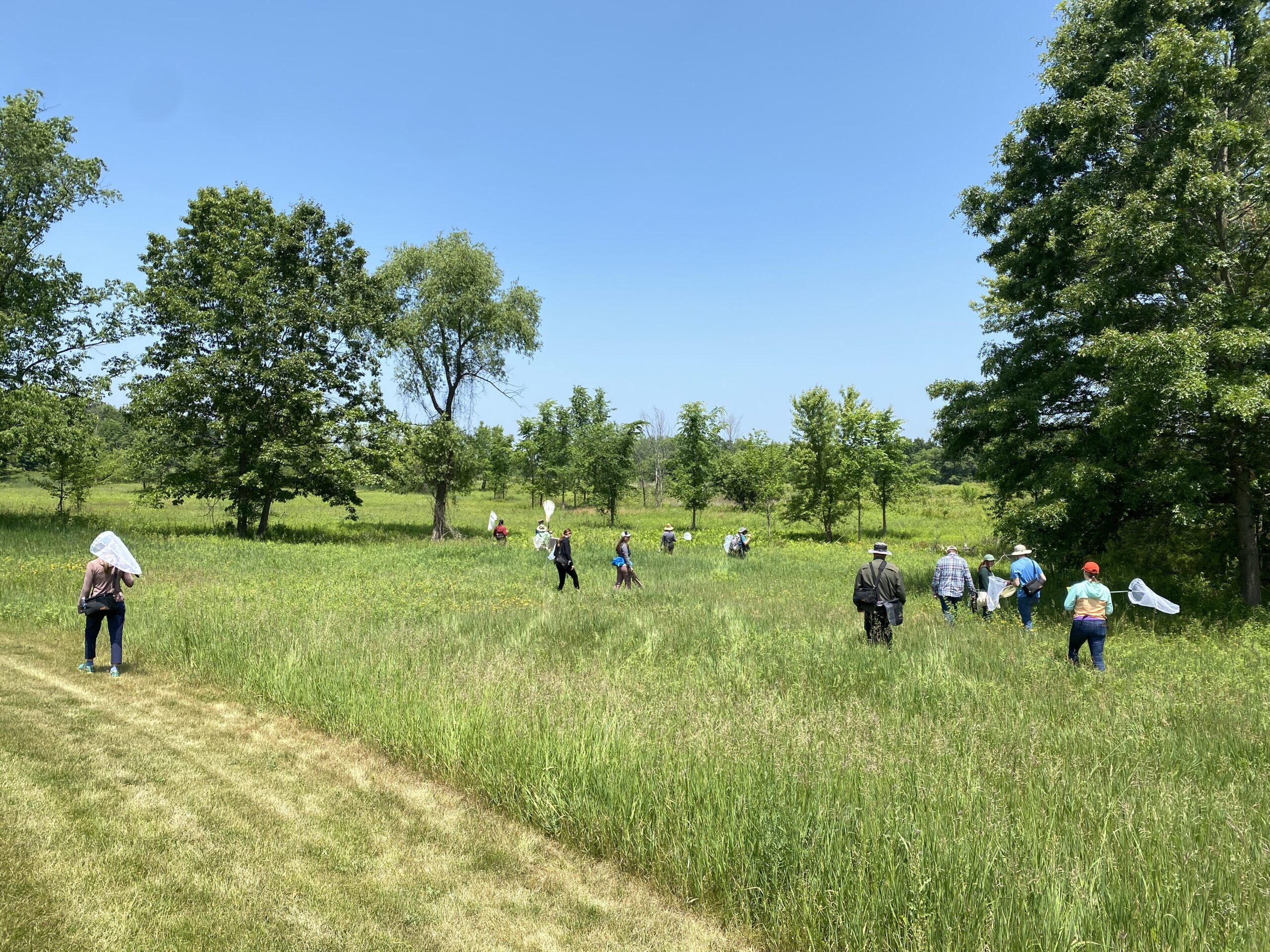
In North America, bumble bee populations are shrinking, with over a quarter of all species facing some degree of extinction risk. In Michigan alone, among a dozen species commonly found in the state, half have reached a 50% population decline in the past two decades.
The Michigan Bumble Bee Atlas (MBBA) — one of many such regional programs nationwide — began in response, with the goal of collecting population and habitat data to inform bumble bee conservation efforts across the state, according to the program’s website.
Since its founding in 2023, over a hundred people have submitted records through the MBBA website, according to Logan Rowe, a zoologist with the Michigan Natural Features Inventory, who helped start the MBBA in Michigan.
Rowe told the Civic Science Observer that despite a surge of interest in landscaping and pollinator conservation, Michigan lacked “any sort of statewide bumble bee community science effort.”
“I was particularly interested in engaging with members of the public to help look for populations of our rare species,” Rowe said. “I really wanted to get more information on where our rare bumble bee species are living, what they’re feeding on, and raising awareness for bumble bees.”
Each spring, the program holds training webinars and in-person events where potential volunteers can learn how to collect, photograph, and identify bumble bees for surveys. Rowe noted that as more participants return, some sessions have evolved to focus on regrouping and planning for the upcoming season.
According to the MBBA Participant Handbook, between June and September, surveys tracking bumble bee species and their local habitats are conducted in accordance with standardized monitoring protocols developed by the Xerces Society for Invertebrate Conservation.
The program has served as an educational opportunity for volunteers, with the experience shaping how they might manage their own property and community. “Going outside in my own backyard and seeing the bumble bees encourages me to build more habitat for them,” Rowe said.
More broadly, the MBBA has also assisted larger organizations like The Nature Conservancy in discussing ways to improve landscape management for bumble bees — including when to prescribe fires or which seeds to include in mixes. The University of Chicago Warren Woods Ecological Field Station has also used and collected regional bumble bee data, both as a “tool for engaging interns each summer” and to inform its land management efforts.
Moving forward, Rowe hopes to navigate funding challenges and help increase the program’s reach statewide.
He explained that Michigan’s vegetation tension zone — a boundary between two distinct vegetative zones — leads to different species found in the Lower and Upper Peninsulas. Despite this, the program lacks volunteer representation in the Upper Peninsula.
“We’re always looking to expand the project,” Rowe said. “People don’t have to be an expert to get involved. People don’t really have to know much about bumble bees at all to get involved.”
“Bumble bees are large, charismatic insects,” he said, “they’re an excellent gateway to learning more about native bees in general, and native landscaping.”
 +
Add CSML on Google
+
Add CSML on Google

Jennifer Shim is a recent graduate of Brown University where she studied applied math. She is interested in exploring the impacts of scientific research on local communities.




Lessons learned from Small Town Universe: A post-screening conversation with Katie Dellamaggiore

Exploring workforce needs and intergenerational learning in informal STEM education

Making a Mini-Forest: participatory science afforestation across the globe

“We want to infuse them with the spirit:” Earthwise Aware’s unique approach to community building and collaboration in participatory science
Charlotte Vaughn says research debriefings are an overlooked public engagement opportunity
Exploring workforce needs and intergenerational learning in informal STEM education
Making a Mini-Forest: participatory science afforestation across the globe
Lessons learned from Small Town Universe: A post-screening conversation with Katie Dellamaggiore
Exploring workforce needs and intergenerational learning in informal STEM education
Making a Mini-Forest: participatory science afforestation across the globe

18 months later, Casey Lardner from Genspace says, “we’ve been really focused on building systems”

Lessons learned from OBSERVER: A post-screening conversation with Sarah Goodwin

What it takes to include Deaf voices in scientific research
Contact
Menu
Designed with WordPress