
CSML Global Desk
Science communicator & Founder/Host of ImmunoAfrica Podcast shares insights from his scicomm work

In this episode of SciCommTV Africa, host Stephanie Okeyo speaks with Wealth Okete, biochemist, science communicator, and host of the ImmunoAfrica podcast. Okete shares his journey into science communication, which he stumbled upon while at university after reading an article on its impact in Africa. Driven by his passion for immunology and the desire to share African research in the field, he launched ImmunoAfrica in 2022.
Wealth discusses the unique challenges and opportunities for African scientists, emphasizing the importance of tailoring immunology solutions to Africa’s needs and fostering intracontinental collaboration. He shares insights from scicomm and podcasting noting that while audio content is accessible for low-literacy audiences, expanding into radio and TV could enhance outreach.
Despite challenges like self-funding and finding guests, Okete’s goal is to increase public understanding of immunology in Africa, combat misinformation, and document the evolution of immunological research across the continent. He envisions collaborations with African podcasters, scientists, and immunological societies to elevate African voices in science.
Explore the transcript of the conversation
Edited for grammar, spelling, and readability.
Stephanie Okeyo 00:46
Hello. In today’s episode, we are joined by Wealth Okete, a biochemist and the host of ImmunoAfrica, also known as the Immunology in Africa podcast. But I’m going to let Wealth describe what he does and his interests.
Wealth Okete
Thank you very much, Stephanie, for this invitation. My name is Wealth Okete. I am from Nigeria, and I am a trained biochemist. Shortly after I left university, I got into science communication. I like to say I stumbled into science communication because, while in university, I had never come across that term.
When I read an article by one of my mentors, Pearl Akazue, about science communication and its impact in Africa, I thought it was a worthwhile field to delve into. So I started out writing. I did that for more than a year, but not up to two years, and my journey evolved. In 2022, about three years after I got into science communication, I decided to start the Immunology in Africa podcast.
One thing that is really interesting about the podcast is how it allows me to blend my interest in science communication with my passion for research. As an undergraduate, I took a keen interest in immunology, vaccines, and infectious diseases. In my third year, we took a course that explored the immune system.
When the idea of launching a podcast came, I didn’t know much about what was happening in immunology from an African context. I thought launching the podcast would educate me about developments in immunology and also allow me to spread the gospel of African immunology: to let other people know what is happening and what African scientists are doing in that field. That’s a bit about myself.
Stephanie Okeyo
Thank you, Wealth. That’s quite interesting. To pick up on what you said, you came to know about science communication after finishing your undergraduate studies, which was similar to my experience. Looking at your journey now, how important do you think it is to introduce people, particularly undergraduates, to science communication and engage them in that field?
Wealth Okete 03:49
It’s something that is very dear to my heart. Although I haven’t been able to do anything about it, I’ve had conversations with a science communicator friend of mine, and thought about it myself, about exposing undergraduates to science communication.
Even when we’re talking about scientific research, there is no science without that science being communicated. I think there’s a quote that says, “Science is not complete without it being communicated.”
Being a good communicator can help you progress in your career. Learning how to write and speak can have very important benefits for undergraduate students. Even during undergraduate studies, people give presentations related to research. These skills also allow them to engage with communities.
I think it’s important to introduce aspects of science communication that align with their interests, whether in research or other parts of their work. Then we can have more robust and comprehensive science communication coming out of the continent.
Stephanie Okeyo
In sharing your journey, you mentioned that you started with writing. How did you progress to a podcast, and why a podcast?
Wealth Okete 06:05
I still write. I started with writing, but I still write. Initially, I wasn’t sure what to start with. When I discussed it with my elder sister, who sometimes plays the role of a mentor, she suggested that I could go on TV or radio and talk about science. There was a TV station not very far from our house here in Benin.
But I told her, “No, I don’t want to go on TV.” I’m quite introverted and shy. I said I didn’t want to talk about science on TV.
Then I went to an event and met a TV presenter. I told her I wanted to go into science communication. She said, “I can let you come on my show and talk.” I told her, “No, please, I don’t want to talk on TV or radio. Can’t you connect me with somewhere I can write, maybe a magazine or a newspaper?”
She mentioned the newspaper agency that I ended up starting out with. I went to the editor, spoke with him, and started writing for them.
The first opportunities that presented themselves were speaking opportunities, or opportunities that required me to appear on TV. I’d say life, or God, knew I was going to delve into podcasting later. But I didn’t feel comfortable or confident fitting into those shoes. I felt, “You can write. People won’t even know who is writing. But if you’re on TV and say something wrong, you’ll probably get into trouble.”
I wanted to start somewhere that was comfortable and convenient for me. Writing was my go-to place of comfort.
Regarding my evolution, when I started science communication, I had this energy to learn something. I wanted to start a blog, but it didn’t work out. About a year later, I wanted to start something else, perhaps writing about immunology and nutrition, because I had an interest in nutrition at one point. That didn’t work out either. I even posted on social media that I was going to launch something new, but it didn’t work out.
I think it was in 2021 that I started making posts on Instagram about science. I started doing that around November. That was when I began to realize that podcasting was becoming a thing.
I connected on Instagram with a scientist and science communicator who was also a podcaster. I listened to his podcast and thought, “Oh, wow, this is cool. Maybe this could be an opportunity for me to finally start a project.”
When I reached out to him about my interest in podcasting, he talked with me. Maybe I had a small fire, but the way he spoke to me added fuel to it. I became so motivated to start a podcast.
When I asked myself what I could do a podcast about, I knew it had to be immunology. Podcasting was already stepping out of my comfort zone because I had been comfortable with writing. I needed a balance: I couldn’t also do a podcast in a field I wasn’t familiar with.
Because I already had an interest and passion in immunology, it made sense. If podcasting wasn’t going to be so comfortable, I should at least have my other foot in a field that was familiar. That’s why I decided to start a podcast about African immunology research. That’s basically how it happened.
Stephanie Okeyo 10:04
It’s quite an interesting journey of trial and error and testing. You’ve spoken about writing, trying blogging and social media posts, and then finding somebody who was doing a podcast. While you were exploring what to do and figuring out how to start a podcast, what was the landscape like? Were there many other science podcasts on the continent that you could look to? What did you find in terms of existing examples?
Wealth Okete 10:41
When I started out, I didn’t really know much about podcasting. When I decided to launch a podcast, I had listened to a few episodes of one or two podcasts, especially the one by the podcaster who gave me assistance. But I didn’t know much about the podcasting landscape in Africa.
Because I had tried to launch previous projects that didn’t end up launching, I told myself I would make significant progress with this project before finding out how things really were. I had already made progress with planning and had even started looking for guests before I said, “Let me check online for podcasts in Africa.”
That was when I got to know about The Root of the Science Podcast by Anne Chisa. Interestingly, we were already connected on Twitter. I looked up an episode and listened to it, and I thought, “This makes sense. I can have similar conversations with scientists or immunologists.”
We didn’t connect much then, but I think I did send her a direct message on Twitter, as it was called then. I told her I wanted to launch a podcast and that her work was inspiring. She encouraged me. We needed more podcasters on the continent. There was another opportunity for us to connect more later.
Most of the guidance I received came from the podcaster I connected with on Instagram. He isn’t African; he is European. That was the main guidance I received. I didn’t know much about podcasting in Africa. It was after I got into the podcasting sphere that I started learning more about podcasts in Africa, both science podcasts and others addressing different issues in the context of the continent.
Stephanie Okeyo
So, for you, you hit the road running and learned along the way. Congratulations! This month, you reached your second year, with viewership in over 50 countries. What would you consider your greatest insight from this work?
Wealth Okete 13:27
As I said, part of the reason I wanted to podcast about immunology was that I didn’t know much about the field in the African context. Because I’m interested in immunology, I periodically read articles, but some of the articles I usually read aren’t from or about Africa.
During COVID, I wrote a lot about it for the newspaper I was writing for, and perhaps a few other science blogs. I knew Africans were getting things done in immunology, but there weren’t really platforms where I could learn about them or find articles. Part of the reason I started the podcast was to find out what African scientists were doing in the field.
The most insightful thing for me has been realizing that African scientists are getting things done in immunology on the continent. I speak with Africans based both within and outside the continent, but those within it are doing a great deal, even with limited resources and challenges with funding and obtaining reagents. They have this passion, zeal, and resilience, and they keep thinking about ways to tailor solutions to our own context. That is a theme that keeps coming up in different episodes.
One of the major highlights of podcasting for me is realizing that African scientists, especially those within the continent, are getting a lot done in immunology. Even with the limitations posed by funding, obtaining reagents, and collaborations, they are able to work with limited resources to do groundbreaking research in the context of the continent.
A recurring theme in some of the episodes is that the African context is different when we discuss the immune system or immunology, and that solutions, therapies, and vaccines have to be tailored to that context.
For example, I had an episode with a scientist who was trying to understand why people in Africa and some other lower-middle-income settings do not respond as well to vaccines. You give vaccines to people in Europe or the Americas, and their immune responses are better, more robust, and higher than when we do the same here in Africa. They’re trying to understand these things. There is this passion and zeal to understand immunology in the African context and develop tailored solutions to help the African population.
There have also been insights about the need to strengthen collaborations among scientists within the continent, so that people aren’t working in silos. You might be in Kenya exploring a topic that I’m also exploring in Nigeria, but we may not be working together or even know that we’re doing the same thing.
That is another common theme: there need to be more collaborations among scientists within the continent, so we don’t keep reinventing the wheel in immunology research.
Stephanie Okeyo 18:30
In highlighting African research with an African narrative and context, who would you say was your target audience when you started the podcast? Looking at the statistics now, who are your listeners?
Wealth Okete 18:55
When I started, I didn’t really think about a target audience. I wanted a podcast that would cater to everybody, where everybody could listen.
But as I’ve grown over time, I’ve realized it’s important to have a defined audience. Right now, I would say the people who listen most are those interested in immunology, usually students and scientists.
I also know that people outside science or health listen to the podcast, including non-specialists who are interested in it. But I think the majority of listeners are students and scientists, based within or outside the continent, and people generally interested in research about the immune system.
Stephanie Okeyo 20:00
Looking at the situation now, mpox has been declared a global health emergency. What do you think is the potential of spaces like science podcasts to engage different audiences, whether science professionals or the public? Having worked in this space for two years, what potential do you see?
Wealth Okete 20:23
I think podcasting has immense potential for science or community engagement. One of its key advantages is that it comes in an audio format. Some people may not have the literacy skills to read about certain things, but when they hear them, they can understand them.
Someone who hasn’t had an education could listen to me now and make sense of what I’m saying. But if I put the same things in writing, they might not be able to read them. That’s one potential advantage of podcasting over other ways of communicating science, such as newspapers and magazines.
One thing I’ve thought about, and which a fellow podcaster on the continent has also raised, is that podcasting may not necessarily be suited to the African population. That may sound contradictory because the majority of my listeners are from African countries. If I rank listeners by country, the top two countries are outside Africa. But if I rank them by continent, the majority are from Africa.
I think radio and television are unexplored opportunities for podcasts. Podcasts could be presented on radio, and podcasters could partner with radio or television stations.
Typically, you need an internet connection to listen to my podcast. But people in remote regions may not have an internet connection, or a strong connection, while they do listen to the radio or watch television. We could make versions of podcasts that cater to these people.
You mentioned mpox. For people who may never have heard of it and who cannot access science podcasts online, there could be versions shown on television or broadcast on radio that educate them about the disease and help them respond appropriately.
Stephanie Okeyo 23:03
It’s interesting how you describe a podcast as a bridge or a hybrid, using existing platforms such as television and radio. Even where a podcast might be inaccessible, partnerships or collaborations could allow it to be used on other platforms.
For you, what is the most challenging part of having a podcast that focuses on a specific scientific discipline, in this case, immunology?
Wealth Okete 23:38
The challenges of podcasting for me have evolved over time. Before I started, the challenge was getting a guest. At one point, I was even questioning whether I really wanted to start a podcast because getting my first guest was very difficult. Once I got into it, finding guests became easier. It still isn’t easy, but it has become easier and faster.
Another challenge is funding. The podcast is largely self-funded, and we know how that works: it affects quality and the time you have for personal things. The podcast is very personal and dear to my heart, so I don’t think of the time invested in it as time I should be spending doing something else. But having funding gives you leverage, more control, and the ability to do more. Those are the challenges I can think of.
Stephanie Okeyo
For anyone who is starting out or looking to start a science podcast, what advice or tips would you give them?
Wealth Okete
I think they should start. That’s the first advice I would give. By starting, I don’t mean just getting a microphone, a phone, or another device and beginning to record. But have it at the back of your mind that you should start.
We need more podcasters on the continent. If someone is interested in podcasting, you’re welcome to the family of African podcasters, especially African science podcasters.
One interesting thing about my podcast is that I planned to launch at a certain time, and it didn’t work out. But I feel the delay helped me refine the goal, the focus, and the quality of what I eventually launched.
Sometimes there may be delays, but when you have a plan, a goal, and the desire or passion to start, work on shaping and sharpening your focus. That way, you aren’t just gambling with your episodes, with people coming to listen without knowing what to expect from them.
That’s the advice I would give, apart from the obvious technical advice about getting the tools and knowing how to use them.
Stephanie Okeyo
Thank you so much, Wealth. It’s wonderful hearing about your journey and how it has evolved over time. My last question as we close: Where do you hope to see ImmunoAfrica, or your work in podcasting, in five years?
Wealth Okete 27:58
Five years is quite a long time, but I hope the podcast will be able to collaborate more with other podcasts, both within and outside Africa, and with immunological societies within and outside the continent.
I like to think of the podcast as representative of what is going on in immunology within Africa. For it to scale, we need to work with and align with the people who matter in immunology, both within Africa and globally. That’s one thing I look forward to.
I also hope ImmunoAfrica will be able to develop short episodes or snippets that can be shared on radio or television and benefit the general public. People could understand what mpox, COVID, and Lassa fever are, and have an immunological understanding of diseases and how their bodies respond to them.
I also hope the podcast can provide a long-term perspective on how African immunology has evolved. We could document its evolution and progress, not just since the podcast started, but from the 1990s, the 1980s, or whichever century immunology began developing in Africa.
For other countries, we have detailed knowledge about these things, but there isn’t as much documentation happening here in Africa. I hope the podcast can be a platform that documents the progress, journeys, and achievements of African immunology over the past few decades, or perhaps centuries.
Stephanie Okeyo
Thank you so much, Wealth. We look forward to more ImmunoAfrica episodes. Where can people find the episodes? On which platforms?
Wealth Okete 30:00
You can listen to the podcast on virtually all audio streaming platforms. Specifically, we’re on Spotify, YouTube, Apple Podcasts, and Amazon Music. Just search for the Immunology in Africa podcast, and you can listen to the episodes that come up.
Stephanie Okeyo 30:24
Thank you so much, Wealth, for taking the time. We look forward to further engagement.
What follow-on action(s) did you take based on the insights above?

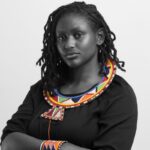
Stephanie Okeyo is a Microbiologist and Science Communicator. She is the founder of Under the Microscope. Some of her previous professional roles include Ambassador of Women in Science, East Africa and Representative to the United Nations office, Geneva at the Royal Academy of Science International Trust (RASIT). In 2019, she was listed as one of Under 30: Breaking Barriers Women in STEM and is a 2021 Zuri STEM category nominee. Stephanie is passionate about empowering young girls and being a voice for gender equality in Science and Technology.







SciCommers at the Museum of Science’s 2026 SciCom Summit in Boston share what drives their work

Photo Essay: A guided tour of DC’s historic National Academy of Sciences Building with Dorothy Goldsmith

Illinois State experiments with workshops to help STEM faculty explore the civic nature of their disciplines

Did You Know: Rice University has launched a new center for science communication called SCOPE?

How Canadian early-career researchers organized to improve funding for future scientists
How Canadian early-career researchers organized to improve funding for future scientists

Photo Essay: Junior Scientists at Harlem BioBus celebrate a year of discovery
Illinois State experiments with workshops to help STEM faculty explore the civic nature of their disciplines
SciCommers at the Museum of Science’s 2026 SciCom Summit in Boston share what drives their work
Did You Know: Rice University has launched a new center for science communication called SCOPE?

Did You Know: Boston’s Museum of Science is opening a Public Science Common? Here are some questions to consider

Did You Know: A museum dedicated to the brain is being developed in Southern California?

STEM Unbarred: What the initiative is learning about hands-on science for incarcerated youth

Exploring workforce needs and intergenerational learning in informal STEM education

Making a Mini-Forest: participatory science afforestation across the globe
Contact
Menu
Designed with WordPress