The Observer
How Canadian early-career researchers organized to improve funding for future scientists
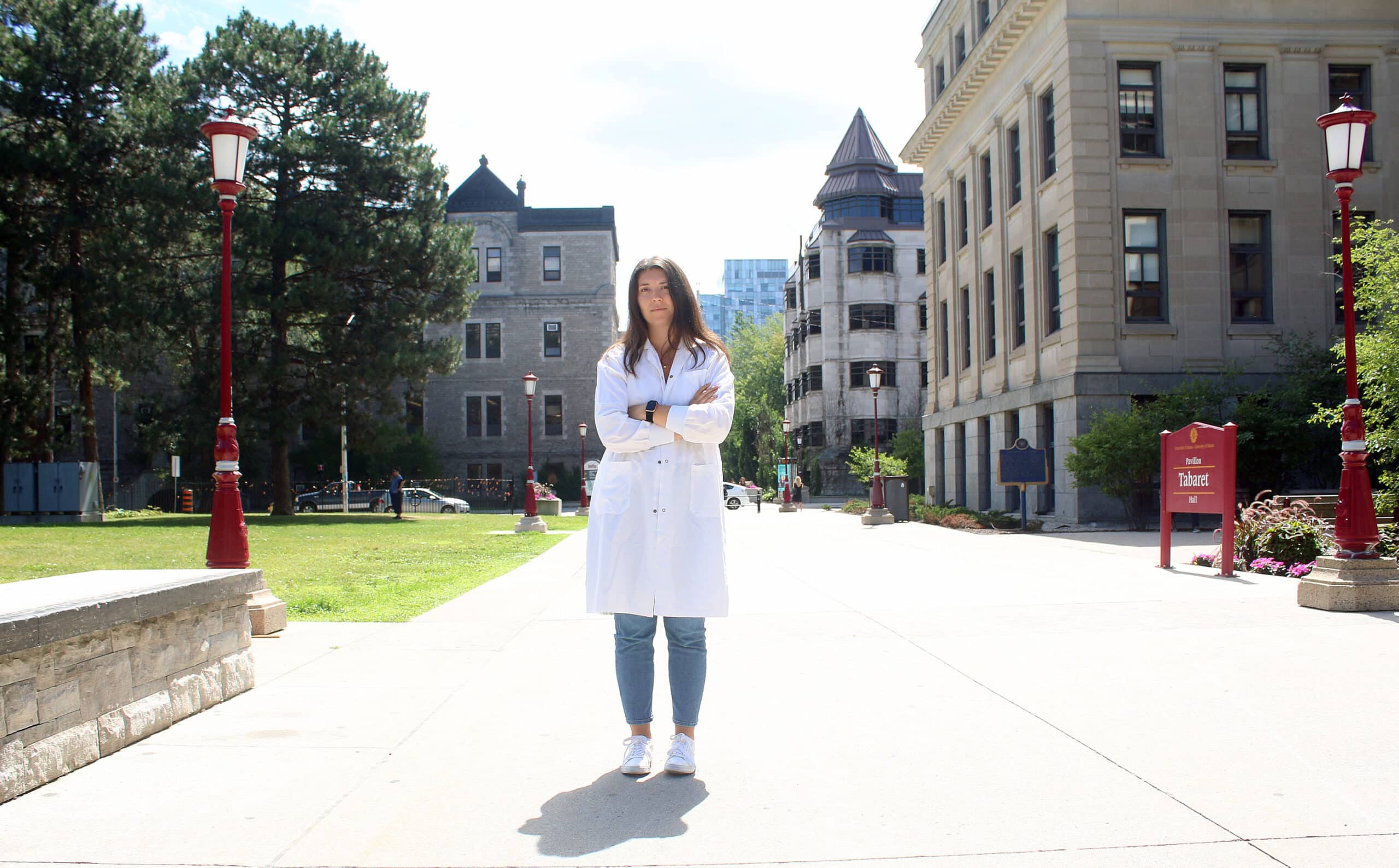
“All the conversations were about graduate students and postdocs, but I would be the only person in that room who actually was one. There was just this huge void.” — Sarah Laframboise.

In September 2024, the Government of Canada gave research trainees their first raise in over two decades. Without it, wages for graduate and postdoctoral scholars would still be below the poverty line. Many would have left home, or left science altogether, in search of sustainable careers elsewhere.
Behind the headlines, the shift in funding for Canada’s science ecosystem was in large part fueled by a group of students who taught themselves how to navigate the systems of government, and by a growing culture of youth leadership in science policy.
2 years earlier
In an effort to address labor shortages in science, the parliamentary committee on science and research set out to learn how to bring talent into universities and colleges. Members of Parliament had unanimously voted to establish a new committee dedicated to matters of science in 2021, and this was to be one of its first studies. The committee invited stakeholders from across the science ecosystem to weigh in.
Of the 43 witnesses who testified at the House of Commons over a span of one month, only 3 were graduate students. One of them was Sarah Laframboise.
At the time, Laframboise was a biochemistry doctoral student at the University of Ottawa and president of her graduate student association, where she was negotiating with university administrators about raising research stipends. A year earlier, she had started a university club, the Ottawa Science Policy Network (OSPN), to help others learn about science policy. OSPN’s founding team was made up of science policy enthusiasts who found each other on Twitter, eager to fill a gap in policy training for science students.
“We realized there was a huge gap in the role that graduate students were playing more broadly in policy discussions,” said Laframboise in an interview with the Civic Science Media Lab. She described her first experiences testifying before the Senate and the House of Commons. The House of Commons is the primary legislative body in Canada’s parliamentary system, made up of elected representatives referred to as Members of Parliament (MPs). When considering new bills and strategies, MPs often consult experts and community members across Canadian society to inform their decisions. “All the conversations were about graduate students and postdocs, but I would be the only person in that room who actually was one. There was just this huge void.”
OSPN’s leadership team wanted to find out how peers from across the country felt about the state of research funding. They began by conducting a nationwide survey on graduate student finances. The numbers were staggering. 86% of graduate researchers were under financial stress, and over 30% were considering dropping out because of it. These results were later cited in the parliamentary committee’s official report to Canada’s House of Commons.
The survey exposed a massive population of young researchers whose struggles were overlooked by Canadian science policy. This ultimately sparked the Support Our Science campaign. Over the next two years, the student-led campaign gave a voice to thousands of young researchers across Canada; led to meetings with the Minister of Finance and the Minister of Innovation, Science and Industry; and eventually influenced how the federal government allocated its budget in 2024. Stipends rose from $17,500 to $27,000 for master’s students. Doctoral students who had previously lived on as low as $21,000 per year were now getting almost double at $40,000. And post-doctoral fellowship grants rose from $45,000 to $70,000.
“I don’t think we would have gotten to that point if it wasn’t for the authenticity and the thousands of people who sent us their stories, so that I could sit in an MP’s office and tell them about a student in their riding who was living in their car because they couldn’t afford housing. Those types of things are what got us in the door through Parliament,” says Laframboise.
Students had also hit the trifecta of a policy window: they were timely, relevant, and had an answer to a problem that policymakers were eager to solve. The aftermath of the COVID-19 pandemic had revealed systemic shortfalls in Canada’s scientific capacity, and policymakers knew that something had to change.
Why it took 20 years
The student leaders behind Support Our Science were not the first to ring the alarm bell. For years, university administrators and national associations had been raising the issue of underfunded science with ministers and MPs. But for the first time, graduate students were joining policy discussions and putting faces to numbers on a national scale.
Laframboise’s first appearance in the House of Commons came as an add-on to a mentor’s testimony. Paul Dufour is a senior fellow at the University of Ottawa’s Institute for Science, Society and Policy (ISSP) who has held several roles in government over the years and has been a longtime mentor and advisor to institutions shaping science policy in Canada. He also served as an advisor to OSPN and had just read the survey results when he received the invitation to represent the ISSP before the parliamentary committee. Each witness is allotted five minutes to make their opening statement. Dufour decided to split his time with Laframboise so that MPs could hear the survey results directly from students.
While students initially struggled to build momentum in individual policy engagement, Laframboise credits these moments with bringing her together with others advocating for the same cause. The peers she met in these rooms eventually formed the core of the Support Our Science movement.
When their collective advocacy took off, they soon became part of a broader Coalition for Canadian Research that included nonprofits and national associations echoing the same unified message. The hard part was getting everyone on the same page. Organizations wanted to call for various funding asks, but they knew they needed to stay united on a central message to have the strongest impact. The coalition worked amongst themselves to calculate the exact increases that researchers in Canada needed from each of the federal scholarships. They wrote a unified letter, printed a one-page ad in the Globe and Mail, and encouraged community members to email elected officials about the issue. When the federal government held its annual pre-budget consultations, the message from groups across the country was loud and clear.
The challenge continues
The federal raise for scholarships and grants has benefited roughly 5,000 students annually since. However, many students who don’t receive these competitive awards still face lower stipends from their universities, a problem that may continue to discourage new scientists. The systemic nature of funding shortages in science requires graduate students to continue participating in financial policy decisions.
But engaging students in science policy has its limits.
Laframboise, who continues to meet regularly with student leaders, has observed that most youth groups struggle for funding and find it increasingly hard to motivate new students.
One barrier is immense burnout at a time when graduate-student demands are rising. “You can’t just be a scientist anymore,” she says, “you have to be a great communicator, you have to be able to write a policy brief, you have to be able to apply for funding and grants. And you’re probably not going to have a long-term career in research, so [students] are trying to pack on all of these extra skills while still doing a very demanding degree.”
Laframboise is now the executive director at Evidence for Democracy (E4D), a prominent national organization promoting transparent science and evidence in Canadian public policy. The nonprofit organization, which also has its roots in student leadership, was co-founded by Katie Gibbs in 2012 when she was a doctoral candidate in conservation biology.
While Laframboise experienced her own challenges balancing her PhD work with running a national movement for graduate researchers, she continues to believe in the power of engaging students in policy. “We were able to create something out of literally nothing, and that paper that we wrote on graduate student finances will perform better than any of my scientific research ever will, so I am eternally grateful for that.”
What follow-on actions did the insights above spark for you?


Nada S. Salem is a bioethics and policy researcher. She is a Science Policy Correspondent in the Civic Science Media Lab.She holds an MSc in bioethics from Harvard Medical School, where she focused on issues in emerging biotechnologies, and brings insight from experience across the UN, Canada, and US science policy. Nada is passionate about the power of science communication in shaping policy action. Her work has been published in outlets including Nature, American Journal of Bioethics, and Tech Policy Press.







How Canadian early-career researchers organized to improve funding for future scientists

Photo Essay: Junior Scientists at Harlem BioBus celebrate a year of discovery

US-based nonprofit Engineers & Scientists Acting Locally (ESAL) receives a $100k unrestricted gift to support its civic engagement work

Did You Know: Boston’s Museum of Science is opening a Public Science Common? Here are some questions to consider

Did You Know: A museum dedicated to the brain is being developed in Southern California?

Peer teaching as empowerment? Exploring NeuroBoricuas with Dr. Christian Bravo-Rivera
Did You Know: A museum dedicated to the brain is being developed in Southern California?
Did You Know: Boston’s Museum of Science is opening a Public Science Common? Here are some questions to consider
US-based nonprofit Engineers & Scientists Acting Locally (ESAL) receives a $100k unrestricted gift to support its civic engagement work
How Canadian early-career researchers organized to improve funding for future scientists
Did You Know: Boston’s Museum of Science is opening a Public Science Common? Here are some questions to consider
Did You Know: A museum dedicated to the brain is being developed in Southern California?

STEM Unbarred: What the initiative is learning about hands-on science for incarcerated youth

Exploring workforce needs and intergenerational learning in informal STEM education

Making a Mini-Forest: participatory science afforestation across the globe
Contact
Menu
Designed with WordPress