
Questions of the Day Program
18 months later, Casey Lardner from Genspace says, “we’ve been really focused on building systems”
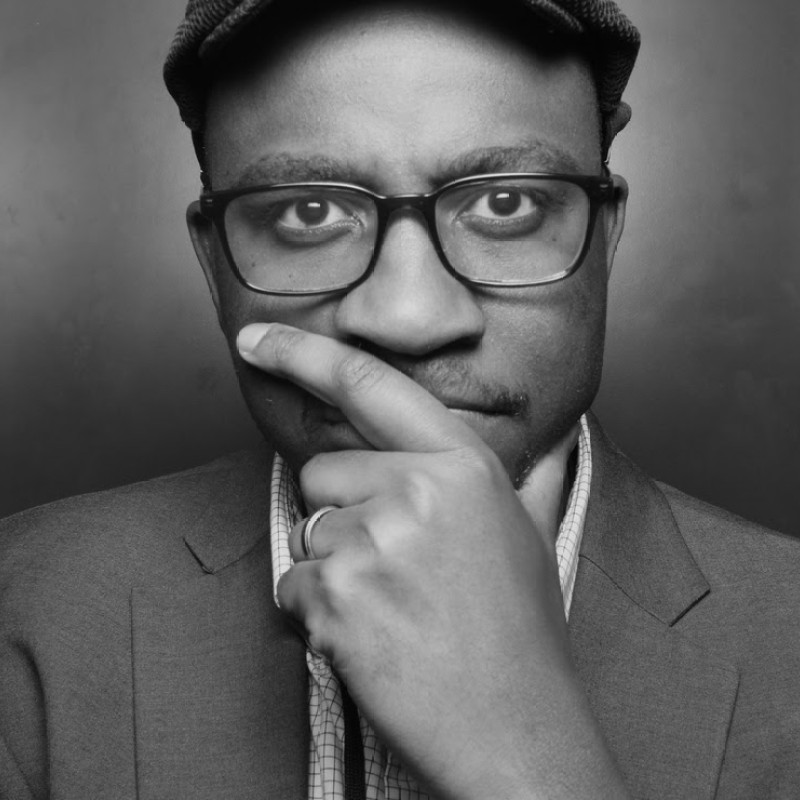
BROOKLYN, NY – When I first visited Genspace, my goal was to understand the theory of change behind the world’s first community biology lab. I wanted to know how a shared laboratory could make biology more accessible by bringing together artists, scientists, entrepreneurs, students, and community members to learn and conduct research side by side. But organizations are in a constant state of evolution, and one conversation is rarely enough to capture the lessons they are learning. A year and a half later, I returned to Brooklyn in February 2026 to dig deeper and ask some follow-up questions to the Executive Director, Dr. Casey Lardner.
A lot has changed since that first visit. Genspace has expanded into a second laboratory, grown its Break into Biotech workforce development program, and become part of the Gotham Foundry, a major New York City initiative designed to strengthen biotechnology innovation. But what interested me most was not simply the growth. It was what that growth has taught the organization.
Readers can also revisit the 2024 conversation, which focused more directly on the lab’s founding model and theory of change.
“We’ve been really intentional about making sure this is not just growth for growth’s sake.”
Throughout the conversation, Lardner kept returning to the difference between expanding and scaling well. More space matters. More programs matter. But the harder work is building the systems that allow a community-driven lab to serve more people while preserving safety, trust, and the sense of belonging that makes participation possible in the first place.
That distinction matters because Genspace’s work is generating impact on multiple levels: trainees find jobs, members publish research, artists build new bodies of work, and entrepreneurs turn lab-based experiments into companies. Other outcomes are harder to capture. How do you measure whether someone feels more confident at the bench? How do you know whether participation in a community lab changes a person’s relationship to science? How do you evaluate trust, belonging, and scientific identity over time?
Those questions and many others are surfaced in the interview. Lardner described Genspace as a place where people can enter biology through many doors: workforce training, community research, youth education, art, entrepreneurship, or simple curiosity. The lesson is not that every participant follows the same path. It is that a flexible lab environment can help people engage with science in a way feels authentic to their goals and experiences.
Some of the numbers shared
During the conversation, Lardner shared several data points that show how Genspace is tracking growth and impact across programs, members, trainees, and partnerships.
Figures reflect what was shared in the interview.
One of the more useful lessons from the follow-up is that outputs alone do not tell the full story. Counting classes, members, or events can show activity, but it does not necessarily show transformation. Genspace is increasingly looking at what people do after they leave: whether they continue in STEM, move into biotechnology jobs, build companies, exhibit new work, publish research, or return to mentor others.
The conversation also shows why community biology may be better understood as civic infrastructure rather than simply public programming. A lab like Genspace is not only a place where experiments happen. It is also a place where people learn how science works, where researchers and non-researchers share authority, and where participation can reshape who feels entitled to ask scientific questions.
That does not mean the model is finished. Lardner was candid about the challenges that remain: filling some adult classes, building partnerships, communicating impact to funders, hiring staff, and finding better ways to measure long-term changes in trust and belonging.
Growth requires systems
The expansion has forced Genspace to invest in onboarding, safety, staffing, lab operations, and internal infrastructure.
Impact takes time
The most meaningful outcomes often appear after people leave the program and continue into careers, research, art, or entrepreneurship.
Beyond the numbers
Metrics like jobs and memberships tell only part of the story. The organization is also trying to understand how community biology changes the way people see themselves in science.
For anyone interested in community biology, public engagement, workforce development, or the future of civic science, Genspace’s next chapter offers a valuable case study. The most important lesson may be that Genspace is providing an important space for connection. A space to ask questions. A space to learn from one another.
Conversation transcript
This transcript has been edited for length and readability. Timestamps mark where each exchange begins in the video.
Open the transcript
Hey, it’s Fanuel here, your host of Questions of the Day. In this conversation, I return to Genspace about a year and a half after my first visit to its headquarters in Brooklyn. I wanted to follow up with Dr. Casey Lardner, Executive Director of the world’s first community biology lab, because organizations are always changing. One conversation is only one data point. The word of the day at Genspace is growth: the organization has expanded its space, grown its workforce programs, joined a major New York City innovation partnership, and is asking important questions about measuring and communicating impact.
Are you able to become a biologist, a scientist, or whatever it is, in a way that feels authentic to your interests and goals? For example, one member came from a region of India heavily affected by pollution from the fast fashion industry. She is now a founder addressing those challenges. We have also had artists in our artist-in-residence program go on to exhibitions and solo shows. It is not only about what people produce while they are here, though we look at that too. It is also about the changes that happen afterward.
Casey, thank you so much for doing this again. Last time, we talked about growth and the possibility of expanding Genspace’s physical space. That expansion has now happened. Take me back to the tipping point that made the move possible.
When we talked about having this follow-up conversation, I returned to the first interview. It was funny to remember that you asked what we would do with a million dollars, and Vanessa and I immediately said, “Expand, expand, expand.” When we spoke in spring 2024, we had just launched Break into Biotech, our adult workforce development program funded by the New York City Economic Development Corporation. Over the last two years, we ran five cohorts and reached 55 adults, including career changers and unemployed or underemployed people looking to move into the life sciences.
We also run an intensive youth research internship program, classes and workshops on weekends, and more active membership every day. Right now, we are up to about 60 active members and around 100 people with total plans, including people who are paused at the moment. Break into Biotech runs most evenings, and we were literally running out of room for training, member research, workshops, and classes.
In the middle of last year, a space across the hall became available. We were already in suite 108, and now we are also in unit 101. We ran the numbers and asked whether we could sustain it. It made sense. A bottleneck turned into a growth opportunity.
Was the expansion funded internally, or did you need to seek outside support?
We had an anchor donor approach us with interest in helping make the expansion possible. That was the literal tipping point. We had always considered an even bigger expansion, maybe our own building someday, but we had not considered what a more incremental period of growth could look like. This allowed us to expand training cohort sizes and increase the number of classes without having to double or triple membership immediately. It felt right for our team and our community, and then we put the pieces together with donors and funders.
Last time we also talked about impact. Now that you have expanded, how are you thinking about impact?
There are so many on-ramps and off-ramps into biology. Sometimes, as Executive Director, I worry that we are unfocused. Then I come back to the fact that we are serving the people who want to be here. We have artists, so we do arts. We have young people, so we do youth education and professional development. We have career changers, so we do workforce development. We have founders, so we do entrepreneurship. Measuring impact across all of those ways of becoming a biologist looks different.
The short answer is that we are looking at what our community does after being here. For young people, are they persisting in STEM careers? Over 90% of our youth participants do, in college and in their careers beyond. For adult trainees, are they getting jobs? In our two-year pilot of Break into Biotech, around 50% of participants reported working in a career-aligned role within three months of leaving the program, and no one was unemployed within three months. For founders, are they getting connections with investors? Are they finding traction? Do they feel confident talking about themselves as biologists?
We are looking at transformations. How is someone coming in and changing as a result of being here? We have artists who have gone on to exhibitions and solo shows. We have a member who became a biotech founder addressing pollution linked to fast fashion. These are individual changes that can have ripple effects.
At the core, Genspace is doing community biology. What are community members actually working on?
I’ll start with community projects. These are mutual-learning collectives where people join groups around common interests. One example is the Open Plant Research Group, Genspace’s oldest community project. It started in 2018 and is inspired by, and connected to, the Open Plant Research Center in the United Kingdom. The group is working to express insulin in liverwort plants. At the end of 2024, they confirmed that the gene for glargine, a precursor to insulin, was present in the Marchantia plants they were working with. More recently, they confirmed that the gene is expressed in the transcriptome of the transgenic plants.
Was that work done here? Are formal scientists involved?
There are formal scientists involved, but they are members of the group. They bring their expertise, and so do high school students and other community members. One project lead is a plant biologist, one is an electrical engineer, and one is a retired former project manager. It is a mixing pot of expertise. The scientists are part of it, but so is everyone else’s enthusiasm. These projects are like mini labs.
If you had more funding and time, what would you most want to understand about the impact of these projects?
What keeps me up at night are ways to measure trust in science.
I would want to quantify participants’ comfort level at the bench beyond technical proficiency or whether they can describe a research project. There is something about the scientific process where you understand that it is fallible, and yet you continue to believe in it and trust the process. I think community biology helps produce a diverse scientific community that can look at questions, pull on threads, challenge assumptions, and say, “You haven’t thought about it this way, because this is my perspective.” I would love to measure that, because I feel it and I see it happening.
When you talk to people about Genspace now, has your pitch changed from a year and a half ago?
Personally, I trained as a neuroscientist and used to think constantly about the brain and how people are shaped by their environments. Now I am obsessed with how we make science a truly participatory activity. I am interested in the porosity of a scientific space — its ability to breed connection instead of division. My pitch is: what if labs were mechanisms of connection?
And when you speak to funders, what is the case you make?
There are a few angles. One is that this is a version of a little democracy. We have a board, staff, and community members, but the science itself is member-driven. If you want to do a research project here, and it is safe, feasible, and supported by our equipment, then you get to do it. That makes the community bio lab participatory. You can think of it as essential infrastructure for an informed electorate.
The life sciences already shape society, often in ways that are invisible. How are community members aware of life-sciences issues, and how are they able to communicate about them? In training programs, we teach skills like reading protocols, pipetting, molecular biology procedures, and data analysis. But there are also skills like troubleshooting, communicating on a team, and staying calm when something breaks. I think of that as literacy in a scientific space. Learning those skills in a way that feels authentic can breed belonging in science.
For workforce development, the challenge is not only training people for skills that are relevant now. It is training people how to keep learning in an ever-evolving field. I do not know how to measure that well yet, either.
You also mentioned Gotham Foundry in your notes. What is it, and what does it mean for Genspace?
Gotham Foundry is a consortium of Genspace, Columbia University, the Fashion Institute of Technology, and CUNY’s Advanced Science Research Center. It will focus on food and health, construction materials, and fashion for a sustainable, green, circular economy in New York City. For Genspace, I see it as a new type of research institute that incorporates the infrastructure of community bio.
Researchers, educators, and science communicators have different skill sets. If community bio is part of the ground floor of a research institute, it can free researchers to do their work while also bringing community members into the process. Practitioners can be embedded in the research institute to form and engage a community. In areas like fashion, construction, and food, you need shared language between researchers and people who know real-world production. Community bio can help create that cross-talk.
What are the logistics? Does Gotham Foundry come with funding?
The initial investment is $45 million to create a physical location. All the partners will participate at that site and also run programming. While the site is being built, we are beginning to form the community through events, programming, and outreach.
Will Genspace physically move?
We may expand, but we will not leave Brooklyn. Genspace’s roots are in South Brooklyn. The Gotham Foundry site will be in West Harlem.
Where do you see opportunities for more collaboration with Genspace?
One area is advocacy: building bridges across local, regional, state, and national governance and thinking about how we advocate for policy. Insulin is one example. Access can be affected not only by price, but also by supply-chain issues and public-private dynamics. If constituents and local officials understood those issues better, they could communicate about them. I would love to see something like a New York City summit on life sciences and policy.
Another opportunity is media. Someone once told me that when The X-Files was on television, it inspired a generation of young women to get into STEM. I want more of that.
Do you mean shows about community science projects, or something broader?
Something broader. I do not need a Marvel-level movie making STEM into something else, but I would love to see media take on science more. Science can be hard to tell stories about because its backbone is uncertainty and it is often slow. When you turn it into a hero arc, you can compromise the process. But we can still tell great stories.
Where is the biggest need for Genspace right now?
We need to grow our audience. Before moving into the second space, we had a waiting list for membership, and we have eliminated that, which is amazing. But we are struggling to fill some classes. I think that has to do with how we talk about the work. Early coverage of Genspace often focused on “scary biohackers” doing biology in a living room. It had a little fear factor; it was spicy and exciting. I would love to see excitement around biology for its wonder and beauty, but it is harder to build mass appeal without contradiction.
Could partnerships help with that — especially with organizations that already have audiences who may want to learn lab skills?
Definitely. We are an organization built on partnerships. I think the main barrier is time. For the last two years, we have been in a period of growth, and we have been intentional about making sure it is not just growth for growth’s sake. We have been building systems: onboarding for members, safety training, information flows, and upgraded software. It is not very flashy, but it is necessary. As we absorb that growth and bring our systems in line, I think we will have more time for authentic partnerships.
You shared a quote from Isaiah, a participant who said that joining Genspace was life-changing and that people there had his back. How are you gathering those kinds of impact stories?
Isaiah was in the first Break into Biotech cohort. That quote came from a survey assessing technical skills, scientific literacy, understanding of genetics, and knowledge of the world of work. We ask how people feel about networking, whether they can name jobs and companies, whether the time investment was worth it, and what could be improved. For that program, the data are anonymized, but Isaiah told us that quote directly, which was special.
We are constantly trying to find the common thread across different forms of impact. What we do best is hands-on access to biology. How do we offer strong training and equip people with experimental sensibilities — the ability to take curiosity and turn it into a question — without sacrificing the interdisciplinary work that makes the space valuable?
You are also hiring new staff. What will those roles do?
We are hiring a Break into Biotech program manager. Over the next two years, we aim to serve three cohorts of 15 people each year, so 45 people annually. This person will anchor the program, support training, help participants find jobs, and support professional development. We are also hiring a lab technician to support lab management. Our lab manager has been supporting hundreds, if not thousands, of people when you include public programs and outreach, so this role will help manage that pressure.
Those larger numbers often come through outreach events, such as the Red Hook boat regatta or the Earth Day festival in Union Square. We bring a hands-on activity because that is our thing: can people learn through doing?
Some community projects also lead to publications. Tell me about the Microbial Reef paper.
That project was done here. A community member named Sally led it, and it was developed in partnership with the Billion Oyster Project and Jackie Weissman’s lab at Stony Brook University. Sally was interested in the oyster reef installed at Bush Terminal Piers Park, near us in South Brooklyn. The project asked whether the microbiome of the water and lagoon environment around the new reef was different. The group collected seasonal water samples, isolated microbial DNA, and did metagenomic sequencing. Jackie’s lab handled the bioinformatics analysis and taught the group how to do those analyses. Billion Oyster Project staff brought expertise in sampling and ecological studies. The paper was important to the community members because they wanted to participate in that way of sharing research. It was published in about a year and a half.
Did community members receive authorship?
Everyone on that paper has authorship. I am second author, which technically makes it the first time I have been a PI on a publication, because I left academia when I was a postdoc.
Why is community science or community biology especially important right now?
I have been thinking about the social contract between science and scientific institutions. Tax dollars fund research, and the federal government absorbs risk in order to produce innovation and progress. But there are many threads to pull on in that story. Research at universities can be opaque and hard to understand. I have always viewed being a scientist as a civic responsibility, especially when you are working with public funding or pursuing questions meant to benefit many people.
That is why I see community biology as the fabric of a new relationship. The image in my mind is an open door: come tell us what you think, come criticize it, come question it. I do not think that has been present enough in the social contract in the United States. Community bio is a two-way street. Researchers and academics come here to teach what they know, and they also learn from community members. There is cross-talk.
The Microbial Reef paper is open access. That is also an opportunity for science communicators to tell stories about community-generated research, not only papers in journals like Nature.
Looking five years ahead, where would you like Genspace to be?
We are definitely still in Brooklyn. I see a bigger lab, again not for growth’s sake, but because the interest is there. We are not going to become an institution like a museum. We need the right size for people who are here for three to six months, or many years. One of our longest-standing members has been here since 2015 and does self-funded scientific work here. We need enough space for that high-touch engagement. I also see exhibition space for artists, studio spaces for artists and designers, and an event space for lectures.
If there is a home base that continues establishing the culture of the organization, it would also be great to have satellites. We could grow equity-focused training programs, our youth program, and place-based versions of Bio Rocket or Break into Biotech. The research lab and hands-on science will always have a home base in South Brooklyn.
That sounds like the idea of keeping a home base while adding satellites. It also seems like expansion is about having the capacity to support more kinds of experiments and respond to member needs.
It is always coming from someone saying, “I want to do this kind of experiment. Can I do that here?” We want to be able to say yes to most of it.
You want to say yes more often?
Yes. We want to say yes more often.
This was fun. We need to do it again. One thing I want to do is come back when people are doing things in the lab or during an event so I can see the work in action. Thank you so much.
Thank you so much for having me back. It is always great to talk to you, and thanks for visiting.
 +
Add CSML on Google
+
Add CSML on Google

Fanuel Muindi is a former neuroscientist turned civic science ethnographer. He is a professor of the practice in the Department of Communication Studies within the College of Arts, Media, and Design at Northeastern University, where he leads the Civic Science Media Lab. Dr. Muindi received his Bachelor’s degree in Biology and PhD in Organismal Biology from Morehouse College and Stanford University, respectively. He completed his postdoctoral training at MIT.






Lessons learned from Small Town Universe: A post-screening conversation with Katie Dellamaggiore

Exploring workforce needs and intergenerational learning in informal STEM education

Making a Mini-Forest: participatory science afforestation across the globe

“We want to infuse them with the spirit:” Earthwise Aware’s unique approach to community building and collaboration in participatory science

Libraries can play a key role in expanding participatory science involvement, SciStarter founder says
“We want to infuse them with the spirit:” Earthwise Aware’s unique approach to community building and collaboration in participatory science
Exploring workforce needs and intergenerational learning in informal STEM education
Making a Mini-Forest: participatory science afforestation across the globe
Lessons learned from Small Town Universe: A post-screening conversation with Katie Dellamaggiore
Exploring workforce needs and intergenerational learning in informal STEM education
Making a Mini-Forest: participatory science afforestation across the globe

18 months later, Casey Lardner from Genspace says, “we’ve been really focused on building systems”

Lessons learned from OBSERVER: A post-screening conversation with Sarah Goodwin

What it takes to include Deaf voices in scientific research
Contact
Menu
Designed with WordPress