
CSML Newsroom
What does impact mean? SciCommers at the Museum of Science’s 2026 SciCom Summit in Boston share their answers (Part 2)

In Part 1, I asked science communicators at Boston’s SciCom Summit what they were working on and their motivations for doing their work. It was quickly evident that everyone’s goals are slightly different. This led me to ask another set of questions: what problems do science communicators aim to solve with their creative endeavors, and how do they define success? In this segment, I share insights from two creators (@dr._inna and @distilledscience).
Dr. Inna: “I am trying to solve the widespread problem of misinformation in psychology, where people do not treat psychology as a science, but as if it’s some wise man under a tree giving sage advice. And so many videos where somebody starts with “according to psychology” or “psychology says,” and then they say something that has nothing to do with psychological science and is not a finding.”
Avisha: “Right now, almost everyone posting in the health and wellness space says things that are science-based, referencing science as some amorphous thing, but they don’t actually provide references. If they do, they might not be real.
If they are real, they probably haven’t actually read anything beyond the abstract or the title of the news article talking about the paper. So I would like to encourage the actual proper referencing of a high quality research with implications that are strong enough that you could actually then apply it to everyday life.”
Those two goals may sound similar, but their definitions of success differed. Let’s listen in.
Dr. Inna: “For me, it’s people reaching out and telling me that they learned how to think about these things. They learned how to ask questions. And sometimes they are saying that I’m basically keeping them sane because otherwise they would be believing all kinds of things. And because they watch my content, it keeps them grounded and reminds them that they need to be questioning the sources of information and not just trust in something just because it sounds relatable.”
Avisha: “It’s a mixture of impact per person and per person reach. So if I have a video that gets a million views and I can shift the perception of 1% of those people, that’s great. Or if I could have a video that has 10,000 views, but each person who sees it really is moved significantly towards making a change, that’s also great.
So depending on the type of problem I’m trying to address, it’s sort of like the expected value of change based on the impact of the topic I’m addressing, the probability of them making a shift in their life. So different problems are different, but I do want to try and make people have real meaningful changes in their behavior that move in the direction of having a life based on science.”
Needless to say, these responses inspired me to think even more critically about the media I see about science–what does the science communicator aim to address through their work? The responses from my interviews at the summit offer a very brief preview of what science communicators are tackling, how they are defining success, and how they are documenting it.
Did you know about these science communicators? Well, now you know.
What follow-on action(s) did you take based on the insights above?


Jacinda is a neuroscience-trained science writer and journalist, editor-in-chief of a science publication and founder of a neuroscience platform with 1,000+ monthly readers. She is currently working toward a Master of Science in science communication at Stony Brook University.


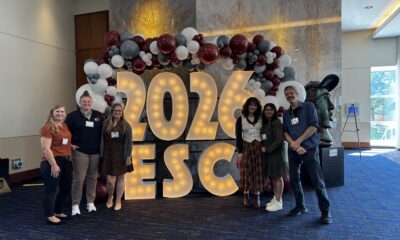

SciCommers at the Museum of Science’s 2026 SciCom Summit in Boston share what drives their work

What does impact mean? SciCommers at the Museum of Science’s 2026 SciCom Summit in Boston share their answers (Part 2)

Photo Essay: A guided tour of DC’s historic National Academy of Sciences Building with Dorothy Goldsmith

Illinois State experiments with workshops to help STEM faculty explore the civic nature of their disciplines

Did You Know: Rice University has launched a new center for science communication called SCOPE?
Illinois State experiments with workshops to help STEM faculty explore the civic nature of their disciplines
What does impact mean? SciCommers at the Museum of Science’s 2026 SciCom Summit in Boston share their answers (Part 2)
SciCommers at the Museum of Science’s 2026 SciCom Summit in Boston share what drives their work
Photo Essay: A guided tour of DC’s historic National Academy of Sciences Building with Dorothy Goldsmith

Did You Know: Boston’s Museum of Science is opening a Public Science Common? Here are some questions to consider

Did You Know: A museum dedicated to the brain is being developed in Southern California?

STEM Unbarred: What the initiative is learning about hands-on science for incarcerated youth

Exploring workforce needs and intergenerational learning in informal STEM education

Making a Mini-Forest: participatory science afforestation across the globe
Contact
Menu
Designed with WordPress