
Civic Science Observer
What a first-time birder learned from the president of the Brookline Bird Club in Massachusetts
Cliff Cook: “One day, a bird just captures your attention in a way that it has never captured your attention before. And that gets you interested in birding. That’s what you call your spark bird.”
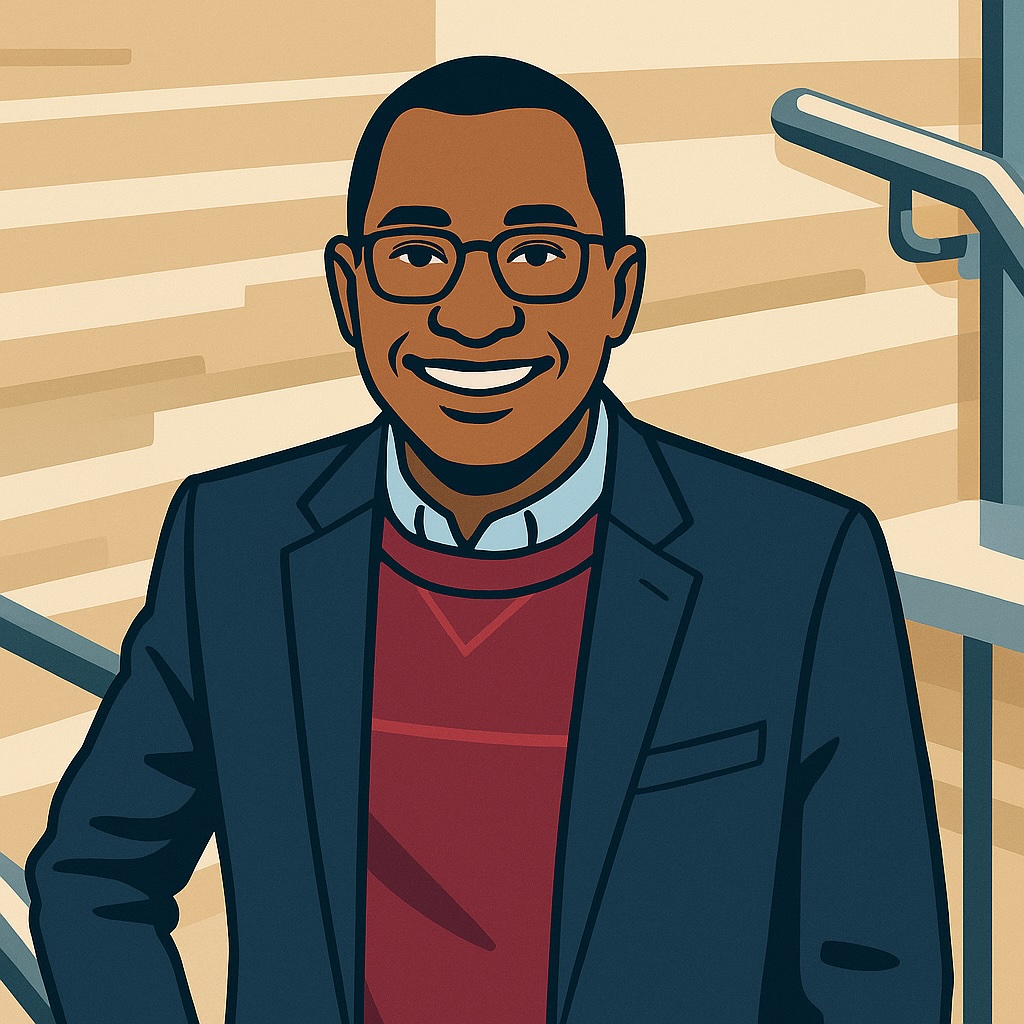
When Shannon Geary, host of the Did You Know special series in the CivicSciTV Newsroom, joined the Brookline Bird Club for a walk around Franklin Park, Geary met the club’s longtime president, Cliff Cook. Cook has been a member for more than thirty years and a birder for most of his life, having started when he was 11.
Cook explained to Geary how most birders begin their journey. “You’re going around through life, you see birds flying around — it’s like, that’s a bird, that’s nice. And then one day, a bird just captures your attention in a way that bird has never captured your attention before. And that gets you interested in birding. That’s what you call your spark bird.”
Alongside other trail leaders, Cook helped the group of birders scan the canopy, pointing out how seasoned birders identify species first by ear, helping Geary realize that bird watching is as much about listening as seeing.
Each bird sighting during the trail was entered into eBird, the Cornell Lab of Ornithology’s global bird-recording database. Cook described how the platform has changed the field. “What it’s done is it’s taken bird records out of people’s desks and closets and back pockets and turned them into usable scientific data,” he said. “Many birders, not all, but many, regularly use eBird to keep a list of the birds they see when they’re out in the field.”
He added that The Brookline Bird Club has kept records since its founding in the 1910s. “We’ve been keeping paper lists back to the beginning of the club. But we’ve been using eBird the last few years, and we’re actually in the process of converting all of our historical records into eBird records as well.”
Cook reflected on the larger meaning of this shift. “It’s the kind of database that people dream of having,” he said. “Ornithologists probably wanted it for decades, but it was unimaginable until the current era and the computational environment we have came along.”
Click on the video above to watch the full 3-minute video report from Geary.
Fanuel Muindi is a former neuroscientist turned civic science ethnographer. He is a professor of the practice in the Department of Communication Studies within the College of Arts, Media, and Design at Northeastern University, where he leads the Civic Science Media Lab. Dr. Muindi received his Bachelor’s degree in Biology and PhD in Organismal Biology from Morehouse College and Stanford University, respectively. He completed his postdoctoral training at MIT.






In Michigan, a citizen science project tracking salamander migration is bringing a community together and building a dataset

“Science is something that we do together.” Benjamin Richards on how OceanEyes collaborates with citizen scientists to monitor deepwater fish in Hawai’i

Dear Colleagues: Participate in a survey on barriers researchers face when communicating with non-expert audiences

Research!America selects 17 grantees from 132 applicants for the 2026 Civic Engagement Microgrant cohort

Melanie Brown: “If you listen, people want to share things that are important to them.”
Dear Colleagues: Participate in a survey on barriers researchers face when communicating with non-expert audiences

Scott Loarie says conservation science isn’t moving fast enough. He describes how iNaturalist is helping

Photo Essay: 2026 Stand Up for Science New York City

UNESCO-backed platform seeks to encourage information sharing among freshwater management citizen science projects

MA3 Challenge awards grants to six universities to modernize promotion and tenure processes: Here’s the question of the day.
“Science is something that we do together.” Benjamin Richards on how OceanEyes collaborates with citizen scientists to monitor deepwater fish in Hawai’i
Melanie Brown: “If you listen, people want to share things that are important to them.”

Abby C. King on leveraging local wisdom and science to create a thriving environment: “Our communities are the most valuable renewable resources for a healthy planet.”

Milky Way Project co-creator Grace Wolf-Chase says public engagement is ‘every bit as important as excellent scientific research’

Seeing is believing: Inside the BioBus revenue engine with Ben Dubin-Thaler
Contact
Menu
Designed with WordPress