
Civic Science Observer
Guess Who’s Coming to Dinner: Reflections on the Evolution of the Civic Science Exchange Café
Ultimately, the Exchange Café is simply one way to add to the diversity of spaces for connection among changemakers in civic science. There is no “special sauce” in hosting them.
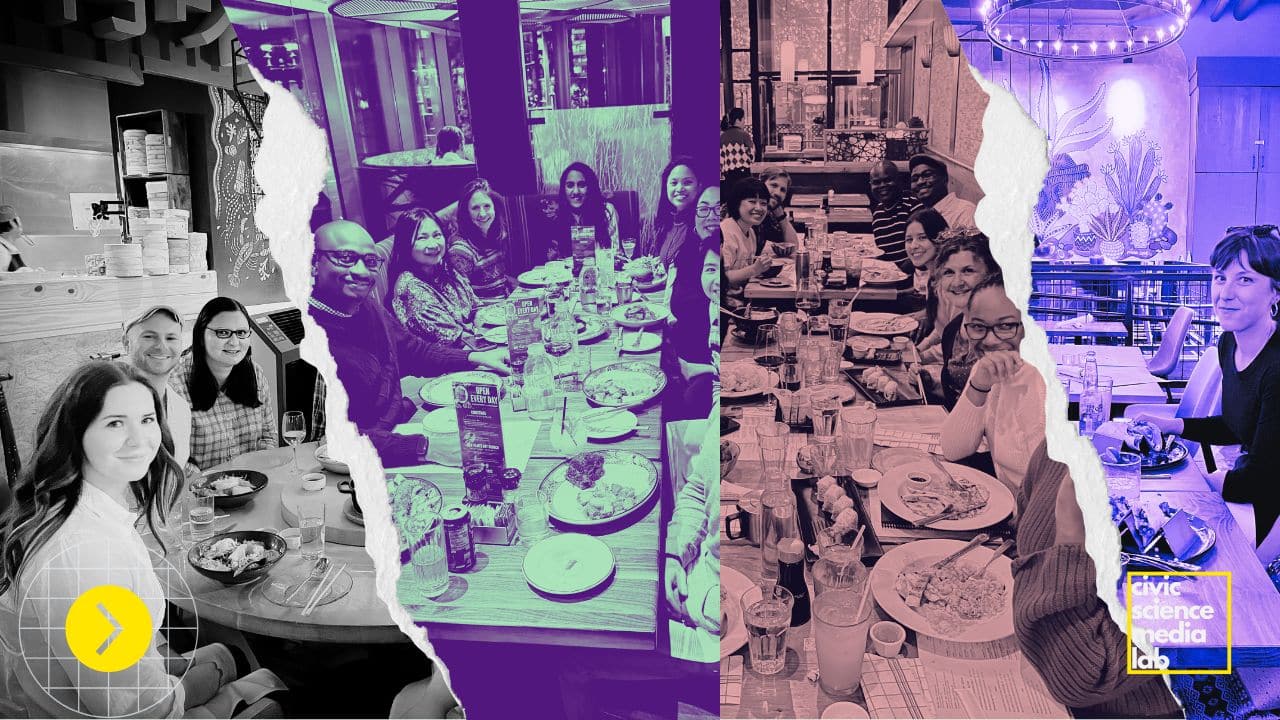
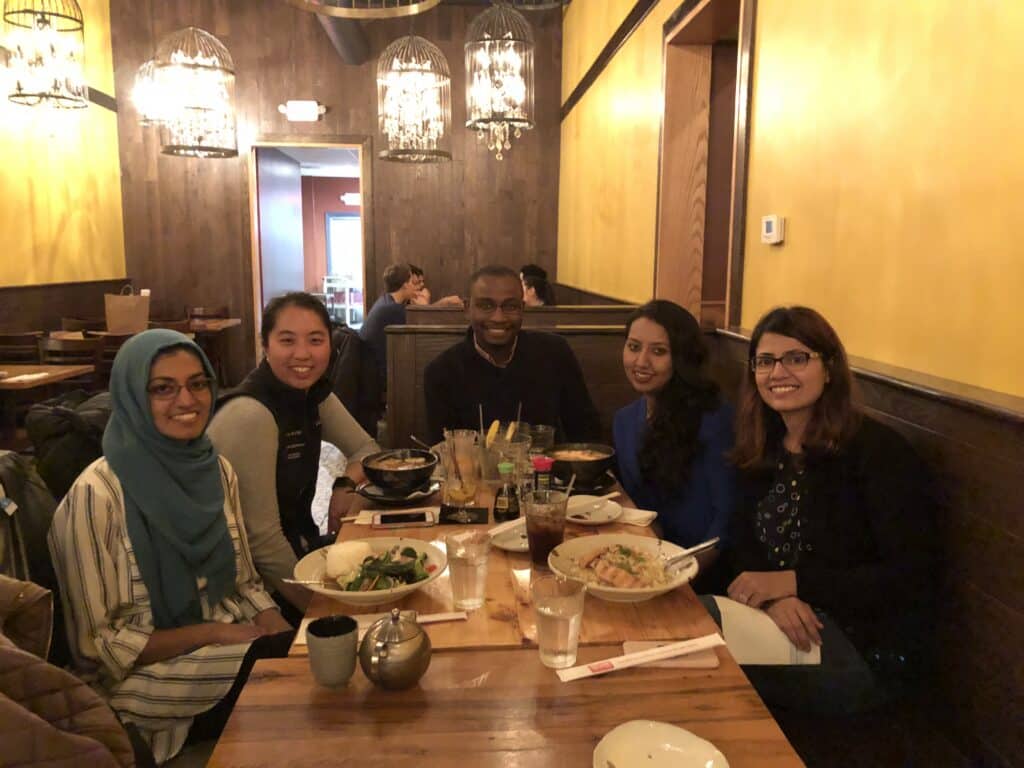
The idea for the Exchange began in 2019 when residents of our collective (mostly science communication entrepreneurs) wanted a place to meet in person. This was in the early days of the ethnojournalism we were conducting with scholars and practitioners in civic science and bringing those insights back to our residents. Although useful, residents also wanted a space to meet face-to-face beyond virtual environments. The challenge was that residents were scattered across different cities, but a cluster in Boston made it possible to gather at The Mad Monkfish restaurant in Cambridge, Massachusetts.
There was no agenda – just changemakers meeting to learn about each other’s work over a meal.
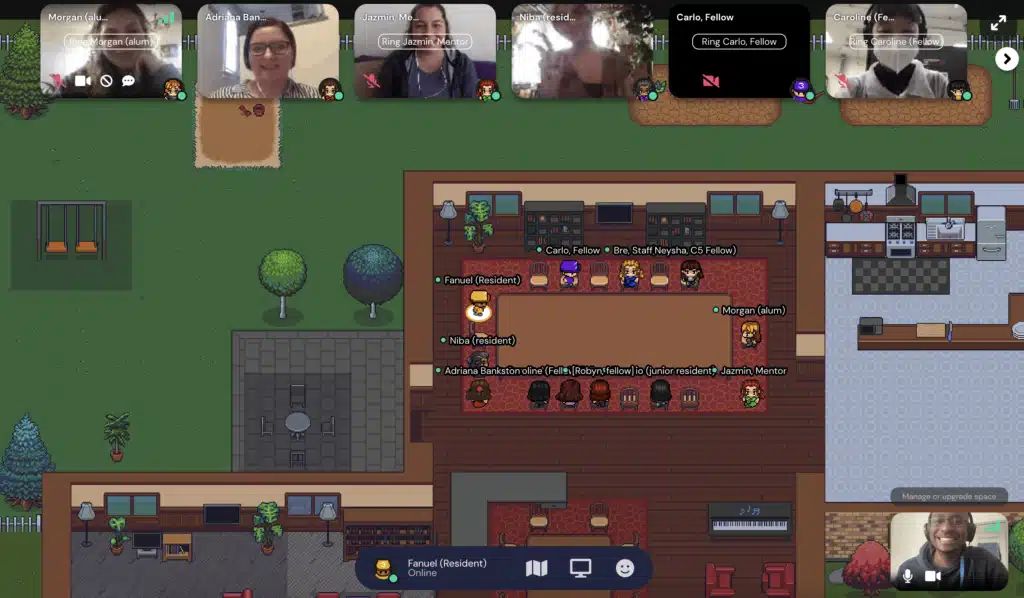
The pandemic interrupted us from organizing another in-person dinner gathering, so we shifted back to being online. Zoom felt flat, but GatherTown proved more suitable as it allowed residents to move around in a digital space we had created and talk more naturally. We provided more structure to the sessions (i.e., rotating to another conversation after a set amount of time) and called the gathering CollabXchange. The responses were mixed about the rotations, and it felt intrusive on my part to pause conversations and ask attendees to switch to another conversation. The online gatherings on GatherTown worked for some time, but interest gradually faded.
It was no substitute for in-person conversations.
When it became possible to meet in person again in 2022, we returned to The Mad Monkfish in Cambridge. The group was larger this time, and as photos of other Exchanges I would host in 2023 and 2024 started to circulate, the natural question was how to make the in-person gatherings possible in other cities and open to those who were not residents in our collective. I looked at our database of residents and saw a cluster in Washington DC, so I started hosting them there too whenever I found myself in the district. Of course, the prospect of traveling and hosting gatherings across the US and beyond was daunting.
Where would I find the time and, of course, the funding?
The idea of supporting residents in hosting gatherings themselves where they live was something I thought a lot about. I figured that could be more sustainable than me hosting each one, and a way to open the gatherings to others. The challenge would still be funding, of course, but the people power problem would have been partially addressed.
Some time would pass before I gathered enough funding to run a small experiment, in which I challenged residents in our collective to pitch ideas for hosting scholar-practitioner gatherings in their own local cities.
I didn’t know whether it would work, but it did.
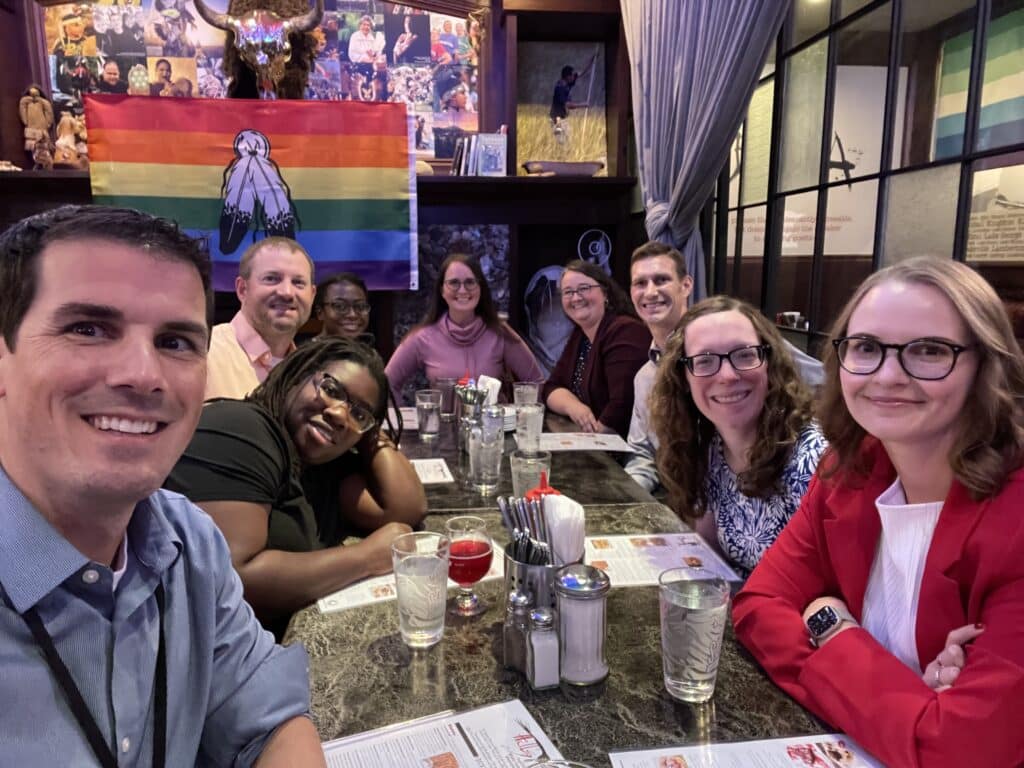
In Minneapolis, Dr. Pete Vollbrecht, an Associate Professor in the Department of Biomedical Sciences at the Western Michigan University Homer Stryker M.D. School of Medicine who also runs the Brain Explorers Program, convened a group involved in community outreach, research, and engagement during the IAMSE conference he was attending.
And in Baltimore, Dr. Rose Basom, the David and Jane Cohn Scientist at the Science Museum of Virginia and Founder of STEMsapien Games, gathered biological anthropologists at the AABA conference to discuss science communication, informal learning, and ways to engage the public. Funding challenges prevented us from continuing the experiment, but the early insights were very encouraging.
What I have observed is that a shared meal slows things down. It creates natural pauses and space to listen, notice, help, and begin visualizing potential connections among the ideas being shared. There is a particular kind of joy that is hard to describe when you watch connections form in real time over a meal, when someone asks for advice, and another person leans in to offer it as they figure out what to try from the menu. Or other times when practitioners meet for the first time and laugh at the absurdity that they had not met each other until that point. You just never knew who would show up to the dinner in the end.
With that said, the operational model for what I am now calling the Civic Science Exchange Café is very much a work in progress. There are more questions than answers. At the top of the list is likely what funders will want to know: how impact is defined and tracked. At the output level, the answer could focus on the number of gatherings hosted, the number of returning vs. new attendees, and perhaps how many new connections attendees intend to follow up with after each meeting. Long-term outcomes are much harder to track, but one dimension could involve documenting project collaborations resulting directly from relationships formed at one of the Exchange Cafés.
The reality is that keeping these Exchanges going requires time, space, and financial support. Funding has been a persistent barrier due to the model we have chosen to deploy. Every gathering to date (around 1-2 per year) has been supported internally, and asking participants to cover their own costs for meals is a solution to sustainably host more gatherings in a given year.
The addition of the word Café to the Exchange is intentional, as it preserves the informal spirit of the gatherings, which I believe is critical, and allows for hosting in more diverse spaces beyond restaurants, such as bookstores. Importantly, it keeps the food element we know matters, while making the model more affordable through options beyond full dinner meals.
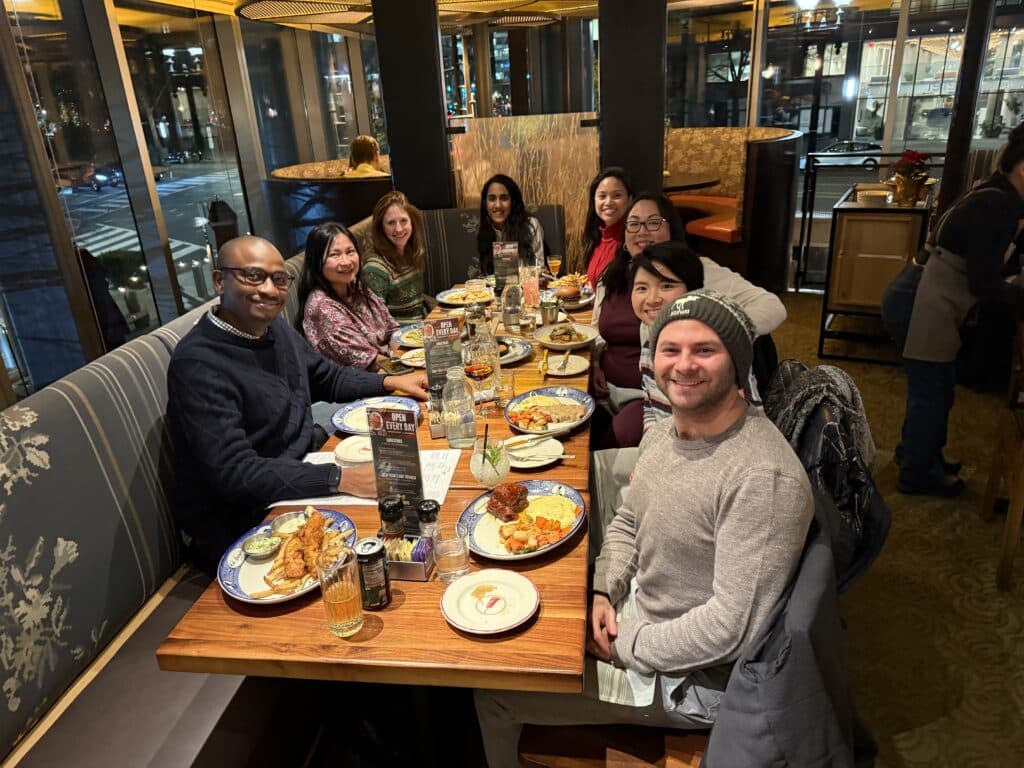
There is also a design question that remains unresolved: how structured should these gatherings be? Free-flowing conversations, which I have leaned on, invite openness but can lack topical focus which some participants may want in deciding whether to attend. A fusion of sorts is likely the way to go, with occasional presentations followed by open discussions among attendees.
Ultimately, the Exchange Café is simply one way to add to the diversity of spaces for connection among changemakers in civic science. There is no “special sauce” in hosting them. We are eager to collaborate with others interested in building spaces for connection.
The experiment continues.

Fanuel Muindi is a former neuroscientist turned civic science ethnographer. He is a professor of the practice in the Department of Communication Studies within the College of Arts, Media, and Design at Northeastern University, where he leads the Civic Science Media Lab. Dr. Muindi received his Bachelor’s degree in Biology and PhD in Organismal Biology from Morehouse College and Stanford University, respectively. He completed his postdoctoral training at MIT.





In Michigan, a citizen science project tracking salamander migration is bringing a community together and building a dataset

“Science is something that we do together.” Benjamin Richards on how OceanEyes collaborates with citizen scientists to monitor deepwater fish in Hawai’i

Dear Colleagues: Participate in a survey on barriers researchers face when communicating with non-expert audiences

Research!America selects 17 grantees from 132 applicants for the 2026 Civic Engagement Microgrant cohort

Melanie Brown: “If you listen, people want to share things that are important to them.”
Dear Colleagues: Participate in a survey on barriers researchers face when communicating with non-expert audiences

Scott Loarie says conservation science isn’t moving fast enough. He describes how iNaturalist is helping

Photo Essay: 2026 Stand Up for Science New York City

MA3 Challenge awards grants to six universities to modernize promotion and tenure processes: Here’s the question of the day.
Research!America selects 17 grantees from 132 applicants for the 2026 Civic Engagement Microgrant cohort
“Science is something that we do together.” Benjamin Richards on how OceanEyes collaborates with citizen scientists to monitor deepwater fish in Hawai’i
Melanie Brown: “If you listen, people want to share things that are important to them.”

Abby C. King on leveraging local wisdom and science to create a thriving environment: “Our communities are the most valuable renewable resources for a healthy planet.”

Milky Way Project co-creator Grace Wolf-Chase says public engagement is ‘every bit as important as excellent scientific research’

Seeing is believing: Inside the BioBus revenue engine with Ben Dubin-Thaler
Contact
Menu
Designed with WordPress