
CSML Audio Studio
Abby C. King on leveraging local wisdom and science to create a thriving environment: “Our communities are the most valuable renewable resources for a healthy planet.”
“We were able to get a tiny seed grant, about $3,000, to run the first Our Voice project.” – Dr. Abby C. King
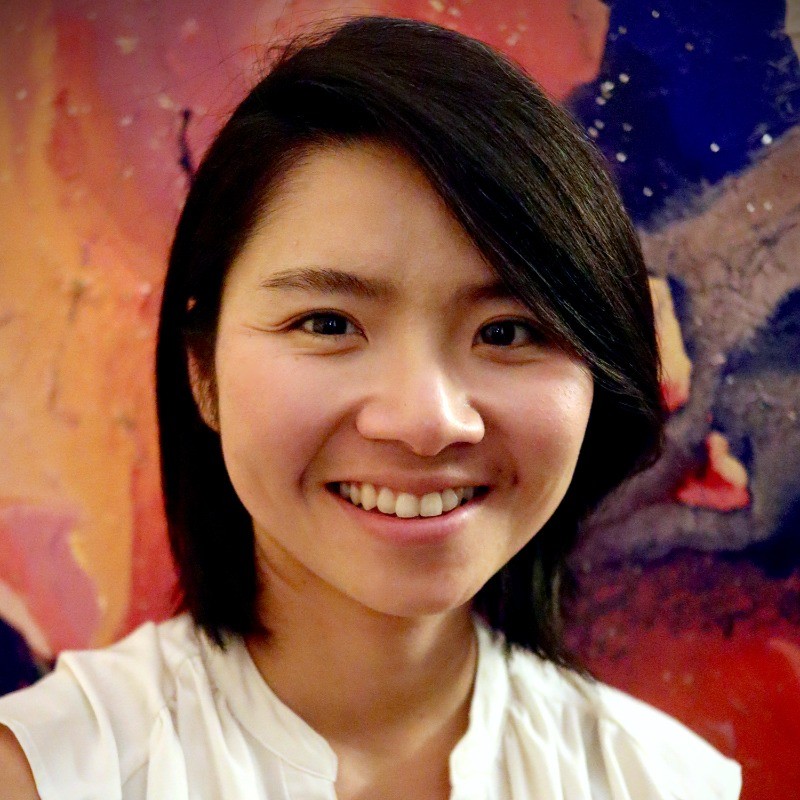
In this episode of Science Engaged, I speak with Dr. Abby C. King, professor of epidemiology and population health and of medicine at Stanford University, where she leads an interdisciplinary research team that develops behavioral and technology-based programs to promote healthier lifestyles. Dr. King is also the founder and faculty director of the Our Voice Global Citizen Science Research Initiative and Network.
Dr. King shares the story and some of the lessons they are learning from the Our Voice project which empowers residents to document and address health and environmental challenges in their communities. The project began in 2010 with a $3,000 seed grant and has since supported more than 250 community projects across more than 28 countries, enabling residents to collect local data and work with decision-makers to improve their environments.
She also describes the participatory process that guides the Our Voice method. Community members use a mobile discovery tool to document features of their local environments through photos, narratives, and simple ratings. Residents then come together to review the collected data, identify priorities, and engage with local decision-makers to develop practical solutions that improve health and environmental conditions in their communities.
Some Insights
Empower residents to collect and present their own data. Community members using photos and narratives to document their environments can produce evidence that resonates strongly with local decision-makers.
Start with achievable, locally defined problems. Our Voice projects focus on issues that residents identify themselves, allowing communities to prioritize practical changes such as improving pedestrian safety, reducing standing water, or increasing access to healthy food.
Build partnerships with local organizations and decision-makers. Successful projects rely on committed local coordinators and collaboration between residents, researchers, and policymakers to translate community-generated data into real-world improvements.
To find out more about the Our Voice method and philosophy, check out this publication.
This episode is made possible by support from Schmidt Sciences and the UC Santa Cruz Science Communication Catalyst Grant. Special thanks to Fanuel Muindi for co-producing this audio program.
Here is our conversation:
Kristel Tjandra Welcome to Science Engaged, where we explore why and how scientists partner with diverse communities.
Abby King The more we can engage the public in science, the better it is for science and for the public. Science builds on itself, which means that things that sometimes we thought were correct based on those data. Turns out, a few years later, we get additional data and they’re not so it’s that kind of process that I think that the public can learn firsthand how it works.
Kristel Tjandra I’m your host, Kristel Tjandra, and today, I’m joined by our guest, Dr. Abby King from Stanford University. Dr. King’s work centers on creating testing and putting into practice public health programs that help prevent chronic diseases in the US and around the world. She has also contributed her expertise to several government task forces, both here and abroad, she has received many awards for her work, including one from the Association of American Medical Colleges for outstanding research aimed at promoting health for all. Dr. King, welcome to the show.
Abby King Kristel, thanks so much. I really appreciate having the opportunity to talk to you today about Our Voice, which is one of my passion projects.
Kristel Tjandra Yeah, I’m excited to hear more. Can you share with me your background and what sparked the beginning of Our Voice?
Abby King Yeah, so I’m a psychologist by training, and so I have always been interested in why people do the things they do, and how can we help people to live healthier, more vital, and more fun lives. So I spent a lot of my early research focusing on individual-level strategies, skills, and approaches to help individuals to live healthier lives. But I’ve noticed throughout the years, and many of my colleagues have too, is that you can have the best of motivations and intentions, but it’s really hard to live a healthy life, and oftentimes it’s because our environments actually get in the way. So it’s not just giving people skills that they can take with them, but if they live in environments that are difficult, that are challenging, it’s going to be very difficult for them. Our Voice is really a focus on the context in which we, people, live, not just, gee, how do I do more physical activity or which food should I eat, but also what gets in the way of making it really hard for me to live the kind of healthy and active life that I want
Kristel Tjandra Tell me about your very first project. What was it like?
Abby King Yeah, so back around 2010, I had three incredible postdoctoral fellows. So so much of our work is team science, and we involve students from high school up all the way through postdoctoral fellowship. And I had three incredible postdocs, Matt Buman, Sandy Winter, and Eric Hekler, and the four of us were trying to figure out how best to get residents involved, to really better understand the neighborhoods that they were living in. And so we were able to get a tiny seed grant. I think it was $3,000 to run a community project that became the first project of Our Voice. And we were very interested in older adults and how they were living, and how difficult it often was for them to live healthy lives. And in East Palo Alto, they had a wonderful senior housing site, and we connected with the community people there. And Our Voice is always a partnership. It’s a partnership between the research group and the community organizations that can help, and then the residents themselves. So that wonderful senior housing site, they were very enthusiastic about connecting us with their residents. And the residents really wanted to be able to get more physical activity into their lives. In other words, being able to walk to things which at that point where it was very difficult and to be able to eat in healthier ways. And so our first, Our Voice project came about there, and we had the first edition of our discovery tool app. It was very simple, and these seniors had never touched technology in their lives. So this was back in 2010, and so we introduced them, and the goal was to make an app that anybody could use, that kids ages seven to people 100 years old could use. And so that, I think is a very important key ingredient of Our Voice is make sure that you collect data that is easy for people to collect and meaningful. So the discovery tool isn’t just a survey or something. It allows people to take photos and to narrate what’s working well in their environments and what’s not working so well in their environment, so it’s very visual, and it’s very easy to use. And so we had these wonderful seniors who use the discovery tool, then came together to talk and share their data, and then we’re able to come up with some great ideas, we then taught them how to talk about those ideas to the local stakeholders and decision makers. In this case, it was the planning committee and the city council of East Palo Alto, and there’s just something special about residents presenting their data. It’s when scientists present our data to community organizations. People are usually very polite. They clap at the end, but it makes absolutely no difference in people’s lives, because you can’t just talk to people’s minds, you have to grab their hearts. And nobody can do that better than residents who are showing photos of the place that they got hit by a car because there was no safe crossing at that intersection. And so these residents, were empowered. So Our Voice is an empowerment model. They were empowered to work with the decision makers who were equal, equally empowered to work together to make changes in the pedestrian infrastructure. They helped the seniors to start a community garden so that they could grow the kinds of vegetables that they had grown up with that they wanted to eat, and to do a bunch of other things there in the community and to make it safe for everybody. So it wasn’t just in the neighborhood around the senior center, but there were things that were done across the entire community in terms of fixing sidewalks and other sorts of things. So we were so excited and we felt empowered. So that’s the other thing that happens, residents and researchers and community organizations all feel this empowerment.
Kristel Tjandra Yeah, I’m curious, what do you think are some of the challenges of starting something like Our Voice?
Abby King Well, I think it has to start with a coordinator or a community organization that is committed to doing it, so you can have communities around the world who would love to use Our Voice, but you really need boots on the ground. It could be one person or a community organization to kick it off, because there has to be some energy, there has to be local knowledge, and there has to be commitment to wanting to bring in residents and teach them how to do this. And again, it’s not very time-consuming, but still, it requires that kind of effort. So we make sure, before we start any Our Voice project, that there is a committed individual coordinator, community organization or research organization, or sometimes a governmental organization that is going to work with us across the Our Voice Project, period, and often these projects have very quick turnaround, so we’re talking a few months, and you can do an entire Our Voice project and get some nice change occurring at the end of that project. So I think that that’s a key ingredient, that’s part of the secret sauce of Our Voice where we really need that kind of commitment and energy in the community. As researchers, we’re not we don’t have the ability to be able to go into every community and make these things happen. So that has to come from the community. And. The thing I love about Our Voice that we’ve learned about a lot over the past 15 or so years is how flexible it is. We have the basic four steps involved, but there is so much adaptability and flexibility, and every community, every problem is different.

A picture that an Our Voice app user took and posted on the platform, explaining the issue in their local community (courtesy: Abby King / Our Voice Initiative)
Kristel Tjandra Do you mind explaining what those four steps are?
Abby King Yeah, so once the community organization is committed and they have found their volunteers who are going to be citizen scientists, it starts with the Discover step, and this is where people learn in a few minutes how to use our discovery tool, mobile app, which is now, as of today, Kristel, in 26 languages. So we have added a number of languages from different continents. So we’re very excited about that, and there are ways to continue to add languages. So the issue is decided upon by the community and the residents, so they know what question they’re thinking about, either safety of their neighborhood, or can they get to their food outlets, you know, easily, or transportation. It can be so many different things, and so they’re told, or they decide together with the community organization how they’re going to collect the data, either in a group or individually. They collect the data they usually involve 15 minute walks in an area or around their neighborhood or at a park or in a shopping area, wherever the issue may be right, and they’re taught how to collect both positives and negatives and how to rate them. Then in the discussion step, which is the second step, the residents come together with the community organization that’s partnering with them, and one of my staff are usually involved as well. Usually it’s done remotely. These days to discuss their data. They get to see all the data that were collected, the photos, the written narratives, the ratings, and as a group, they decide what’s working and what’s not, and what’s appropriate and meaningful for them to pursue with the idea of feasibility always in line building a bridge across the 101, For instance, or, you know, a huge freeway. That’s not going to probably happen, but getting a crosswalk put in, or a crossing guard, or something else could be very helpful. And as they come up with their priorities, they then brainstorm with us and with the community organization, what decision makers could really activate these solutions? So that’s the next step, partnering to activate the decision makers, and this usually means a meeting where the residents learn how to present their data in a meaningful way, usually with a PowerPoint presentation about this is what we discovered. These things work great, which is what decision makers love to hear, because usually they only hear complaints. So to start with, the positives, is a very important and positive thing. Then they talk about what made it a little harder for them to be able to walk or shop or whatever the issue is, and that the decision makers who are picked to be able to think about these problems will come in and think about what can be done next, and then these action steps are parlayed into change. So that’s the final step, and that doesn’t mean that resident’s job is done, that they’re they’re participating with the decision makers to figure out how to make these changes and get these changes in place. Yeah.
Kristel Tjandra Can you give me an example of a community project that follows that four steps?
Abby King Yeah, one of our favorite recent projects is by a very dear colleague of ours who was a postdoctoral fellow with me, Dr. Eduardo De La Vega in the Caribbean, part of Colombia, so Cartagena and Baru and other parts along that Caribbean coast, a very impoverished area, informal settlements there, so not a lot of resources. Usually, a. An environment that’s very hostile and difficult in terms of health. So Eduardo, Dr. De La Vega has run incredible groundbreaking Our Voice projects there with the school children who live there, and so they are the citizen scientists. And one thing that that everyone is concerned about along the Caribbean coast is mosquito borne illness, which is very dangerous, things like Dengue fever, which now are creeping up into the US because of some climate change issues, so that that’s very scary, these mosquito borne illnesses. We call the mosquito the most dangerous animal on the planet, and it is spreading to places like the US that really have never really had much of a problem with that. And one of the things that really can prevent the spread of mosquito borne illness is to take care of standing water and get rid of it, cover it, do whatever you can to make sure that it’s not finding places to lay eggs. And of course, when you’re in a tropical environment like the Caribbean, which rains a lot, it’s not easy to do. And so he’s run a series. He and his colleagues there have run a series of incredible Our Voice projects with the school there in that section of Cartagena, and these adolescents have done the most incredible things in terms of finding ways to decrease the amount of standing water that is there and as an offshoot, what we call a ripple effect. Once you empower students in particular, and youth and old people in particular, those are two groups. Once you empower them and others as well, they oftentimes engage in ripple effects. So once they have success covering the the places where water is standing and making people aware of it, then they take that empowerment and they add it to other things. So in addition to clearing up the streets, and they actually were able to get these streets paved now so that not only can kids get to school and not have to wade through mud and muck and water up near their knees and everything, but now they can ride their bikes on this on the street, and they cleaned up the park. So, you know, in dealing this, they were looking at the park across the street from the school and thinking, we can’t even use that park because of the mud and the water and stuff. But not just that. But there wasn’t much to do there. There wasn’t any exercise equipment. The students were able, through working with the decision makers in that community to get exercise equipment into that park, and they’re continuing to do things. They’re working on the food items in the school, and the whole community is involved. And I’ll send you some photos of that too. You know, there were 20 decision makers in the room working on these issues, and it’s not a one and done. They’re going to keep on working. And one of my my lab director, Ines campero and I had the honor of visiting that school a few months ago, and it’s just the most amazing thing to see how these citizen scientists, these teenagers, what incredible work they’ve done, and it’s inspired The whole school, the teachers and the principal and the local director and you know it, that’s the thing I love the most about Our Voice. It empowers everybody to keep it going. Let’s, let’s add these skills to new issues and see what we can do. So I would love, I mean, that’s my favorite project, hands down. There was a similar project in the Isle of Granada, the island nation of Granada, also in the Caribbean, that one of our incredible faculty here, Desiree LaBeaud, ran and they. They had something like 52 schools across that entire island randomized to getting a very either nothing or a very simple message or a simple message, plus Our Voice. And so they actually have data showing that Our Voice increases agency. It increases knowledge over and above what a more traditional educational program can be. So, you know, we love working with everybody, but it’s wonderful in particular because these students, they’re the leaders of tomorrow, and the more we can get them involved, the more things can really improve, or, you know, continue to grow in a positive way.
Kristel Tjandra Yeah, what a what a great story you mentioned about the Our Voice app, which I believe is where all the activities happen, where the interaction between the scientists and the community members take place for those who aren’t familiar with it. Can you describe to me what it’s like, and I guess also, what makes the app so effective?


Before-and-after images of streets in Columbia that were part of the Our Voice project. (courtesy of Eduardo De La Vega / Our Voice)
Abby King Yeah, so when you get onto the app, and you can only access the app as part of an Our Voice project, because you need a project code. So that’s all been worked out with a community organization or research group that are going to be that key person or group to run the project. So they’re then given a code that all the residents that are going to be using it for that project can put into the app, and then it’s got a page for simple page of safety things, because a lot of the app is taking photos, and you don’t want people to be walking and taking photos and and all of those kinds of things. But and the community organization works out with the researchers and the residents, sometimes like, what is the key question we should be asking? So there’s a question a prompt. We call it, what makes it harder or easier to control your stress, buy food, keep your kids safe, extend your culture in positive ways. All of these things have been actually done using the Our Voice app, so it’s very flexible that way, and so people walk around their neighborhood or their park or their beach, or whatever the area is that the issue is happening at. And when they see something that they think is important or useful, they take a photo and then hit a button to just narrate why I took this photo. And then the third step is just, do I rate it positive, negative, or both. You know, red, negative, green, positive, little smiley faces, emojis to rate it, and then it’s put together on the platform. And so that’s one data point. So one data point is a photo, a narrative, a map to shows where that photo was taken, and this smiley face, frowny face rating of up or down. And then we can integrate on the platform all of the data across one walk, but also across all the walks that are being done by people in that project, and we can use that to identify hot spots, you know, areas in a community, or in a city or other neighborhood that really have a lot of red, you know, they really need a lot of attention, where, over here, it’s more green. And so what Eduardo has done, he’s done before/after walks, which are the best the students walk before Our Voice happens, and then several months later, when things have been changing, they do the same walk. And he can show maps where they’re mostly red in the before and more green in the after, and then. So it’s data that are so easy to show to council members, to organizations that you want to get involved. Everyone understands a photo and a narrative. They understand that kind of data, and we think that that’s a very important instrumental reason why Our Voice is being used so many places by so many different people. There’s nothing that speaks more strongly to that than this kind of visual narrative. And yeah, and you want. Touch people’s hearts, not just their minds, with data. You need to do both with data if you really wanted to work and do something in the world. And there’s nothing like reading a personal narrative. And I think what we have found, the more we can engage the public in science, the better it is for science and for the public, because we know, over the years, now there’s this growing mistrust in science, because there’s so much data out there. It seems to change every day. People maybe don’t really understand how science works. There’s not like oftentimes, one discovery sometimes, but not often, in public health and health that there’s one discovery that changes the world. Science builds on itself, which means that things that sometimes we thought were correct based on those data. Turns out, a few years later, we get additional data and they’re not so it’s that kind of process that I think, that the public can learn firsthand how it works.
Kristel Tjandra Yeah, now I want to talk about funding, obviously, to sustain something like this for over a decade, you need money. You mentioned how Our voice had a humble beginning. You know, back in East Palo Alto, how have you been able to secure the funding needed for this initiative?

Youth citizen scientists in Columbia identified barriers within their environment & envisioned innovative solutions through partnership with Our Voice (courtesy: Eduardo De La Vega / Our Voice)
Abby King So as a researcher, we have to tap into a variety of different funding schemes and places. So we write grants consistently, to the federal government, to other people’s federal governments, to international organizations, to foundations. We’re constantly writing grants. And so that’s one type of funding stream that’s important. A second one that’s now grown to be equally important is really donors looking for ways that people really care about this issue. And here we have a platform that needs funding. That’s not something that a grant is going to fund. Grants don’t fund that kind of infrastructure or tech. So that’s something that we’re actively looking for. We also, as I mentioned, the groups that are utilizing Our Voice oftentimes will pay to help to cover it. Never defrays everything for Our Voice, but it helps to cover some of the staff costs and things like that for Our Voice. And we do that on a sliding scale. So it really depends on what people can afford, and then we will help them think about a project that fits into that. So again, our dream is an international, global movement of Our Voice, residents and organizations and researchers, where we’d have this major platform that people could go to, they could more easily do Our Voice projects. They could share their data, if they chose. The data are all anonymized, so there are no names. We tell people, don’t take faces. You know, the data are really protected that way to be able to share their data with people all over the world and to build this international movement of residents changing the world, both a healthier and a more sustainable world. I like to think of our community residents as the most important, valuable renewable resource on the planet for healthy humans and healthy planets than almost any other resource we have that’s really underutilized. Yeah.
Kristel Tjandra Now, if you can secure more funding in the coming years, what are some of the things that you’d like to do with it?
Abby King Yeah, so we work on a patchwork quilt sort of funding. We’re a not for profit group within Stanford Medical School, and so the goal is to try to get this thing to as many people as possible. The our big wish list item these days is we. Have this incredible platform, tech platform which houses the discovery tool, app, the data, the being able to integrate data with other things. It offers a platform where users, the community, people, the organizations, can get onto that dashboard and manage their own project. And it’s it’s a first generation platform in a v2 world, where as because it’s using mobile apps and things. Every time Google, Apple, any other tech giant, changes anything, upgrades something, the app needs to be upgraded. The whole system needs to be able to reach it. So the big item on our wish list is to be able to upgrade our entire platform to meet the needs of the next 20 to 50 years, and get it out of this version one place that is just not going to work. It barely works now. So we really need that, and we have beautiful architectural plans. So think of it as a house you’re building. We’ve got beautifully approved architectural plans to upgrade and enhance this platform for the future. And so now we just need the funds to build it. And so we’re actively seeking anybody who thinks that they would be interested in talking with us about that.
Kristel Tjandra Yeah, I hope you and your team will get to make that a reality. Now, before we close, how can listeners check out the work you and your team are doing and maybe even support it?
Abby King Well, we would love it if everybody listening to this podcast got onto our website to learn a little bit more about us and what Our Voice is all about and the things they have done that we have done, if they’re at all interested in learning more, we have a how to contact us and if they want to get involved, either in terms of running a project or donating to a project, to keep Our Voice going and growing and Being able to make a difference in the world. There’s there’s a place there too, that they can connect with us, and we would love that. Like most ventures like this, we’re at a crossroads right now because of the funding, and the world is in a very tumultuous place these days, and science has been hit hard with that, and so we are always looking for partners who can help us not only just do the science together, but also help to support it so it stays vibrant and growing into the Future.
Kristel Tjandra Well, Dr. King, thank you so much for sharing your insights and the wonderful journey of Our Voice initiative.
Abby King Well, thank you so much, Kristel for inviting me. It’s really fun talking with you about it, and your questions are insightful, and I’ve enjoyed it
Kristel Tjandra For our listeners who are interested in checking out the website. It’s ourvoice.stanford.edu.
CREDIT
This episode is transcribed using Otter.ai
The podcast features soundtrack by Lukas Got Lucky / Success Story / Courtesy of www.epidemicsound.com



Melanie Brown: “If you listen, people want to share things that are important to them.”

MA3 Challenge awards grants to six universities to modernize promotion and tenure processes: Here’s the question of the day.

Scott Loarie says conservation science isn’t moving fast enough. He describes how iNaturalist is helping

Photo Essay: 2026 Stand Up for Science New York City

Meagan Naraine reflects on the emergence of the nonprofit Culturally Relevant Science and how it aims to thrive.

“What are you going to do on Monday?” SNAP challenges leaders at the 2026 AAAS conference

Abby C. King on leveraging local wisdom and science to create a thriving environment: “Our communities are the most valuable renewable resources for a healthy planet.”
Photo Essay: 2026 Stand Up for Science New York City

UNESCO-backed platform seeks to encourage information sharing among freshwater management citizen science projects
Scott Loarie says conservation science isn’t moving fast enough. He describes how iNaturalist is helping
Melanie Brown: “If you listen, people want to share things that are important to them.”
Abby C. King on leveraging local wisdom and science to create a thriving environment: “Our communities are the most valuable renewable resources for a healthy planet.”

Milky Way Project co-creator Grace Wolf-Chase says public engagement is ‘every bit as important as excellent scientific research’

Seeing is believing: Inside the BioBus revenue engine with Ben Dubin-Thaler

Haley Davis shares how SeaKeepers is engaging the yachting community to support marine citizen science projects
Contact
Menu
Designed with WordPress