
Changemakers Program
Melanie Brown: “If you listen, people want to share things that are important to them.”
Melanie Brown reflects on her journey into science journalism and the practice of finding stories through listening, working in communities, and reporting on science in ways that connect to people’s everyday lives.
In this 22nd episode of Changemakers, host D’Maia Curry talks with Melanie Brown, an award-winning radio producer, journalist, and presenter at BBC Studios, about her path into science journalism and how she approaches storytelling at the intersection of science, the environment, and society. Brown reflects on her early work in international development and the challenge of connecting audiences to lives and issues that feel distant, noting that “storytelling was key” to building empathy and understanding across contexts.
The conversation centers on how she has translated that insight into her work today. Brown emphasizes starting with stories close to home, explaining that “what’s very local can touch on something that’s much more regional, national or global,” and highlights the importance of being “truly multimedia” as a way to enter and navigate the field. She also describes civic science storytelling as “quite an intangible thing,” requiring a balance between narrative craft, scientific accuracy, and thoughtful representation of voices that are often overlooked.
Drawing on her time as a Civic Science Fellow in Oregon, Brown discusses how storytelling can function as a bridge across stakeholders with competing priorities. She points to approaches that begin with shared ground, asking, “why don’t we start with the things we can agree on… and then you can start having those harder discussions,” framing storytelling as part of a broader process of engagement rather than just communication.
At the same time, she underscores the responsibility that comes with science journalism, especially in emerging or uncertain areas, noting that “there’s quite a burden… to really be very accurate” given the real-world consequences of misrepresentation. She closes with practical advice for those entering the field: “don’t do it all from a room,” but instead engage directly with communities, because “people like to tell their story” when given the opportunity.
The transcript below has been edited for length and clarity.
D’Maia Curry: Melanie Brown is a multimedia journalist and audio producer at BBC Studios, telling stories at the intersection of science, the environment, and society. Melanie was previously a Fulbright scholar and a Rita Allen Civic Science Fellow in Oregon, where she explored how storytelling can help connect science and society. Melanie began her career in international relations, working with communities in rural Afghanistan.
Melanie Brown: So I studied international relations at Sussex University in the UK, and I actually had a sort of career working for an NGO focused on fundraising and communications. And then I later retrained as a multimedia journalist. I did a master’s and a sort of vocational training qualification about 13 years ago, I guess, and then I got on a trainee scheme. I did a bit of freelance work, and then I got on a trainee scheme with the BBC, where I’ve been working in radio ever since.
D’Maia Curry: Through this work, she developed a strong interest in people-centered storytelling and in storytelling as a way to connect communities.
Melanie Brown: I worked for an Afghan and an Indian NGO, and one of the real challenges there was how to connect people in the UK with stories and lives and issues that are quite different from what most people would experience here, in some sense. And I found that really storytelling was key to that, and I really enjoyed that process. I love meeting people, hearing their stories, thinking about ways of communicating that, and building empathy and understanding, I guess, and finding common ground that people could relate to. And I thought, oh, I love doing this. Why don’t I make this the majority of my job? So then I thought, right, how does one do that? I’d done a little bit of radio as a sort of hobby along the side, and I love photography, so I’d done a bit of that. So I had a bit of experience, but I really wanted to up my skills, professionalize my skills, and also give myself the confidence to feel like I could call myself a journalist, in a way. So I thought, right, if I study, that’s going to help that process. So I did quite an intense year of an academic qualification mixed with very hands-on skills. I learned to do shorthand, for example, where you get to scribble lots of symbols at high speed, but you also do legal training, you think about the ethics of journalism, you do writing. So it really covered a lot of different aspects and helped, I think, bring those sort of slightly disparate skills into a more formal experience. And that was great. That was a really good opportunity. And also, as part of studying journalism, you get to do stories, right? You don’t just sit in a classroom. You have to go out and do reporting. And then you also have to do a big project at the end. And it really is probably one of the few times you get to be really creative. Because obviously, when you work for organizations, you definitely have creativity, but you’re often on a particular program or responding to a particular thing, whereas actually you can really follow your interests when you’re doing this. So I went to Afghanistan, and I made a photo film about women boxers there, which was an amazing experience to be able to meet these incredibly inspiring young girls, but also tell a story that I felt passionate about and I was interested in. I was learning to box myself. I was doing some reporting on the Olympics, and so it was great to be able to really follow a story that I just thought was fascinating. But really, I think the underpinning motivation of it all was that I’m interested and engaged with the world, and I want to make sure we hear from voices that we perhaps don’t always hear from in the mainstream media. And so that sort of sense is something I’ve brought with me to my journalistic work, to try and maybe find these slightly lesser-told stories, or make sure that people’s voices, who often are overlooked but potentially quite central to some of those stories, are included, so that we can really see the impact of some of these things on people’s lives. And I think that’s something that’s particularly relevant to civic science.
D’Maia Curry: From 2022 to 2023, Melanie was a Fulbright and Rita Allen Civic Science Fellow at the University of Oregon’s Center for Science Communication Research, where she spent a year exploring civic science storytelling and developing work around it.
Melanie Brown: So I went to the University of Oregon, and while I was there, I worked on quite a few different things. I set up a course called Civic Science Storytelling. That was one of the key things I did, and that was really fascinating, because it gave me an opportunity to reflect on my own practice and see where I could sit within the landscape. But it also challenged me to think about the way I storytell, the voices I include, why it’s important to do so, to have that sort of academic underpinning to it all that I haven’t really been looking at, and to learn from all these other wonderful civic science fellows who operated more in that academic space. I would definitely call myself more of a practitioner than an academic, but it challenged that bit of my brain, definitely. I had a class full of people of different years within the university. Some came from journalism, some came from science. So I had to think about how to create something that worked for both of those paths. It was a short course. It’s only 10 weeks. So I had to really think about what we could meaningfully do within that time. It’s quite an intangible thing, civic science storytelling. It’s like a feeling. It’s like a source. So it’s like, what are the ingredients for this recipe? Some of it’s practical, thinking about how to build a narrative arc. Some of it’s about how to make sure the science you’re reporting on is accurate. Some of it’s about thinking about the voices you’re representing and the way to match your format to those voices, and how to include voices that have traditionally been more excluded from storytelling. But it was also an opportunity to learn, to meet people from a different country, different backgrounds, such an interesting range of people who are at the university, and who were much younger, obviously, and coming into this experience with a lot to teach me as well. So that was lovely, just having a space to have dialog with a new generation and learn what they’re worried about, what they’re passionate about, how they struggle to talk to their grandfather about climate change, because they’re not quite sure what arguments to use. They feel passionately, but there are a lot of barriers. A learning opportunity was to see how some of the organizations in Oregon were doing that. We collaborated with a local NGO in rural Oregon called Wallowa Resources. I connected them to my students, and they gave us a storytelling challenge to talk about some of the work they were doing. A lot of the work they were doing was working with very different stakeholders in rural communities and using evidence-based science to look after land, whilst taking account for economics, tribal needs, and bringing all these different people’s needs together. Their ethos was finding where people could agree rather than focusing on areas of disagreement. They would say, why don’t we start with the things we can agree on, which is that we all want a clean and prosperous space? So how do we achieve that? Then once you find those common things, you can start having those harder discussions. That was interesting to learn about how they’d done that over the years and how they were developing projects based on that. The other thing I did was connect, or start thinking about, the Hispanic community, the Latinx community in Oregon, and how science was being received and communicated to that community. I worked with a colleague, Catalina De Onís, at the university, and a local radio station that was keen to have some science programming. The manager there described how he felt there was a real lack of science communication for his community. So we worked together to develop a mini series to talk about a range of science issues, some directly related to people’s lives, like wildfire, but also some that would create a sense of interest and connection to science, and include scientists from that community to showcase careers. I did that with three students from the Latinx community, where I was the producer in the background, and they would go out and do the interviews. I’d help them edit and put it together, and they would present the program themselves. That was something I really enjoyed being involved with.
D’Maia Curry: For those at the beginning of their careers, Melanie recommends developing a broad skill set. She also encourages aspiring storytellers to look for stories close to home, whether within their own communities or rooted in their personal interests.
Melanie Brown: So you’ve got to be able to turn your hand to a lot of different things, or I felt that anyway. Certainly within the organization I was working with, it was to my benefit that I could do video work, do a bit of writing, do a bit of audio. So being truly multimedia is something that probably increasingly is important, or can help get you in the door, even if you don’t end up doing video. Maybe video skills will be the thing that gets you that first job, and then you pivot, because you’re inside the organization or whatever it might be. So I think just having some practical skills that you can walk in and do the job, even if you’re not brilliant at it, helps. And then I think having ideas is important, knowing what you’re interested in. One bit of advice I’d always give people is, whilst it’s great to write about things that are different or interesting, sometimes a good place to start is your own community or things around you. You forget that the things you’re connected to are actually of interest to other people. Maybe you’re really into archery, but there might be some really interesting story within that community. It’s like your hobbies, the things you care about, find the stories there. Because it’s easier for people to trust you, it’s easier to meet people who might want to be interviewed. Look at the stories on your doorstep to start with and how they affect you. Things you actually care about are stories. Sometimes we think we all have to break these big stories, and you’re like, how am I ever going to break the story about the pharma company doing this or that? Actually, it’s much more interesting learning about how your local pharmacy is struggling to get ADHD medicine or something. What’s very local can touch on something much more regional, national, or global. The microcosm is something you can experience and relate to. So for people starting out, I think that’s quite useful, to follow your own interests and passions.

D’Maia Curry: As her career progressed, Melanie found that she became increasingly attuned to editorial considerations and developed a strong instinct for identifying and navigating them.
Melanie Brown: And then I guess, as my career has progressed, things like sensibility around editorial issues, that’s something that grows on you as you’re around more senior people, as you come across particular ethical issues or dimensions to your work, you build experience over time. It’s hard to teach those things in the classroom because you don’t know what’s going to happen. So that’s like a sort of second sense that you develop. It’s a lifelong development, not a moment where you’ve arrived. But also knowing, especially in science journalism, having a sense for little red flags of things that you need to question. It’s like a spidey sense that something might be an issue, and not ignoring those signals, because ignoring them can get you into trouble. There’s quite a burden on you as a science journalist to be very accurate, especially with health-related topics. You think about the what-ifs, what if you say something that isn’t true. The implications can be serious. I’m making a documentary at the moment about chemicals in our lives, forever chemicals, PFAS, microplastics. It’s a balance between underlining that it’s a serious issue with real-world implications, but not overstating the evidence, because it’s still a developing area in science. Some studies are controversial in terms of methodology. So you have to weigh how much to emphasize concern. Even after 10 years, it’s still tricky, but at least I have those internal flags that help guide me.
D’Maia Curry: Melanie’s main advice for those interested in this work is to get out there and start trying.
Melanie Brown: Don’t do it all from a room. It’s hard because it takes time and effort, but it’s surprising what you find when you go to a community meeting or meet someone face to face. People are much more open to talking than if you just approach them by email. If you’re curious, put yourself out in the world, and you’ll be surprised by the connections you can make. Work with people. It can be lonely working on your own when you’re starting out. I made a film about women’s boxing in the UK with two other people who also wanted to start media careers. We thought, no one’s giving us a job, so we’ll just do it ourselves. It took us three years, but we made a film on no budget and learned a lot. We went deep into the boxing community and met incredible people. People like to tell their story. If you listen, people want to share things that are important to them. Being open, listening, having empathy, taking time, and listening to voices you may not agree with is important. Also, ask people for a coffee. If there’s a job you like, find out who does it and ask how they got into it. People like to talk about their work, and sometimes that leads to opportunities. It can feel vulnerable to ask, but someone will give you their time. Sometimes you have to do work that isn’t your passion to pay the bills, but that allows you to do what you love. I did event photography, which wasn’t my main interest, but it supported other projects I cared about. So be practical about what sustains you, while continuing to do what you’re passionate about. It’s rare to get your dream job immediately. Most people move through different roles, but as long as you’re gaining useful skills and doing meaningful work, it’s okay if it takes time.
D'Maia Curry is a writer with a background in Geology and is passionate about communicating technical information


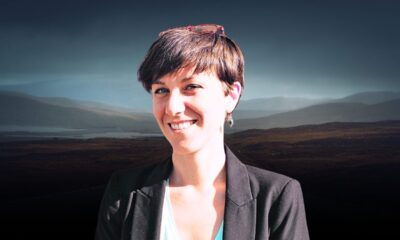




Melanie Brown: “If you listen, people want to share things that are important to them.”

MA3 Challenge awards grants to six universities to modernize promotion and tenure processes: Here’s the question of the day.

Scott Loarie says conservation science isn’t moving fast enough. He describes how iNaturalist is helping

Photo Essay: 2026 Stand Up for Science New York City

Meagan Naraine reflects on the emergence of the nonprofit Culturally Relevant Science and how it aims to thrive.

“What are you going to do on Monday?” SNAP challenges leaders at the 2026 AAAS conference

UNESCO-backed platform seeks to encourage information sharing among freshwater management citizen science projects
Photo Essay: 2026 Stand Up for Science New York City

Abby C. King on leveraging local wisdom and science to create a thriving environment: “Our communities are the most valuable renewable resources for a healthy planet.”
Scott Loarie says conservation science isn’t moving fast enough. He describes how iNaturalist is helping
Melanie Brown: “If you listen, people want to share things that are important to them.”
Abby C. King on leveraging local wisdom and science to create a thriving environment: “Our communities are the most valuable renewable resources for a healthy planet.”

Milky Way Project co-creator Grace Wolf-Chase says public engagement is ‘every bit as important as excellent scientific research’

Seeing is believing: Inside the BioBus revenue engine with Ben Dubin-Thaler

Haley Davis shares how SeaKeepers is engaging the yachting community to support marine citizen science projects
Contact
Menu
Designed with WordPress