
Civic Science Observer
Looking for a sign? Study says interpretive signs at U.S. National Parks have low readability
This paper presents the first known study that analyzed the language content of interpretive signs of U.S. national parks. It has identified, among other takeaways, an apparent need to increase the readability of interpretive signage.

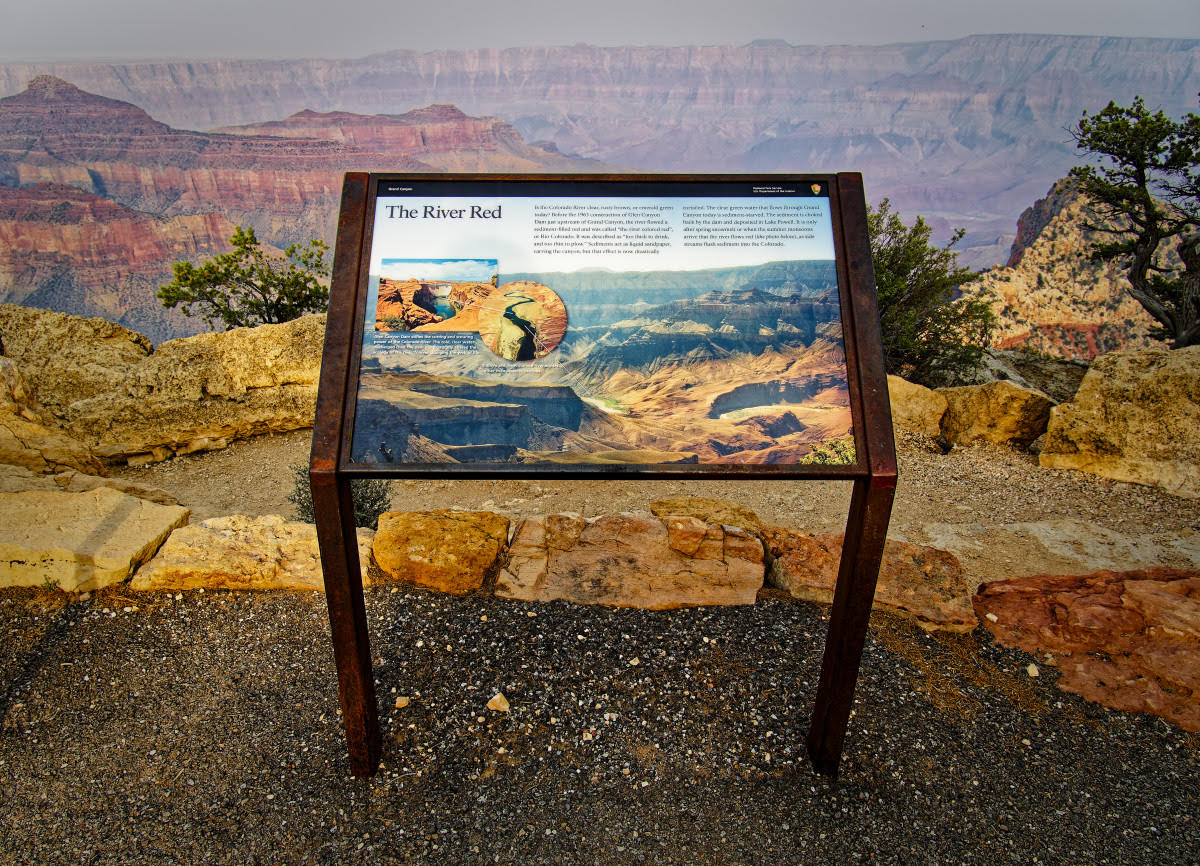
Paper Title: National parks as vehicles for science communication: the science of signs
Author(s) and Year: Lloyd Davis, Lei Zhu, Wiebke Finkler, 2025
Journal: Journal of Science Communication (open access [link])
TL;DR: Researchers went to 11 U.S. national parks, capturing images of all interpretive signs they encountered. They then performed an analysis of the science content of these signs, determining topics, readability, depth, and relevance to humans. Results indicated that most sign topics fell into the geology or biology categories, and readability was overall low and generally negatively correlated with science content, though with some notable exceptions.
Why I chose this paper: I found the idea of assessing the readability of interpretive signs in national parks really interesting. For many people, these types of signs are some of the few interactions they will have with science content post-education, and making them readable and accessible is an important step. I see the potential for a lot of future research based on this paper, and I hope to see more from these authors about the science behind signs.
Imagine standing at a gorgeous vista at a U.S. national park. What do you see? A sunset-colored canyon? A roaring river? Chances are, in front of any of that, you’ll see a sign that provides information on what exactly you’re looking at. Perhaps you become curious about the view and you take a look at the sign to learn more. But what happens if the interpretive sign itself is hard to interpret?
The Background
Interpretive signs, which are a staple in national parks and other recreational natural areas, provide written and visual information about views and other park features. For example, an interpretive sign overlooking a canyon might provide a diagram and notes about the geological history of the formation. They represent a unique opportunity to communicate science content to readers who otherwise may not be interested in science, hooking in people with the views they provide context for. However, little research has been done about the readability of the language on those signs.
Authors Davis et al. have published new research in the Journal of Science Communication assessing the interpretive signs in U.S. national parks. They looked at three main research questions, asking (1) What are the topics and how much science content are on the signs? (2) Is the text readable, and does that readability vary between sign subjects and individual parks? and (3) How does depth of information and human-relevant content on the signage vary?
The Methods
The researchers visited 11 national parks over a period between July 2018 and June 2019. They spent two days at each park, taking pictures of interpretive signs using an all-occurrence sampling method, meaning that they photographed all signs they encountered rather than seeking out all signs in the park. For consistency, they only photographed interpretive signs that followed a standardized, roughly 62 x 93 cm, angled format (n=129).
Software was used to extract text from each image. For subject analysis, researchers determined the science subject of the sign (geology, biology, or other) and the proportion of science to non-science sentences on the sign. Specific topics within the subject (i.e canyon, forest, etc) were assessed using a word frequency analysis.
For readability analysis, they calculated a Flesch Reading Ease (FRE) score for each sign and compared them by park and subject. The FRE score is based on a 0-100 scale, and a higher score indicates a more readable text.
Lastly, informational depth and human relevance were coded by two researchers. Informational depth was assessed by determining whether or not a sentence went beyond surface interpretation to give explanations, evidence, and context to science information. Human relevance was also assessed at the sentence level to see whether the signs referenced humans, which research has suggested may make science communication more effective.
The Results
The vast majority of science topics fell under the geology (57.4%) or biology (31.8%) categories, though the dominant subjects varied by park. Science content was highest on signs about biology (88.3% of sentences) as opposed to signs about geology (77.7%) or other subjects (67.2%).
On average, the interpretive signs had a FRE score of 51.19. In the discussion section of the paper, the authors explain that this score is representative of around a 10th to 12th grade reading level, “likely to be fully understood by only just over half of the US adult population.” Readability varied by each park, and was generally negatively correlated with the number of sentences with science content. Notably, however, Great Sand Dunes National Park had the highest FRE score with an above-average amount of science content, which indicates that science content does not necessarily have to be sacrificed to increase readability.
Depth and human relevance of content were also variable by park. By subject, biology had the most depth interpretation (65.8%), followed by other (51.7%) and geology (50.2%). Interestingly, human relevance widely varied by subject. 48.3% of “other” signs were relevant to humans, while only 4.5% of geology signs and 24.3% of biology signs had this element.
The Impact
This paper presents the first known study that analyzed the language content of interpretive signs of U.S. national parks. It has identified, among other takeaways, an apparent need to increase the readability of interpretive signage. This would allow parkgoers to be more engaged with park information and increase their scientific understanding of what they encounter. This is important since many national park visits are self guided. Signs can also show parkgoers the unseen— the presence of animals, water features, and other elements may change with the season or time of day.
In future research, parkgoers could be surveyed to assess their understanding of and satisfaction with current signs to see whether the low readability diagnosis holds. The authors also express a desire to test different improvements to signage to find the optimal means of increasing readability.
Edited by Julianna Goenaga and Sarah Ferguson
This research digest is cross-posted here in partnership with SciComm Bites. You can read the original piece here.








In Michigan, a citizen science project tracking salamander migration is bringing a community together and building a dataset

“Science is something that we do together.” Benjamin Richards on how OceanEyes collaborates with citizen scientists to monitor deepwater fish in Hawai’i

Dear Colleagues: Participate in a survey on barriers researchers face when communicating with non-expert audiences

Research!America selects 17 grantees from 132 applicants for the 2026 Civic Engagement Microgrant cohort

Melanie Brown: “If you listen, people want to share things that are important to them.”
Dear Colleagues: Participate in a survey on barriers researchers face when communicating with non-expert audiences

Scott Loarie says conservation science isn’t moving fast enough. He describes how iNaturalist is helping

Photo Essay: 2026 Stand Up for Science New York City

MA3 Challenge awards grants to six universities to modernize promotion and tenure processes: Here’s the question of the day.
Research!America selects 17 grantees from 132 applicants for the 2026 Civic Engagement Microgrant cohort
“Science is something that we do together.” Benjamin Richards on how OceanEyes collaborates with citizen scientists to monitor deepwater fish in Hawai’i
Melanie Brown: “If you listen, people want to share things that are important to them.”

Abby C. King on leveraging local wisdom and science to create a thriving environment: “Our communities are the most valuable renewable resources for a healthy planet.”

Milky Way Project co-creator Grace Wolf-Chase says public engagement is ‘every bit as important as excellent scientific research’

Seeing is believing: Inside the BioBus revenue engine with Ben Dubin-Thaler
Contact
Menu
Designed with WordPress