
Civic Science Observer
Researchers examine the expanding use of participatory science data by state agencies
“Every time somebody uploads a photo to iNaturalist or another citizen science project, it is an observation of biodiversity, but it’s also an observation of how someone interacted with the natural world.” – Corey T. Callaghan

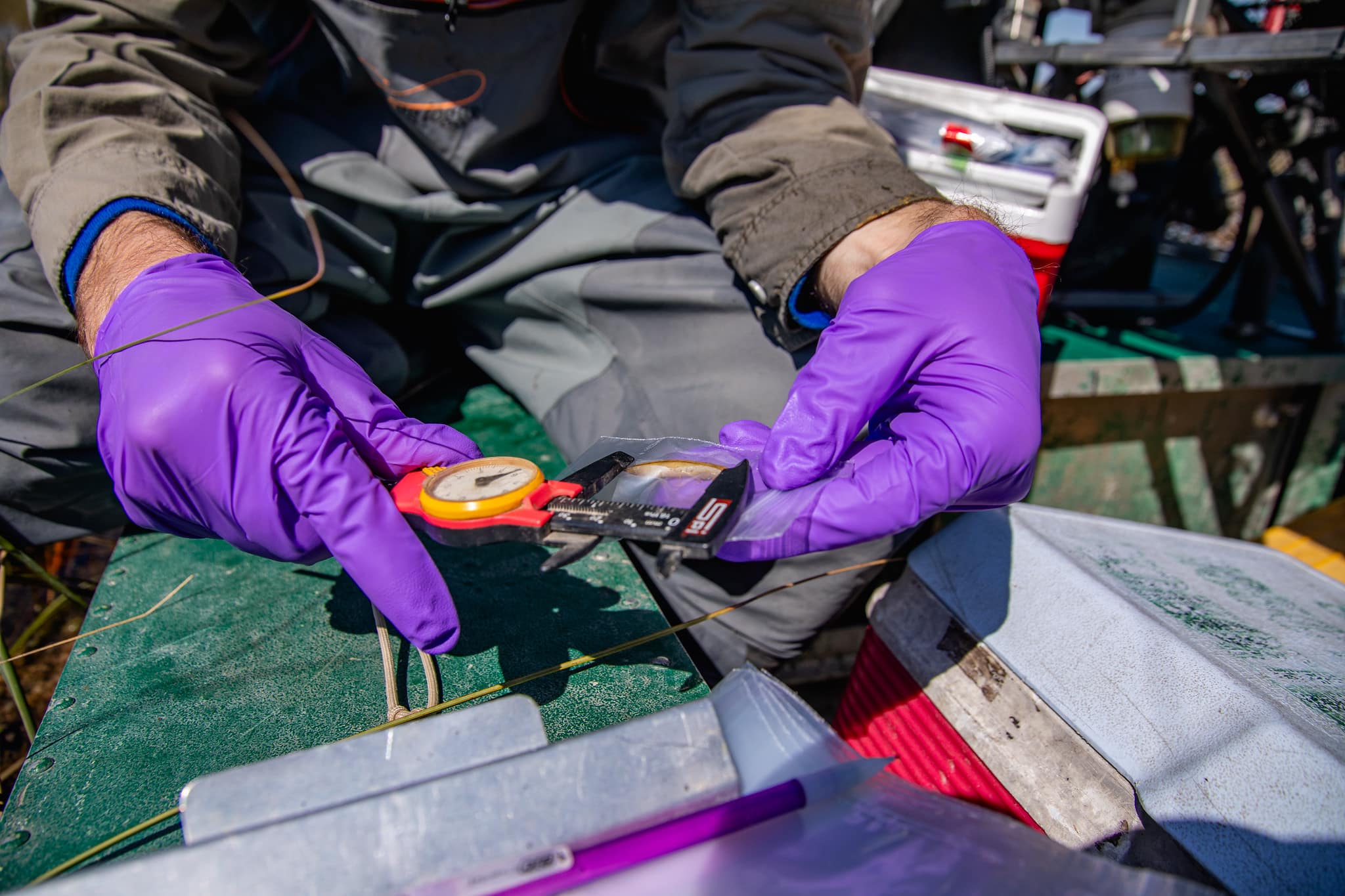
As researchers increasingly rely on data collected by citizen scientists via platforms such as iNaturalist and eBird, scientists at the University of Florida are looking to codify best practices for using those platforms.
The scientists are developing a paper, which has yet to be published, that aims to provide guidance on citing and attributing iNaturalist data. They are also seeking to focus on ensuring reproducibility.
“With apps like iNaturalist and eBird, there are filters and quality control steps that researchers can take that are baked into those apps to help maximize data quality,” said Corey T. Callaghan, assistant professor at the University of Florida. Callaghan leads research on citizen science with the University of Florida’s Fort Lauderdale Research and Education Center.
Developing best practices for using these apps may help state and federal governments that rely on data collected by citizen scientists, because everyday people can cover much more ground than scientists can.
Callaghan says his research focuses on how participatory and citizen science data are used in natural resource management ecology. For instance, Florida requires a management plan for all state parks, which includes a requirement to maintain a species list. The state recruits citizen scientists to help with that maintenance.
While professional data is geared at understanding what is there, participatory and citizen science data are really useful because “you can get more eyes out there looking,” Callaghan told Civic Science Observer.
Professional data might also be geared toward what is required for funding purposes, such as data on threatened species. But citizen science data, such as what’s collected on iNaturalist, can be geared towards anything.
“There are people who specialize and are interested in just about anything,” and data from iNaturalist can help support that research, Callaghan explained.
While Callaghan urges researchers not to be afraid to use data collected by citizen scientists, he also wants to ensure they know how to obtain what they need.
“I know that’s a bit jargony and sciency, but it’s important to think that critically and conceptually as you design your project because data quality might be an issue,” Callaghan said. One of the researchers’ main objectives should be to ensure that the data fit the project so that researchers can draw what they need.
For instance, one project might require only 10 observers to achieve its objective. Those observers will likely undergo advanced training and be highly specialized. But at the other end of the spectrum is a project that wants 10,000 observers, ranging from very skilled to not that skilled, because that many participants and that much data help fulfill the research project’s objective, Callaghan said.
Ultimately, researchers should also make sure that the data is good for the objectives they want answered, according to Callaghan, because “citizen science data is actually really good at documenting presence, but it’s not all that good at documenting absence.”
Callaghan and others at the University of Florida have been steadily publishing research on citizen science over the last year and a half, including a BioScience paper that the New York Times covered. That paper, titled “iNaturalist accelerates biodiversity research,” shows that roughly four papers a day are being published using data that came from iNaturalist.
“It just shows the breadth of scientific literature that is using iNaturalist data. It’s revolutionizing how we do ecology and biodiversity research,” Callaghan said.
Another paper examined participatory science from a policy perspective and studied the increasing incorporation of data from iNaturalist, and especially eBird, into documents submitted for review under the National Environmental Policy Act (NEPA), such as environmental impact statements.
Indeed, one of the benefits of data from iNaturalist or eBird is its interdisciplinary potential. “The BioScience paper really shows how many fields are using the data,” Callaghan said. Scientists, computer scientists, and education specialists, he added, “are using the data, so it has quite broad usage and speaks to this interdisciplinary notion.”
A third paper examines the value of biodiversity data that is collected during bioblitzes, which are events that aim to document as many species as possible over a predefined period. The paper examined this issue through the DeLuca Bioblitz.
As the participatory science field continues to expand, one avenue that Callaghan thinks should be explored is the idea of human and nature interactions: “Every time somebody uploads a photo to iNaturalist or another citizen science project, it is an observation of biodiversity, but it’s also an observation of how someone interacted with the natural world. And I think there’s a lot to unlock there about understanding how society at large values, pursues and interacts with and enjoys biodiversity. And so that’s something that we might be starting to scratch the surface of, maybe.”
It allows anybody to participate. It really does allow anybody to participate in the scientific process.
“And coming back to what I am interested in research-wise, one of the things I really am motivated by is closing the loop, meaning, demonstrating and illustrating how people’s observations, including my own, contribute to the greater scientific good.”
Citizen science as a valuable tool for environmental review
This paper examined more than 1,300 environmental impact statements produced under the U.S. National Environmental Policy Act and found increasing incorporation of citizen science in environmental review.
iNaturalist accelerates biodiversity research
This systematic review found that iNaturalist data are increasingly used in biodiversity and conservation research, with peer-reviewed studies drawing on data from 128 countries and 638 taxonomic families.
Bioblitzes Provide Valuable Biodiversity Data
Using the DeLuca Bioblitz as a case study, this paper evaluates the biodiversity data generated by bioblitzes and their value for land managers and conservation professionals.
What follow-on actions did the insights above spark for you?


Joanna Marsh is a freelance writer and journalist based in Washington, D.C. For The Civic Science Observer, she reports on new developments across the citizen science landscape, covering both new research and on-the-ground practice. Her work highlights how local communities are engaging with scientists to contribute to ongoing scientific research and lessons being learned by the involved stakeholders.




Did You Know: A museum dedicated to the brain is being developed in Southern California?

Peer teaching as empowerment? Exploring NeuroBoricuas with Dr. Christian Bravo-Rivera

STEM Unbarred: What the initiative is learning about hands-on science for incarcerated youth

San Francisco Bay Area climate resilience group helps local communities talk about extreme heat

Did You Know: Kirtland’s Warbler Festival in Michigan is engaging the local community in celebrating and conserving the once-endangered songbird through educational events

Questions, biology-based environmental stewardship, and accessibility are at the center of Bio4Climate’s annual conferences
Did You Know: Kirtland’s Warbler Festival in Michigan is engaging the local community in celebrating and conserving the once-endangered songbird through educational events
San Francisco Bay Area climate resilience group helps local communities talk about extreme heat
STEM Unbarred: What the initiative is learning about hands-on science for incarcerated youth
Peer teaching as empowerment? Exploring NeuroBoricuas with Dr. Christian Bravo-Rivera
Did You Know: A museum dedicated to the brain is being developed in Southern California?
STEM Unbarred: What the initiative is learning about hands-on science for incarcerated youth

Exploring workforce needs and intergenerational learning in informal STEM education

Making a Mini-Forest: participatory science afforestation across the globe

18 months later, Casey Lardner from Genspace says, “we’ve been really focused on building systems”
Contact
Menu
Designed with WordPress