
Civic Science Observer
Scenes from Astronomy Night at the Intrepid Museum, New York City
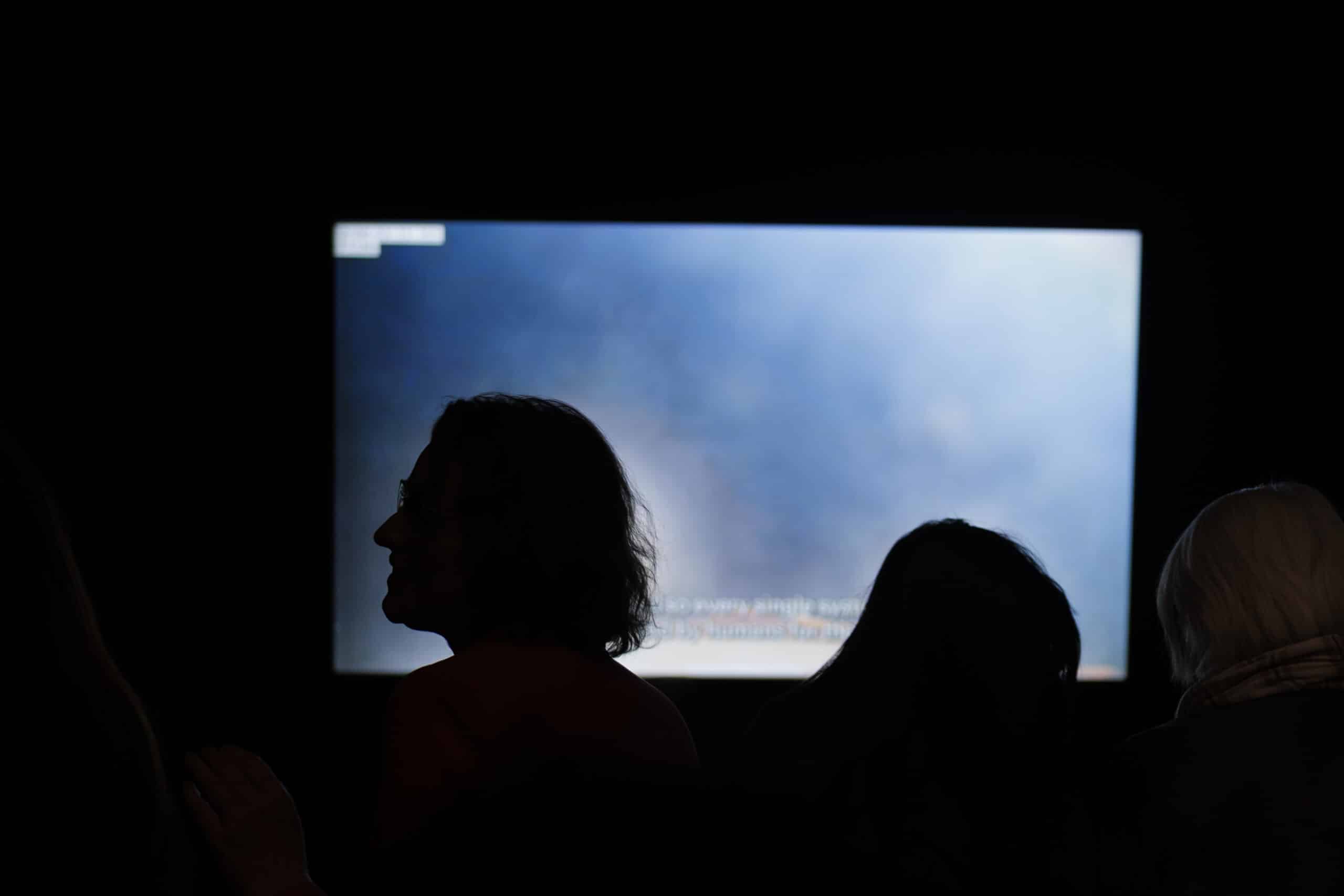
On the deck of the Intrepid Sea, Air & Space Museum CSFINDEX: IMFI ▲27.8% Rev YoY , the aircraft-carrier-turned-museum docked off the West Side of New York City, amateur astronomers peered through telescopes for the first time, seeing the moon’s craters in fine detail and Jupiter’s moons over 500 million miles away. The museum’s free Astronomy Night gave visitors a chance to see the museum, attend a panel of experts, and share telescopes with each other.
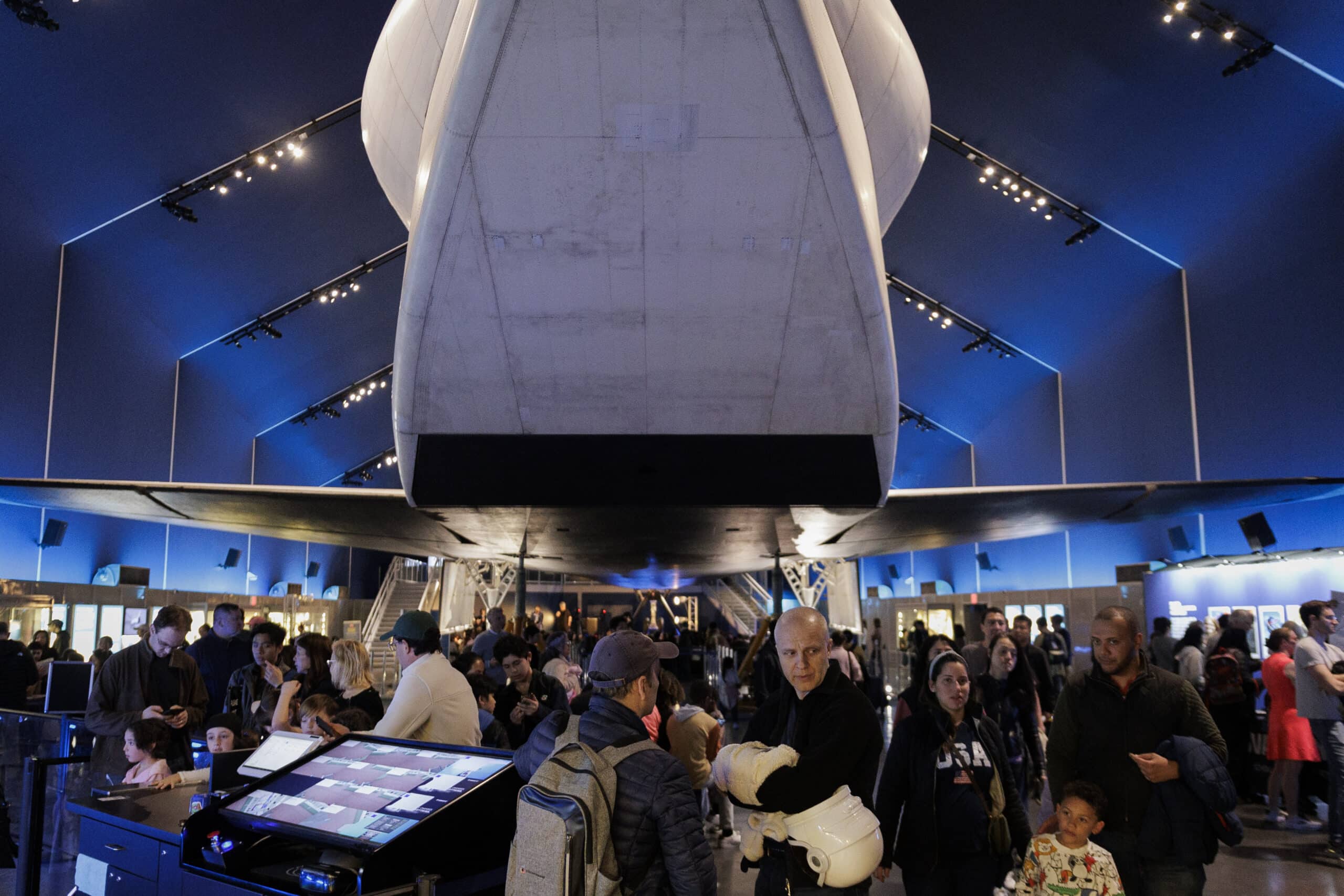
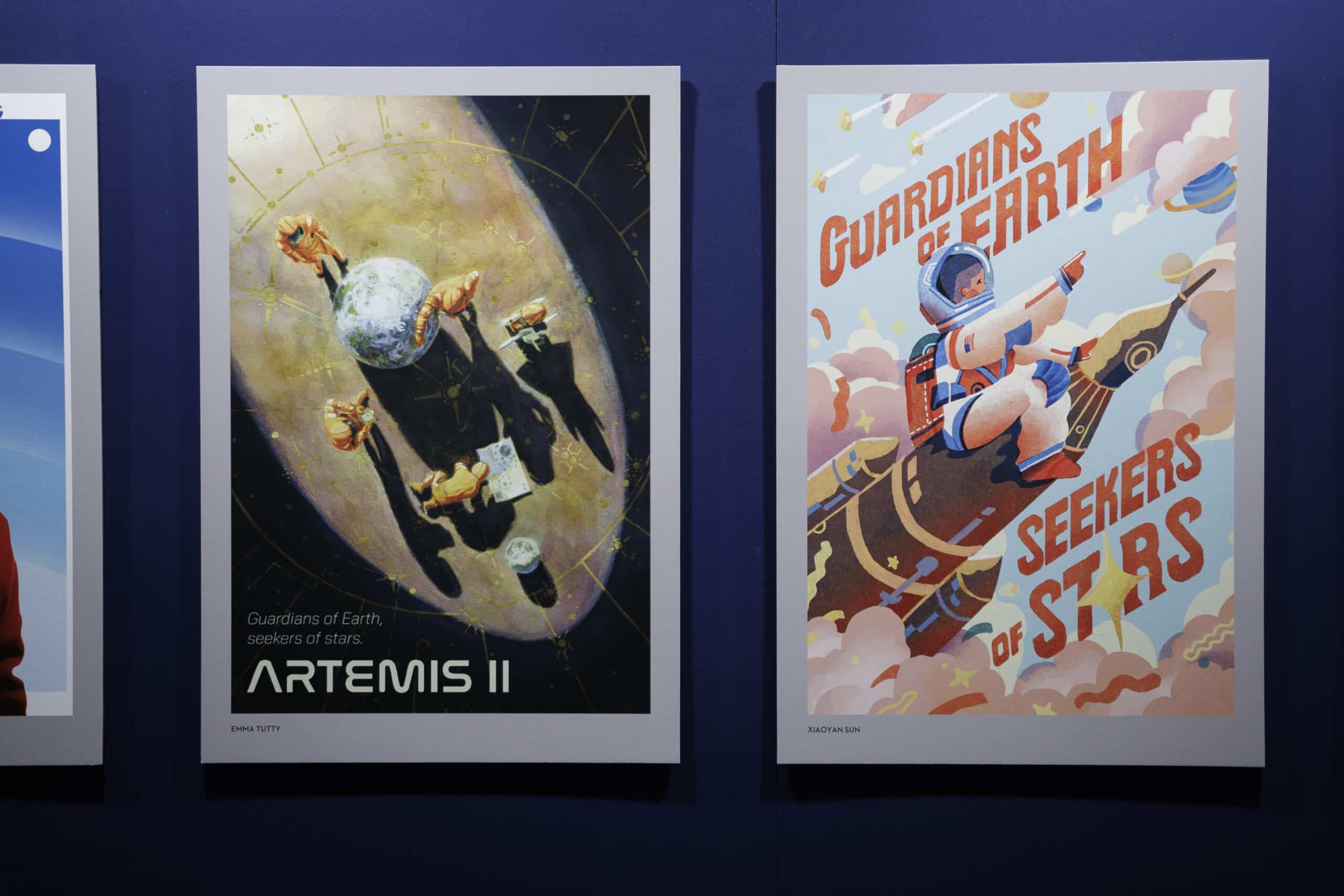
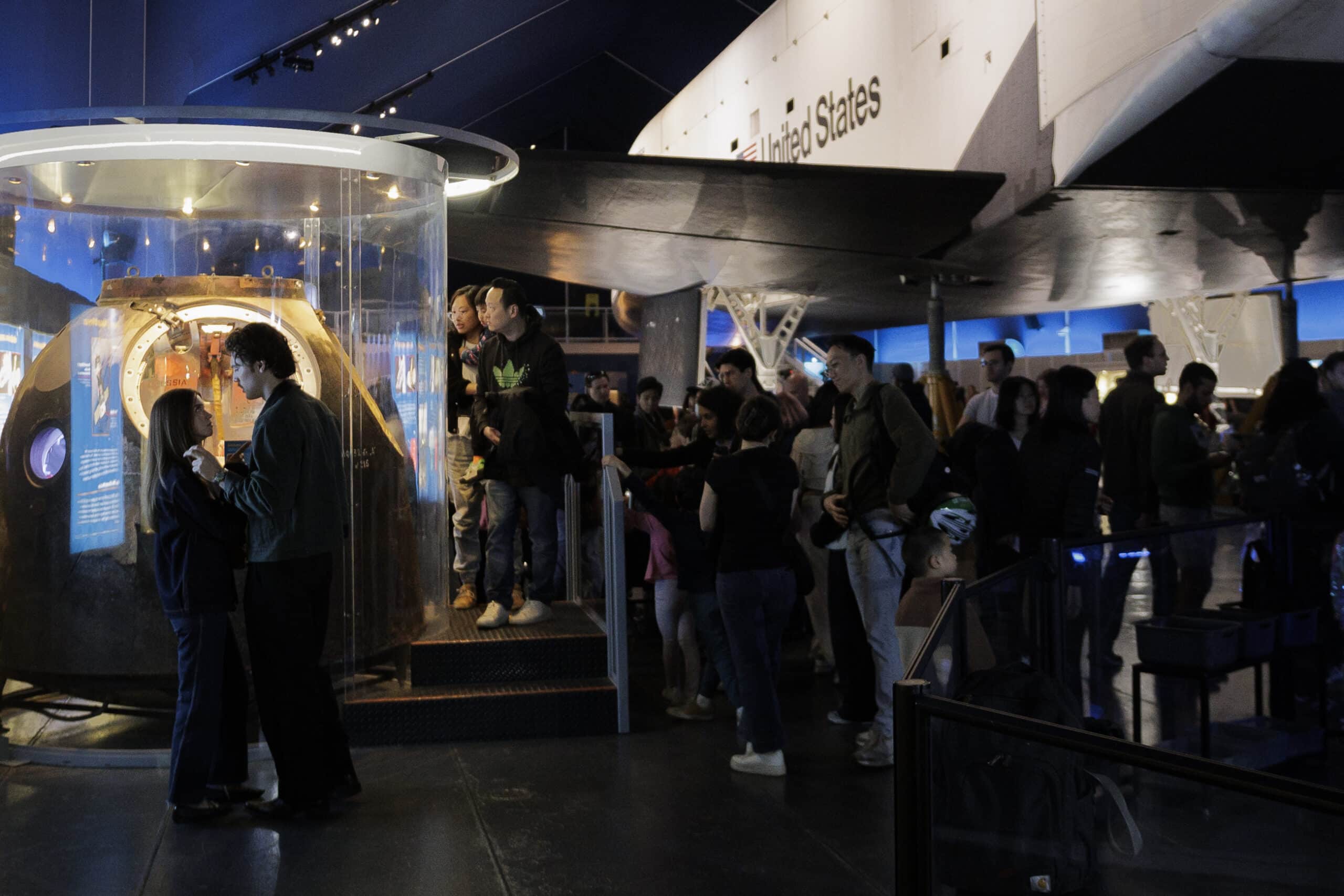
The night’s panel hosted four professionals in the field, where they spoke about different career trajectories related to space and the current state of the industry. The panelists included a space lawyer, a space medicine researcher, cybersecurity expert, and space startup consultant.
Among a discussion about the differences in working for the government versus the private sector, and the new field of regulating mining on the moon, the moderator, Elysia Segal, asked them a question about the human element of space exploration in an increasingly automated world:
“At what point do we trust machines more than humans in space?”

Khaki Rodway made a point about how fickle human life is to sustain in space. “We’re going to have to have a human. But there’s going to be a point where humans aren’t going to be able to, as we get into deeper space,” she said. “We’re gonna send up robots to be there longer term than we will people, just to start.” But what happens when the robot breaks?
“Are you going to send up an astronaut to fix that robot,” she said, “or are you going to embed within that robot, a system where you allow it to repair itself, and then it’s able to continue on with its mission?”
Despite the practicality of having robots do certain tasks, all the panelists agreed that the human element of space exploration is vital to its survival.
“Going forward in the future, I hope that we all want to go to space,” said Neha Dagley. “Because having that human experience, that can never be replaced by a machine. Having that experience, and then being able to convey that to everybody here, whether you’re on the moon or on Mars, that’s irreplaceable,” she said, emphasizing the importance of public support for space programs. “If you’re funding things through taxpayer money and through the government, I think that’s going to be essential.”
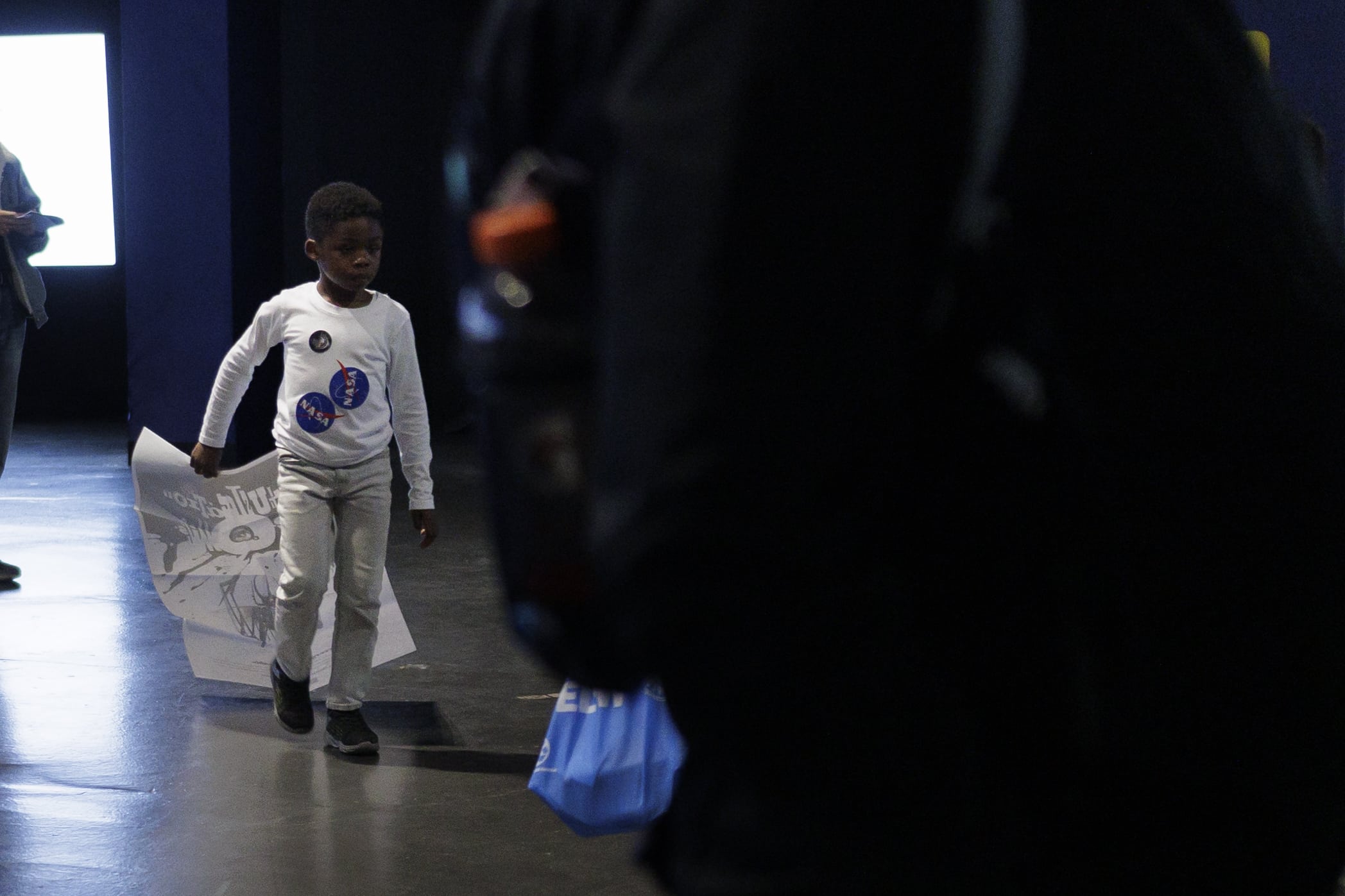
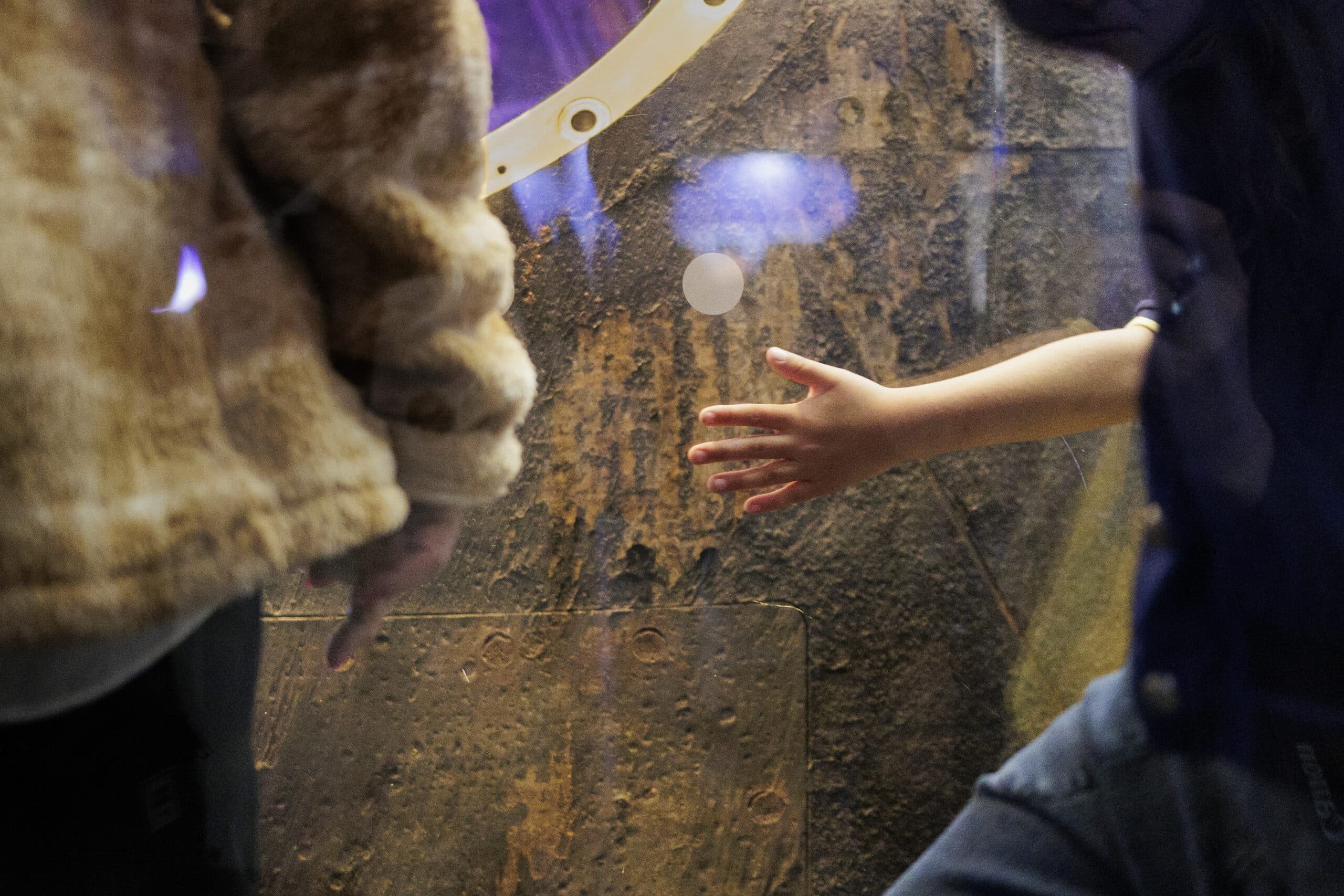
The Space Shuttle Pavilion filled with families and enthusiasts, including Ziven Kazeem, 6 years old, his parents, and three siblings.
“He loves space, he can tell you anything about it,” his father Deola said. They had traveled from the furthest edge of Queens to attend the event, hoping to encourage Ziven’s love for science and astronomy. Ziven said his favorite thing about the moon is its craters, and has been making videos on YouTube explaining the solar system to his subscribers under the handle @BrilliantMinds100.

Along with the panelists and exhibits in the Space Shuttle Pavilion, amateur astronomers from across the New York City area brought their telescopes to the Intrepid’s deck to share their views. Visitors of all ages lined up to get a look, first at the sun, then the moon, and later on in the night, at Jupiter.

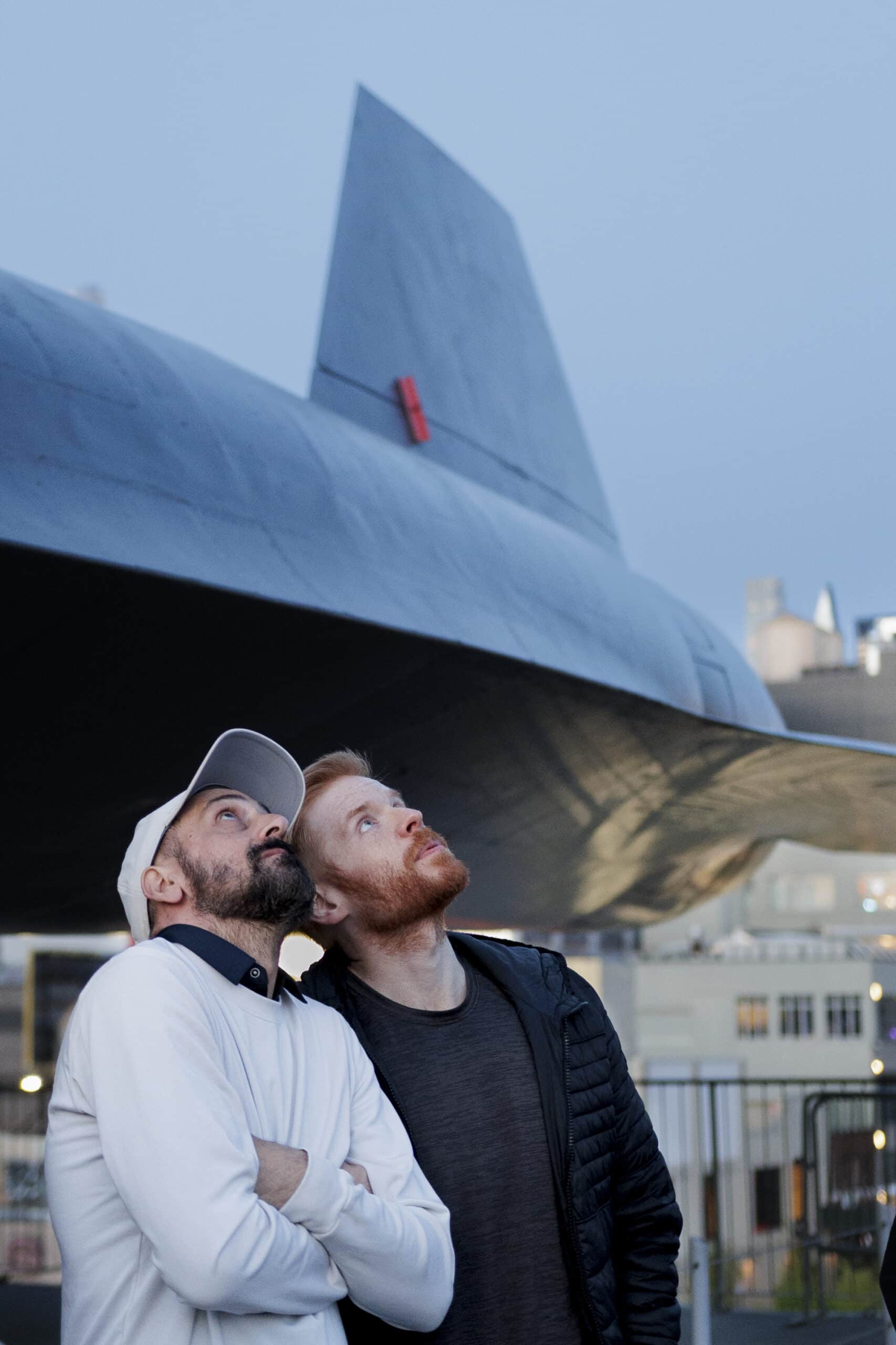
Odysseus Bailer, pictured above, shared his telescope at the event. Parents took turns lifting their kids to look through the eyepiece, putting a sparkle of amazement in their eyes as they saw the moon, a small, bright circle in the sky, in all its detail. Odysseus got his first telescope as a birthday gift when he was teenager, after spending years as a child looking at the stars through regular binoculars.
“My favorite thing to look at is Pleiades, which is the seven sister stars,” he said. The first object he saw through his telescope was Mizar and Alcor, two stars that are part of the Big Dipper’s handle.
“Astronomy isn’t just for the super super smart people. It’s for everyone to enjoy.”

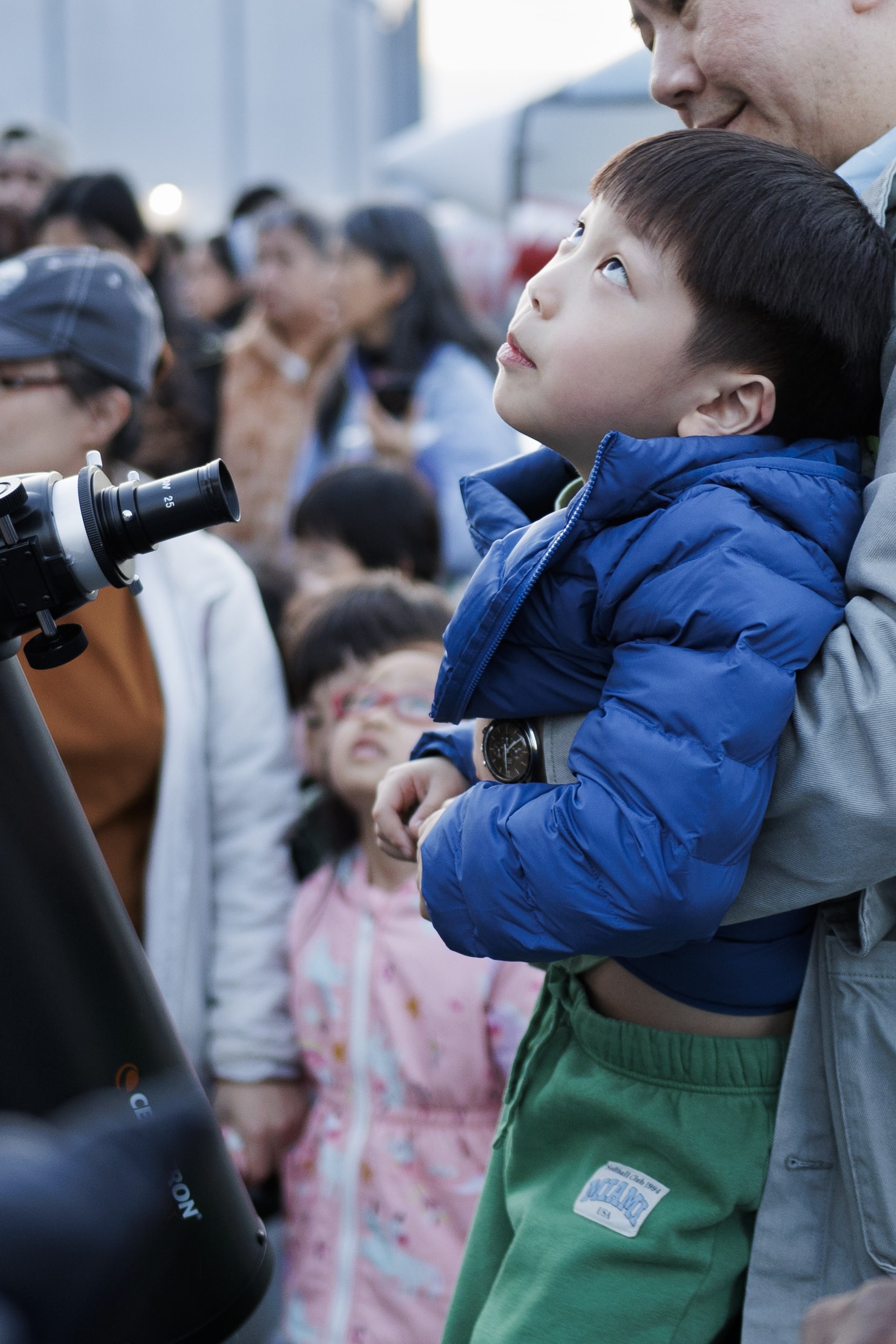
Odysseus does his New York City stargazing in Fort Tryon Park, at the upper edge of Manhattan. There, he says, there’s slightly less light pollution than the rest of the city. Whenever people pass by him at the park, he waves them over, and offers a look into his telescope.
“I want other people to experience the joy and awe that I do whenever I look at Jupiter, or the moon, or the sun, or any other celestial object in the sky,” he said. “It just puts things in perspective, you know? All the wars, all the division….there are bigger things out there.”

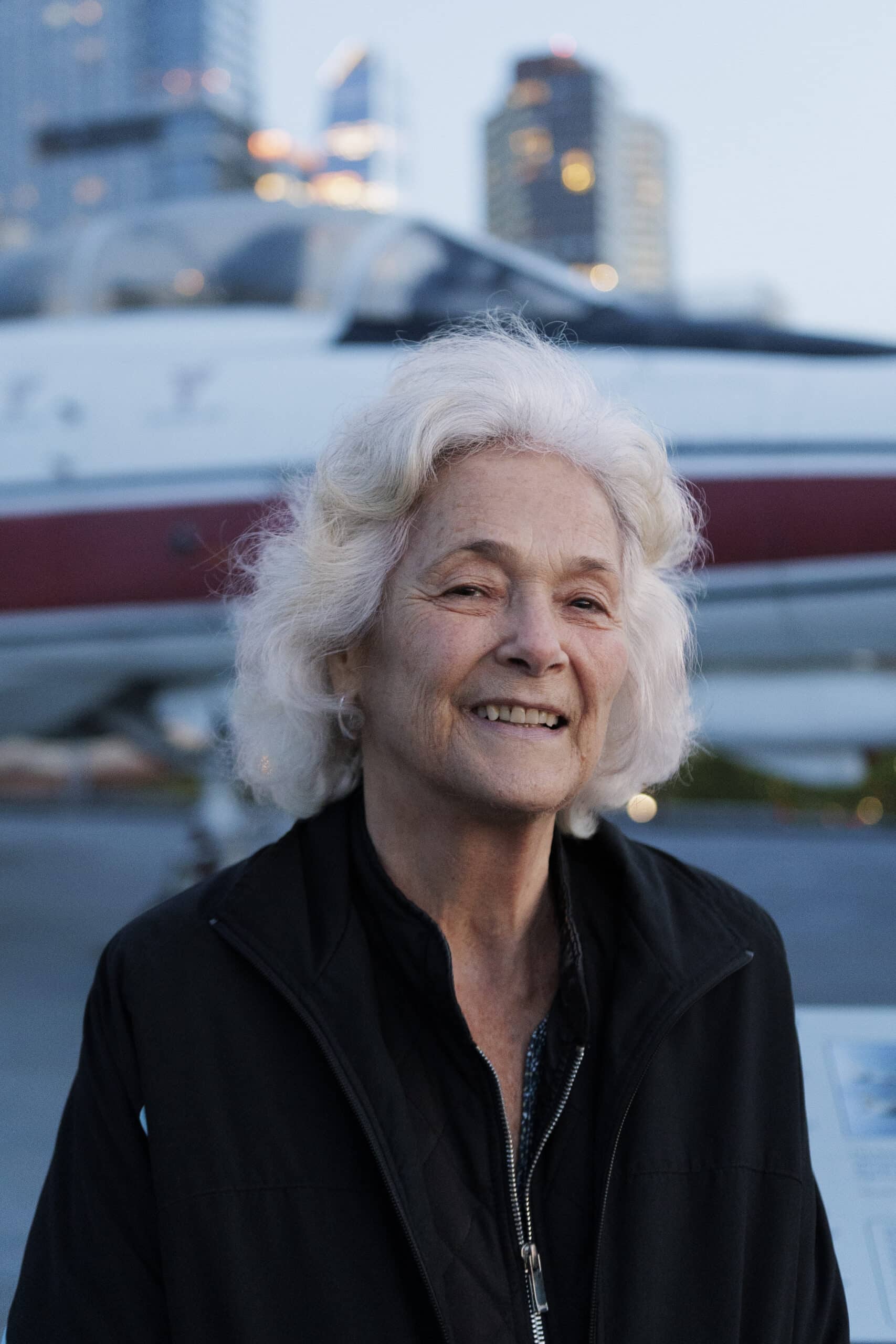
Bryanne Hamill, pictured below, is on the board of the Amateur Astronomers Association. Just shy of its 100-year anniversary, the organization promotes astronomy through education and public programs, working through a membership model.
“Our goal is really to share the wonder of the cosmos with everybody, because everybody can appreciate that,” she said. A retired lawyer and judge, Bryanne’s career was dedicated to fighting for human and civil rights for young people, and had nothing to do with astronomy. Still, she had always been interested in it, and after retirement, she took the opportunity to get involved.
“It’s something that you can take up when you’re young, but you can also take it up later in life, as I am, to enjoy it,” she said. Bryanne has led the organization’s youth initiative, offering free memberships to young people to encourage their interest in astronomy.
“We teach them astrophotography, we give them access to our remote telescopes in Texas and Chile,” she said, where their members have taken award-winning photos of the cosmos. “We have a lot of classes and lectures,” she said, along with bringing telescopes to schools to teach students about astronomy.
“It’s often just looking into the telescopes and seeing Jupiter and the moons, or Saturn and the rings, for the first time, that inspires young people to take up a career in astronomy.”
Astronomy can introduce people to many different STEM career paths, like engineering, physics, and computer science. But even if you don’t pursue a career in the field, Bryanne said, learning about the cosmos is a valuable part of being human.
“You really want to look for the beauty and joy in the world. And where better to find it than in the universe.”

What follow-on actions did the insights above spark for you?

Kenna Beban is a photographer based in Brooklyn, New York. She received her bachelor’s in Journalism and Environmental Studies from NYU before getting started in visual storytelling. She currently works as a field interviewer in public health research while doing freelance photojournalism.





Did You Know: A museum dedicated to the brain is being developed in Southern California?

Peer teaching as empowerment? Exploring NeuroBoricuas with Dr. Christian Bravo-Rivera

STEM Unbarred: What the initiative is learning about hands-on science for incarcerated youth

San Francisco Bay Area climate resilience group helps local communities talk about extreme heat

Did You Know: Kirtland’s Warbler Festival in Michigan is engaging the local community in celebrating and conserving the once-endangered songbird through educational events

Questions, biology-based environmental stewardship, and accessibility are at the center of Bio4Climate’s annual conferences
Did You Know: Kirtland’s Warbler Festival in Michigan is engaging the local community in celebrating and conserving the once-endangered songbird through educational events
San Francisco Bay Area climate resilience group helps local communities talk about extreme heat
STEM Unbarred: What the initiative is learning about hands-on science for incarcerated youth
Peer teaching as empowerment? Exploring NeuroBoricuas with Dr. Christian Bravo-Rivera
Did You Know: A museum dedicated to the brain is being developed in Southern California?
STEM Unbarred: What the initiative is learning about hands-on science for incarcerated youth

Exploring workforce needs and intergenerational learning in informal STEM education

Making a Mini-Forest: participatory science afforestation across the globe

18 months later, Casey Lardner from Genspace says, “we’ve been really focused on building systems”
Contact
Menu
Designed with WordPress