
Changemakers Program
Risa Schnebly’s journey to researching ecological grief and telling its stories
“That’s a big goal, and the through line to what I do is trying to bring humanity into science, or to humanize scientists, which also is a big reason why I got into doing a lot of science communication and science writing work.” — Risa Schenbly
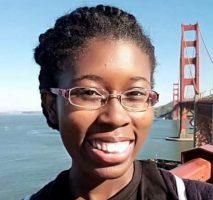
In this 23rd episode of Changemakers, I speak with Risa Schnebly, a graduate student from Arizona State University, about how her personal experiences with grief have shaped both her research and her work in science communication. Her focus on ecological grief reveals a gap between the emotional realities of conservationists and the broader public’s awareness of biodiversity loss. She also reflects on how writing and storytelling became key entry points into science communication, helping her translate complex ideas for wider audiences. Throughout, she points to a larger challenge within science: making space for emotion, vulnerability, and lived experience, even as she continues to navigate her own mental health alongside her work.
Below is a transcript of the conversation, edited for grammar and readability.
D’Maia Curry: Risa Schnebly is a PhD student and studies how wildlife conservationists experience ecological grief. She’s also a science writer and communicator, and her work has appeared in Cascadia Daily News and ASU News.
Risa Schnebly: I am pursuing a PhD at Arizona State University, and I am in my fifth year now. It will probably take six years. I research how wildlife conservationists experience ecological grief, which is a concept that’s arisen over the last 10 years or so. It basically describes the kind of grief that some people might go through after experiencing, like, the loss of another species or a place that’s been important to them or, you know, something within nature that’s non-human.
I started my undergraduate degree at UC Davis, but I dropped out after a year when my mom developed stage four cancer. I dropped out and moved to Mexico with her, to where she wanted to spend the rest of her life with her family and where she grew up. And then I took about a year or so just working, like, two or three jobs at a time after she died here in Arizona, waiting to get residency, living with an aunt of mine. And when I got in-state residency, I started back up again at ASU. Had about a semester or two in person before COVID hit, and then graduated during COVID and just immediately started doing graduate school because I didn’t really know what else to do with my life.
I was given the opportunity to teach a science writing class, and it felt like, okay, I can do this for, you know, five years or so, or I can go back to, like, waitressing or something, you know. So the PhD seemed like the better route, but I had really no idea what I was signing up for when I started. I didn’t really fully understand what it meant to do research. And so that’s been a huge process for me of, like, trying to understand, okay, this is what research means. This is what it means to be rigorous.
But that’s what led me to study ecological grief. You know, grief really dominated my life after losing my own mom, and still, you know, it’s been over eight years now since I lost her, and it’s still very much a part of my everyday. And I had originally wanted to go into wildlife conservation myself, and I’ve always just had an interest in nature and started, like, writing about de-extinction, you know, the people trying to bring back woolly mammoths and stuff like that. And through thinking about that, I kind of came to thinking about extinction more through this philosophical lens of, like, this is a form of loss, and what does this mean to us? And it’s a form of loss that has, like, in itself, been so central to the conservation movement, right? But what is people’s relationship to it? Like, are people grieving in the wake of an extinction or the loss of some creature?
And I kind of started out with the actual research path by talking to just undergrads at Arizona State to see kind of what their relationship to nature was or whether they really had any emotions about extinction in the first place. And most of them didn’t, you know. Most of them were like, oh, I didn’t even realize that there was a biodiversity crisis. Like, this was a novel concept to 18-year-old business students, and that was, you know, maybe not the most surprising in hindsight, but pretty disheartening.
And from there, I was like, well, okay, I want to talk to people who do feel something in the wake of this loss or are more likely to feel something. And so that’s led me to start talking to wildlife conservationists who work with endangered species, some of whom work with pretty critically endangered species like the vaquita porpoise in the Gulf of California. Yeah, I interview them and just listen to their stories about what that experience has been like and what kinds of loss have actually elicited an emotional experience or not. And I analyze those interviews according to the literature of grief and bereavement that comes from humans grieving other humans, which has allowed me to learn a whole new language about grief and which has helped me personally in a lot of ways, as well as hopefully will allow me to help start these conversations within scientific institutions that are so resistant to letting people be emotional.
That’s a big goal, and the through line to what I do is trying to bring humanity into science or to humanize scientists, which also is a big reason why I got into doing a lot of science communication and science writing work. I’m planning to write my dissertation largely in a narrative nonfiction style, weaving in bits of my own life and perspective into, you know, the stories that I’ve gotten from the people that I’ve talked to through my research.
And yeah, I was a AAAS Mass Media Fellow last summer and got to work as a science journalist in a hyper-local newsroom in Washington State, which was really awesome, writing environmental stories that were extremely place-based. And yeah, I’m still trying to do some freelance writing, and I write for my university department, and I’m always juggling a bunch of—I put together storytelling events. I am putting together one right now for another department at Arizona State about Phoenix community members’ relationships with water, which is exciting. So yeah, I’m always telling stories or getting other people to tell stories or, yeah, talking about emotions.
D’Maia Curry: Risa’s passion for science communication grew out of her love of writing. While taking writing courses at Arizona State University, she was introduced to the field of science communication and science journalism, where she began developing and refining her skills and gaining experience in communicating scientific ideas to broader audiences.
Risa Schnebly: I always loved writing and just, you know, was one of those kids that was like, you can’t be an English major because you won’t make any money. But through being at ASU, yeah, specifically my mentor Jane Maienschein has been so pivotal in everything that my life has been since I came back to school. Through her, she runs a class at Arizona State called the Embryo Project. She started this open-access encyclopedia that talks about the history and breaks down the science around all things like embryology, reproduction, and development, like developmental biology, and it’s an amazing resource.
It’s totally not in my field of research or study, but that’s how I started writing about de-extinction, was writing about genetic engineering and cloning and that kind of technology for the Embryo Project. And it really, really taught me—it’s this amazing, really unique class where, you know, students get really intense hands-on feedback from their professor. And Jane Maienschein is this incredible, badass professor who is an amazing writer and an amazing communicator, and for her to be giving such hands-on feedback to students is super rare and unique. And for all of us to be commenting on each other’s articles and really learning how to write concisely and clearly and accessibly for other people and give each other feedback—so that experience was, for sure, one of, like, I don’t think I would have realized or been on this career trajectory without Jane Maienschein, without the Embryo Project.
And from there, I kind of realized, like, and through meeting people within that kind of community, I started to hear about, like, oh, there are ways that you can get paid to write about science. I heard about medical writing or maybe doing freelance editing, and I had learned fact-checking skills and all of that. And so I started kind of looking into that on the side a little bit more.
And eventually, I got, again, really lucky that a recently retired New York Times reporter from the science desk there decided to co-teach a class here at Arizona State. His name is Jim Gorman, with a psychologist here named Clyde. And they taught a class about writing about animals, and that introduced me to the world of more traditional science journalism and put the Mass Media Fellowship on my radar and put organizations like ComSciCon, which is this great organization where grad students put on and organize free workshops for other grad students to learn communication skills.
And then, yeah, taking that class in itself taught me about the structure of writing a news story and, you know, what is a lead and how to interview well or pull out good quotes. And then a big synchronous coincidence was just that my department had put up a job posting for someone to write in a communications position, writing stories for my university’s news that semester, and I got the job. And through that, I have gotten more practice just writing, you know, not journalism, but feature stories about scientists and covering, you know, breaking down papers and learning to write about them.
And yeah, I applied for the AAAS fellowship finally last—yeah, whatever winter that was, 2024—kind of on a whim, being like, oh, people apply for this so many times, like, I’m not going to get it my first chance. But I got it, and that was really special. I felt like, yeah, that felt really validating, especially—I know so many people who get that fellowship are coming from really prestigious universities and have a ton of freelance journalism experience. I’ve only freelanced in a journalism kind of way once or twice, and I’m still working on learning that skill. But yeah, that was a really great experience.
And, you know, we got to do an orientation and a wrap-up in Washington, DC, at the AAAS office, which felt so prestigious and fancy. And yeah, I got to write as a journalist in the Pacific Northwest, which I lived there during high school in Oregon. And I spent the summer in Washington. But yeah, it was such an interesting experience to get to know a place through trying to cover environmental stories there. Yeah, and it was definitely difficult in some ways. I was sleeping on an air mattress the whole summer. But yeah, it was really fulfilling and really informative. And yeah, I don’t think it has convinced me to go full speed ahead on the journalism direction yet. But yeah, I really want to keep practicing journalism skills and have that as one writing style in my arsenal.
D’Maia Curry: One skill Risa has taken away from her work experience is learning to write directly and clearly.
Risa Schnebly:: Every kind of science writing is going to take different skills, and you have to switch it up depending on who your audience is and where you’re writing for. But yeah, I think with writing this kind of encyclopedia-style thing, it taught me that you don’t have to wait to reveal the main point until the end of the story. Just say what’s happening, why it matters, state the problem, state the solution. Just be clear.
And then, yeah, writing without jargon, writing without passive voice, all that classic talking like a normal person when you’re writing on paper kind of skills is definitely important and feels like one of the main things you have to learn right away before you start delving into developing your personal style.
And then also, while I was taking the Embryo Project, I was taking a lot of nonfiction, like creative nonfiction writing courses, which was great. I got a grad certificate in that, and that was wonderful. I’m not sure how common that is for people interested in science communication or science journalism, but yeah, I really learned—I still do a lot of memoir-style writing—and it taught me to write really beautifully, I think, or really pay attention to words and language and structure and kind of mess up the rules of formulaic journalism or encyclopedia writing.
Now that I’m a little bit more focused on trying to write journalistically again, I’m like, okay, I have to remember the rules. Say why it’s important right away. You don’t need a whole lead-in. You don’t need to tell some beautiful story first. You just need to say what matters and what’s the news, right? So yeah, I think my heart really is with loving language and paying attention to individual words. So I feel like that training was really informative as I was just starting to get more into writing.
D’Maia Curry: Mental health has been an ongoing challenge alongside her work, particularly because her research focuses on grief and deeply personal experiences. Speaking openly about these challenges has helped her process them and continue engaging with her work in a meaningful way.
Risa Schnebly: I think one of the biggest challenges of life in general is just my mental health has been such a struggle throughout my life. I got a PTSD diagnosis last year. My fellowship experience was wonderful, but also I was going through having this kind of experience in the stage of PTSD that I’d never really experienced before. It made it really intense and really lonely.
And I think, you know, my work is about grief, and it’s really intensely personal, and it’s not objective. And I think I started off with a lot of fear and a lot of imposter syndrome about bringing so much of myself into my work and the space. But I’ve really become—I wouldn’t say comfortable—but more willing to share things like that, about, you know, I’m not doing okay half the time. And I don’t think most people are.
And I think so much of the ethos behind what I want my work to be is about just being open and human and not pretending everything is okay in a world that’s falling apart, and when so many of us have our own histories of trauma and hardship and loss that we are not sharing with each other, and it feels so isolating, right?
And so I think as I’ve taken steps to be more open and vocal about, like, I’m not doing okay, that has so continually been met with understanding and compassion from other people, and so often has invited other people to share the same things with me. And yeah, I feel like that’s just continued reinforcing—I’m not sure what my career path will be, but I am doing what I do because I want people to feel okay being open with each other. I want to be open with people. I want to stop pretending that we can just work all the time and that everyone’s fine.
And yeah, I mean, I’m working through these challenges of mental health by going to therapy and taking time off and having community and leaning on my friends. But I think also just speaking them out loud to people and holding space for other people to do the same has been huge and has allowed me to continue being here rather than, you know, dropping out and saying I don’t need this.
D’Maia Curry: Risa recommends staying open to different possibilities and staying ready to go in different directions.
Risa Schnebly: I am not a five-year-plan type of person. I do things I like. I really try to work hard and commit, hold true to my commitments, not say I’m going to do something and not do it. But I’m very motivated by just what I want or what I think is fun or meaningful. And I’m really just staying open to different possibilities and trying to best prepare myself to go in multiple different directions.
I think for some people, it works to have a really specific plan and know exactly what steps they’re going to take to get there. But I think for me, it really just works to try to learn as much as I can, keep my eyes open to opportunities, and be adaptable.
And yeah, I think also just asking for help. So many people—I still have no idea what’s going on. I’m asking people to chat with me all the time. And I think a lot of people feel shy or like an inconvenience, but the worst-case scenario is that someone just doesn’t answer your email. So it’s always worth shooting your shot, and sometimes it can really get you somewhere much more helpful.
What follow-on actions did the insights above spark for you?
D'Maia Curry is a writer with a background in Geology and is passionate about communicating technical information


Did You Know: A museum dedicated to the brain is being developed in Southern California?

Peer teaching as empowerment? Exploring NeuroBoricuas with Dr. Christian Bravo-Rivera

STEM Unbarred: What the initiative is learning about hands-on science for incarcerated youth

San Francisco Bay Area climate resilience group helps local communities talk about extreme heat

Did You Know: Kirtland’s Warbler Festival in Michigan is engaging the local community in celebrating and conserving the once-endangered songbird through educational events

Questions, biology-based environmental stewardship, and accessibility are at the center of Bio4Climate’s annual conferences
Did You Know: Kirtland’s Warbler Festival in Michigan is engaging the local community in celebrating and conserving the once-endangered songbird through educational events
San Francisco Bay Area climate resilience group helps local communities talk about extreme heat
STEM Unbarred: What the initiative is learning about hands-on science for incarcerated youth
Peer teaching as empowerment? Exploring NeuroBoricuas with Dr. Christian Bravo-Rivera
Did You Know: A museum dedicated to the brain is being developed in Southern California?
STEM Unbarred: What the initiative is learning about hands-on science for incarcerated youth

Exploring workforce needs and intergenerational learning in informal STEM education

Making a Mini-Forest: participatory science afforestation across the globe

18 months later, Casey Lardner from Genspace says, “we’ve been really focused on building systems”
Contact
Menu
Designed with WordPress