
Civic Science Observer
NASEM panel outlines hurdles and opportunities to advance science journalism
Siri Carpenter: “We hope to see and to help catalyze a big picture shift in journalism at large, and to recognize that we can’t afford to leave science coverage just under the purview of science journalists.”

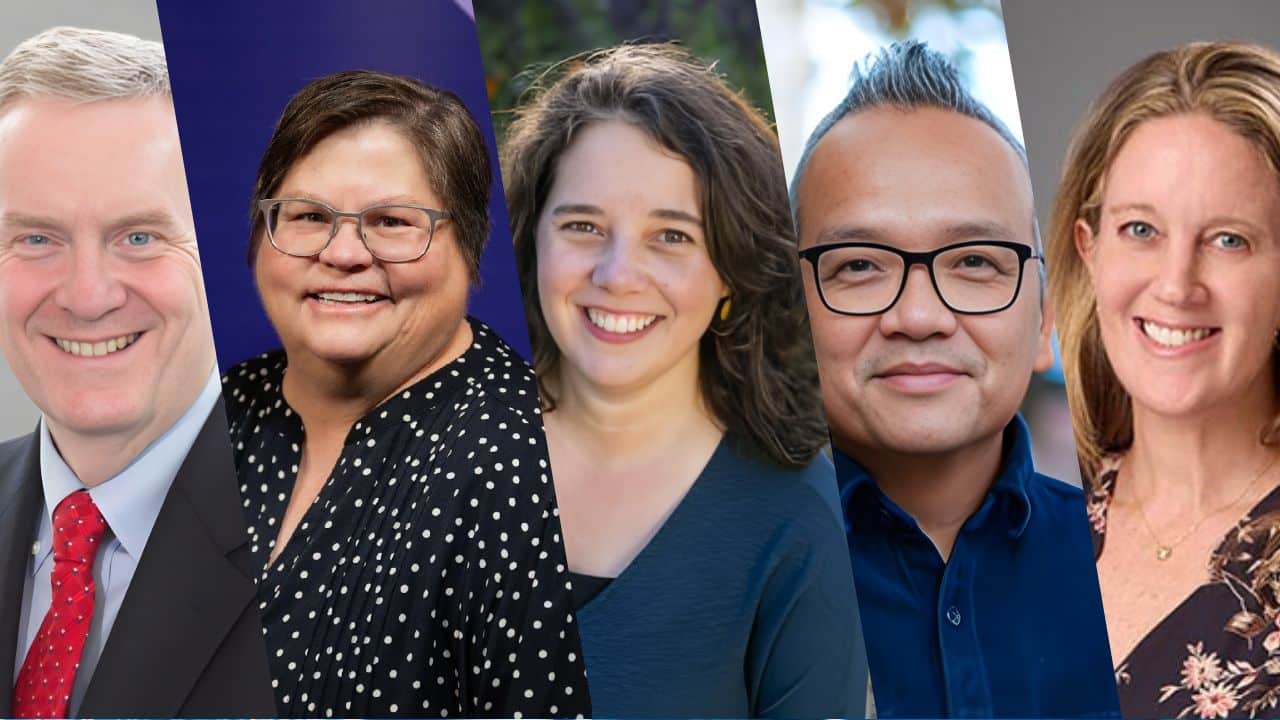
The journalism industry must regroup and make big changes in the ways it reports and presents issues in science, health and the environment if the industry wants to fight the tidal way of misinformation on social media, speakers urged during a recent panel on November 13 hosted by the National Academies entitled “Advancing High-Quality Science Journalism: Challenges and Pathways Forward.”
“Journalists play a vital role in helping the public make sense of science by translating complex research into accurate, timely, and trustworthy information. Yet over the past few decades, decreased funding, shrinking newsrooms, media deregulation, and limited access to credible scientific information and sources have weakened the capacity for in-depth science coverage,” said Lauren Feldman, professor and chair of journalism and media studies at Rutgers University, who served as the panel moderator. “At the same time, we see growing news deserts across the nation, as well as declining public trust in the media, which have created conditions in which science misinformation can more easily take hold.”
Science journalism, therefore, has to adjust to the influence of social media, while also grappling with changing newsroom norms and new audience expectations, she continued.
The Factors Causing Science Journalism to Pivot
Traditional journalism’s seemingly wavering influence on how the general public gets its news is attributable to several factors that have snowballed over time.
First off, consumers’ accessibility to alternative sources for news has imploded the advertising-based business model that has supported news and the news industry for decades, according to Tim Franklin, senior associate dean and director of the Medill Local News Initiative at Northwestern University.
Northwestern has been tracking the number of local news outlets across the country for the last 20 years, and through that time, the number of newspapers has fallen almost 40%, Franklin said.
“On average, we’re losing more than two newspapers every week in the U.S., and that has led to the spread of news deserts. So, we now count 213 entire counties in the U.S. with no source of local news,” while another 1,500+ counties have only one remaining news source, Franklin said.
“You add that up, and there are more than 50 million Americans who have limited to no access to local news and information, which is, I think, a big problem for communities, especially ones that need reliable, accurate news and information about science and health and environment in their communities,” Franklin said. He continued, “So, when you see losses of that scale, you’re naturally going to see fewer science, health, and medical reporters, especially at midsize and regional newspapers across the country, where a lot of really great reporting was happening.”
Furthermore, the disappearance of local news hearkens “this tsunami of misinformation and disinformation and rumor mongering that is afflicting our society, which is especially treacherous when you’re talking about health and science news and information specifically,” Franklin continued. That’s because those in news deserts are more apt to receive news from social media or national cable outlets, he said.
“People being civically engaged on Facebook is great. I applaud it. The problem is there’s no journalist moderating that conversation doing what journalists do, which is fact-checking, checking documents, talking to sources, looking at background history on a story. I think this is feeding, and fueling, this dis- and mis-information crisis that we have in the country,” Franklin said.
There are also downstream effects to this shift. For instance, the contraction of the journalism and media industry has meant that there are fewer avenues for specialized training via formal science writing graduate programs, said Siri Carpenter, executive director and editor-in-chief of The Open Notebook. It has also meant that when outlets lose their funding, they tend to cut their internships first, she said, resulting in lost opportunities for less experienced journalists to learn from more seasoned reporters.
“Those early opportunities are also shrinking,” which has resulted in an increasing reliance on freelancers, Carpenter said. As a result, “there are fewer opportunities for early career journalists who are freelancing to benefit from the type of in-person newsroom training that used to be more prevalent. Entry paths into the profession are also less linear than they used to be,” Carpenter said.
Furthermore, the majority of journalists who cover science, health or the environment don’t have formal training on these disciplines, Carpenter continued.
Keeping Science Journalism Relevant and Available
This implosion of the advertising-based model has forced traditional media companies to rethink their strategies for reaching out to their audience, while also giving birth to niche or B2B publications that seek to fill the void, sources said.
Media professionals also have had to pivot the ways that they train journalists, outreach and inform the broader public and find financial support to ensure that science journalism is thriving.
“At a time of industry contraction… we’re seeing this real growth in nonprofit—especially science, environment, medicine—news sites. I think that’s great, and I hope that trend continues,” Franklin said. “Have they replaced all the folks that we’ve lost at legacy news organizations? Probably not. Many of them tend to be smaller or have smaller audiences, but they are reaching important audiences, and in many cases, underrepresented audiences as well.”
To respond to these changes in the industry, one strategy has been to find alternative funding sources beyond advertising and seek collaborations within the industry.
Tracy Baim, executive director of Press Forward Chicago, said her organization seeks to bring new funders into journalism, particularly journalism serving local communities, as there are 41 chapters of Press Forward around the country. Through this funding, journalists are able to delve into how science or environmental issues affect their local communities.
“I think philanthropy is trying to put hundreds of millions of dollars into the space over the next few years. It’s a drop in the bucket, but it is [still] a drop in the bucket, and I think it’s meant to grow other funders that have never funded journalism,” Baim said.
The downside to these hyper-local outlets is that it may be challenging to have a full-time person dedicated to a certain beat, Baim continued. As a result, local media organizations have had to share reporters who are trained in a specific topic across their newsrooms.
“There’s so much more collaboration happening now in journalism, where 10 years ago, there might have been competition between news outlets,” Baim said.
Another strategy is training working journalists in science reporting. This is being done by media organizations and professional associations, according to sources.
“A number of different organizations do provide practical guides and beat primers and workshops and trainings and accessible toolkits for journalists and editors,” Carpenter said. The Open Notebook offers training, resources and mentorships, as do other organizations such as the American Association for the Advancement of Science, the Association of Health Care Journalists and the Institute for Journalism and Natural Resources.
“We hope to see and to help catalyze a big picture shift in journalism at large, and to recognize that we can’t afford to leave science coverage just under the purview of science journalists, that there’s this increasing need to show every journalist how scientific evidence plays into their daily reporting and how scientific expertise can provide important perspectives for their stories,” Carpenter said.
Still another strategy is training non-journalism professionals in science communication.
Duy Linh Ngyuen Tu, dean of academic affairs and professor of professional practice at Columbia University’s School of Journalism, said that the huge changes in the media industry have caused a kind of existential crisis for journalism schools, because the output of journalism school graduates is greater than the number of journalism jobs available.
“We’ve really had to consider what is the value of our degree… I think the fundamental thing we’ve had to re-examine is this idea of who gets to do the journalism,” Tu said. One way that his graduate school has wrangled with this issue is by partnering and developing co-curricular program with other Columbia graduate schools, such as the School of Public Health, “not to turn public health researchers into journalists, but [to] allow them to tell those stories,” he said.
“I think we have to really think about who this education is valuable for, who these skills are valuable for—the skills that we sell,” such as finding information and sources and then telling useful stories that serve the public, Tu said.
“The pure fact of the matter is, there are platforms that exist. They have the information, so why not connect the people with the information to the platforms?” Tu said.
Although this might be a controversial idea because it doesn’t answer the question of what happens to the journalists, it does address the misinformation piece, as science communicators can also serve to stave off the misinformation happening in social media, according to Tu.
“It’s terrifying for journalists that we don’t get to be the gatekeepers anymore, but fundamentally, right now, the people getting to be the gatekeepers are Mark Zuckerberg and everyone who owns the platforms,” Tu said. “I think the biggest change in trying to figure out how we can continue [to disseminate] good, high-quality information [for] the public good.”
Additional strategies include embracing social media platforms, such as TikTok, as legitimate outreach channels, and pursuing solutions journalism.
Tu told the story of one student who had 500,000 followers on TikTok, but he never used his channel to promote his stories from class.
“I think what we’re doing is really breaking down that wall of what is legitimate media and what is acceptable,” Tu said.
Meanwhile, solutions journalism is “a growing movement across the country,” Franklin said. “That’s to say, not just reporting on problems, but doing reporting on potential solutions to those problems,” and applying that model within environmental, science and health reporting “can really help make a difference.”
Conducting audience research is also a key strategy, because through it, bedia organizations can create a business strategy, develop suitable products and improve audience engagement. It also helps organizations grow their audience, which in turn grows that organization’s influence and encourages philanthropic support, Franklin continued.
“We need philanthropic alignment, and namely, multi-year unrestricted funding to build teams and tools with governance that protects editorial independence and supports new outlets and independent creators,” Carpenter said. This includes continued support for journalism schools, funding that allows working journalists to participate in additional training and efforts to bolster media literacy and critical thinking among younger students.
Scientific societies, such as the American Geophysical Union, can educate their members on how to work with journalists to strengthen coverage of various topics, Carpenter continued.
Pursuing all of these strategies may give the media industry the boost it needs to compete with the disinformation that’s rampantly available, sources said.
“We have an opportunity to reinvent science journalism… Let’s reinvent it for the future, so that every day, people can understand when epidemics happen, when environmental catastrophes happen,” Tu said. “Because if you care about this issue, we have to have journalists as part of the solution, whether they’re influencers or traditional journalists, consumer journalists or science journalists. So come on in, the water’s fine. We need more drops in the bucket.”
What follow-on actions did the insights above spark for you?


Joanna Marsh is a freelance writer and journalist based in Washington, D.C. For The Civic Science Observer, she reports on new developments across the citizen science landscape, covering both new research and on-the-ground practice. Her work highlights how local communities are engaging with scientists to contribute to ongoing scientific research and lessons being learned by the involved stakeholders.







Did You Know: A museum dedicated to the brain is being developed in Southern California?

Peer teaching as empowerment? Exploring NeuroBoricuas with Dr. Christian Bravo-Rivera

STEM Unbarred: What the initiative is learning about hands-on science for incarcerated youth

San Francisco Bay Area climate resilience group helps local communities talk about extreme heat

Did You Know: Kirtland’s Warbler Festival in Michigan is engaging the local community in celebrating and conserving the once-endangered songbird through educational events

Questions, biology-based environmental stewardship, and accessibility are at the center of Bio4Climate’s annual conferences
Did You Know: Kirtland’s Warbler Festival in Michigan is engaging the local community in celebrating and conserving the once-endangered songbird through educational events
San Francisco Bay Area climate resilience group helps local communities talk about extreme heat
STEM Unbarred: What the initiative is learning about hands-on science for incarcerated youth
Peer teaching as empowerment? Exploring NeuroBoricuas with Dr. Christian Bravo-Rivera
Did You Know: A museum dedicated to the brain is being developed in Southern California?
STEM Unbarred: What the initiative is learning about hands-on science for incarcerated youth

Exploring workforce needs and intergenerational learning in informal STEM education

Making a Mini-Forest: participatory science afforestation across the globe

18 months later, Casey Lardner from Genspace says, “we’ve been really focused on building systems”
Contact
Menu
Designed with WordPress