
Civic Science Observer
Down, down, down the road: Making mathematics fun and relatable with math trails
This paper introduces the concept of math trails — guided walks designed to engage students in actively observing and reasoning about mathematical concepts in everyday life.

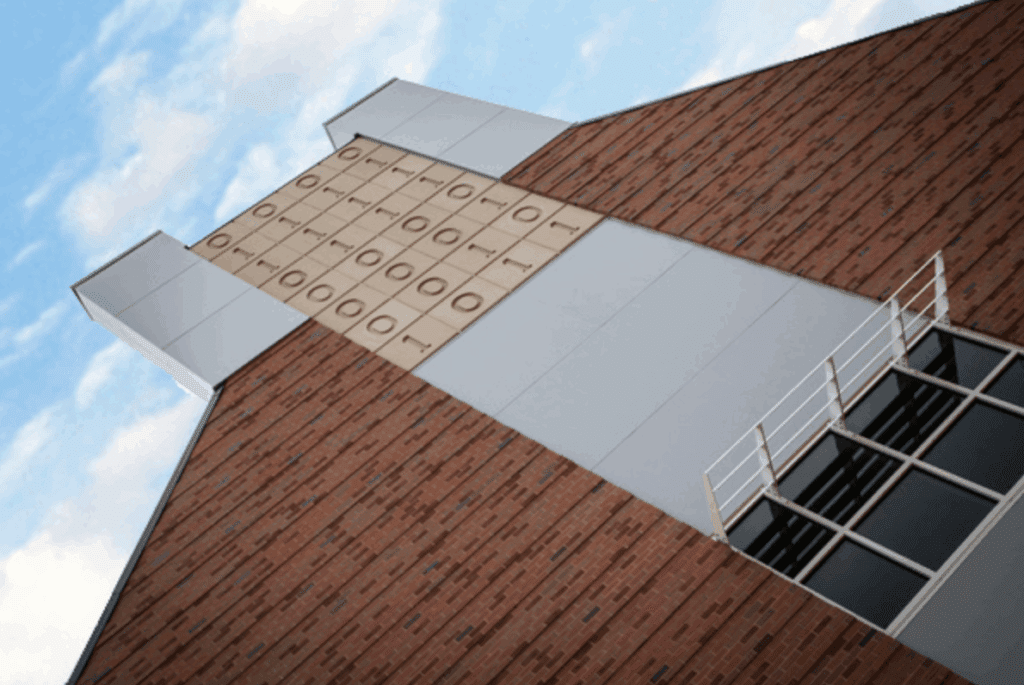
Paper Title: Engaging Mathematicians One Step at a Time: Math Trails
Author(s) and Year: Mary L. Dalton & Jennifer Yantz (2025)
Journal: Journal of Humanistic Mathematics (Open Access)
TL;DR: This paper introduces the concept of math trails — guided walks designed to engage students in actively observing and reasoning about mathematical concepts in everyday life — and shares a case study on how to create one on a university campus. These activities help connect abstract math concepts to familiar surroundings, like fountains or windows. The authors argue that math trails offer a fun and accessible way to teach mathematics outside the classroom.
Why I chose this paper: Out of all the STEM fields, math seems the hardest to do outreach in — at least to me. The authors address this challenge with an interactive outdoor activity, which made me interested in exploring how mathematical concepts — which often seem too removed from everyday life — can be made engaging for students. Their advice on how to create a math trail also makes this paper highly practical for math teachers and education managers.
The Background – Seekest Thou the Road
Mathematics is all around us. At the very beginning of their math journey, students add and subtract real-life objects like apples. At some point in their education, math lessons start to be all about practicing procedures, making it more difficult to relate math to the real world. Pen and paper replace exploration, which decreases student engagement in learning.
How can we change this? The answer is simple: get out of the classroom and onto the math trail! A math trail is a walk where participants discover mathematics in the world around them. Unlike the procedural learning in the classroom, math trails are structured as guided explorations. Participants follow a predetermined path with stops, where they are encouraged to observe and consider mathematical concepts directly related to the real world. It must be difficult to create one though, right?
Wrong.
The Research Question – Marching Ever Forward
In this study, the authors explore the following central themes:
- How can outdoor mathematics help develop mathematical thinking?
- How do math trails help connect abstract math concepts with everyday objects, patterns, and surroundings?
- What should you consider when designing a math trail?
The Methods – Through Many Miles of Tricks and Trials
The authors looked for items of visible mathematics — objects, patterns, or structures that directly reflect mathematical concepts — at the Austin Peay State University (Clarksville, Tennessee) campus. Examples of such objects included fountains made of concentric circles or a binary code on a university building. From there, they designed a route with twelve stops, which takes about 90 minutes to complete.
Their math trail is accessible with and without electronic devices and is supplemented with a guidebook. It targets middle-school students and covers mathematical concepts such as the Pythagorean Theorem, circumference, coordinate plane, number system, and others. However, the authors note that they plan to create trails for other grades and mathematical skills levels, too.
The Results – Follow Me, My Friend
“Each and every child should develop deep mathematical understanding as confident and capable learners; understand and critique the world through mathematics; and experience the wonder, joy, and beauty of mathematics.”
National Council of Teachers of Mathematics
Outdoor education in mathematics — such as following a math trail — allows one to explore an interdisciplinary curriculum in a multimodal way, encouraging students to employ multiple senses in learning. Furthermore, hands-on math education grounds abstract mathematics concepts in real-life, tangible examples, instead of exploring them in a traditional pen-and-paper setting. This betters student engagement and challenges students to do high-cognitive demand tasks for which there might not be enough time in the classroom.
Some math trails already exist in science museums and centers around the world, but they are still rather rare. A math trail, however, can be created practically anywhere: simply outside, at a zoo, a playground, or on campus. The participants are prompted to consider the mathematics of everyday objects — gardens, buildings, fountains, etc. — and ask what is happening there, mathematically. This allows the students to see how mathematics is actually very relevant to our everyday lives.
The authors give the following advice to aspiring trail-makers:
- Consider accessible locations. If you can’t build an outdoor math trail, think of indoor activities and surroundings that can be considered mathematically.
- Look both for items of visible mathematics (e.g., binary code) and everyday objects, structures, and arrangements displaying math-related features, such as shapes, patterns, distances, angles, etc.
- Look both for stationary — permanent objects such as buildings — and changing items that get “replaced” often, e.g., license plates.
- Engage students to help create new activities for the trail.
- Take advantage of the students’ newfound engagement in mathematics in the classroom after the trail.
The Impact – To Glory at the End
A math trail brings abstract mathematics out of a non-relatable, routine-ridden classroom and into the real world, making it more tangible for students. This interactive and fun way to study mathematics outdoors not only reinforces the relevance of mathematical concepts, but can also boost the interest and motivation of students. After following the math trail, the students might even continue drawing connections between real-world applications and abstract mathematical ideas when they are back in the classroom.
While math trails take preparatory efforts to design and set up, they are extremely versatile and accessible. This makes them an interesting tool for interactive and multimodal learning that suits different age groups and levels of mathematical knowledge. Unlike in the classroom, there are no grades — instead, the students are encouraged to observe, reason, or even give suggestions to improve the trail, truly placing them at the very center of the learning experience. Perhaps even more important, math trails show that there is more than one way to do math. (Also, they are fun!)
My key takeaway: Making math relatable can help spark interest in learning mathematics and even choosing STEM careers. Even without long-term impact, math trails are simply exciting, novel experiences and can offer a fresh view on what the students have learned in the classroom.
Edited by Diego Ramírez Martín del Campo and Crystal Koralis Colón Ortiz
This research digest contains lyrics from the The Ballad of the Witches’ Road (Witches’ Chant Version) — Agatha All Along cast. It is cross-posted here in partnership with SciComm Bites. You can read the original piece here.
 +
Add CSML on Google
+
Add CSML on Google

Mykyta 'Nik' Kliapets is a PhD Student and a Kavli Scholar in Machine Learning for Astrophysics at KU Leuven, developing AI solutions to study pulsating stars. He is passionate about science communication and is currently writing for SciCommBites, where he summarizes recent research on science and society. His other outreach contributions include a catwalk in spacesuits, an episode on design thinking for an educational series, and physical models of planetary atmospheres.





12 companies invest $180k to keep Letters to a Pre-Scientist free for students

SciArt behind the scenes: The hows, whys, and whats of the science artists — a research digest

How Georgia Tech’s Institute for Neuroscience, Neurotechnology, and Society is integrating lived experience into research and education

Researchers examine the expanding use of participatory science data by state agencies

Scenes from Astronomy Night at the Intrepid Museum, New York City
Scenes from Astronomy Night at the Intrepid Museum, New York City
Researchers examine the expanding use of participatory science data by state agencies
How Georgia Tech’s Institute for Neuroscience, Neurotechnology, and Society is integrating lived experience into research and education
SciArt behind the scenes: The hows, whys, and whats of the science artists — a research digest
12 companies invest $180k to keep Letters to a Pre-Scientist free for students

What it takes to include Deaf voices in scientific research

Risa Schnebly’s journey to researching ecological grief and telling its stories

“Science is something that we do together.” Benjamin Richards on how OceanEyes collaborates with citizen scientists to monitor deepwater fish in Hawai’i

Melanie Brown: “If you listen, people want to share things that are important to them.”

Abby C. King on leveraging local wisdom and science to create a thriving environment: “Our communities are the most valuable renewable resources for a healthy planet.”

Contact
Menu
Designed with WordPress