
Civic Science Observer
Building institutional capacity for public engagement with science: Insights from a NASEM panel


What would it take for research universities and institutions to treat public engagement as central to research rather than an afterthought? That was the challenge posed at a recent National Academies webinar. As moderator Elyse Aurbach from Michigan State University noted, the goal was to grapple with the tensions between disciplinary traditions and institutional opportunities, and to consider how institutions can build the capacity to support engagement across the spectrum of research.
Panelists argued that the answer lies in building real capacity by creating supportive cultures inside universities, equipping researchers with resources and training, and forging partnerships that extend beyond academia.
They also stressed that institutions need ways to listen to communities, respond to their concerns, and integrate public voices throughout the research process, not just at the end. Just as importantly, panelists highlighted the need for better mechanisms to document the long-term impacts of engagement and share those lessons broadly.
“Doing public engagement has always been a secondary thing or add-on thing, and viewed in that way. We are not at a time where that thinking works anymore,” said Erica Kimmerling with the Association of Science and Technology Centers. “We are in a critically different moment when it comes to why we need to do this work, and that should be fundamentally informing how we institute change at an individual institution and systems level.”
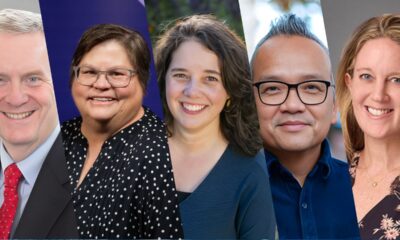
The webinar titled ‘Building Institutional Capacity for Public Engagement with Science‘ featured five panelists and built upon a workshop whose proceedings are available here. Below are some of the many insights shared.
Building institutional capacity: examples mentioned
A range of institutional bright spots that show different ways capacity is being built. Examples of these, some of which were cited by the panelists, include:
- Morehouse School of Medicine has a community governing board that guides its research.
- Brown University created a cabinet-level role on engagement.
- The University of Pittsburgh is developing a competency framework for engagement professionals.
- The University of Missouri offers a graduate certificate in public engagement and runs the ARIS program.
- Michigan State runs a summer intensive on community-engaged scholarship.
These examples, alongside the University of North Carolina at Charlotte’s Community Innovation Incubator and Wisconsin programs that embed students in rural and urban communities, were highlighted as models of progress.
Creating momentum
Susan D. Renoe, a panelist from the University of Missouri, stated that “momentum has been building for a long time, and it keeps growing.”
Taking the first steps toward building more effective public engagement initiatives may entail working with someone within your organization or outside of your organization to move an innovative idea forward, the panelists said.
“We think about this at an ecosystem level. But you don’t all need to do everything all at once, at the same time,” said Liz Crocker of the American Geophysical Union. “We can think about splitting things up. You can do one thing, I can do something else. …It’s okay to pick low-hanging fruit. It’s okay to pick the thing that’s easy” to do.
There are also steps within an organization, such as an academic institution, that researchers should consider implementing to ensure effective science communication.
One is to stop viewing engagement and communication as being separate from the research’s mission, according to Kimmerling. This may involve working with scientists so that they have a better understanding of how their research funding benefits the broader public, as well as working with the broader community to give them a more informed awareness of how scientific research benefits their everyday lives.
“In order to respond effectively, it’s these deeper forms of engagement, listening sessions, forums, and partnerships that allow us to learn more,” said Kimmerling, discussing a recent survey she was involved in that looked at the broader public’s perception of scientific research.
Another step is to be mindful of the humanitarian role that scientific research can fulfill within disadvantaged communities, panelists said. Instead of engaging in science just for the sake of generating knowledge, researchers should partner with a local community as they jointly conduct scientific research.
“I think some of the most exciting work that I’m seeing are functions and practices that elevate community beyond just subjects but to community as participants,” said Byron White of SOVA Solutions, a nonprofit aimed at developing operational strategies for higher education.
White considered the next level of work as members of the community working as co-producers who are engaged at a deep level. While community members become the drivers of the research questions, researchers are coming alongside and supporting the progress that the community is making, he said. He pointed to the Community Innovation Incubator at the University of North Carolina at Charlotte as an example.
“There’s a power system involved here. Science has a language of power,” Crocker said. “When you give people the ability to tap into that—they often come to us when they’re talking about their problems. They might say, ‘my community feels sicker, our throats hurt, we’re tired and we have headaches.’ They might have some general sense of what that source might be. But when you can add in research and data and statistics to prove actual correlations and then causations of why someone might be becoming ill because of environmental pollution or something like that, then that gives them the ability to really advocate for change and to improve their points and move that upwards throughout those systems of power.”
At the meta level, or the level beyond single institutions, science societies and institutions can play an important role by empowering scientists not only to help them engage with those communities but also to partner with other peers across disciplines, according to Crocker.
“One of the things we are coming to really deeply appreciate as interdisciplinary is not just making sure that physicists are talking to chemists, but also thinking about it beyond natural sciences – bringing in social scientists and humanities,” Crocker said. “They can give us a lot of insights, a lot of information, but they also should be co-collaborating with us, and that should also include community knowledge. They should all be part of this broader ecosystem of how we are working together.”
Crocker aids in developing interdisciplinary partnerships through her work with Thriving Earth Exchange, a community science program providing resources, training, and structure for people and organizations to move forward. These resources include interweaving education with policy and publishing a peer-reviewed journal on community science.
It “gives people the chance to make a deep impact, but also to learn how to do this on the ground, which is often very different than just attending a workshop,” Crocker said. She continued, “that’s something that at this meta network level we can do. We can provide everything from just static resources all the way to that deep-dive experience and help programs get developed.”
Through Newman’s work with rural communities in Wisconsin, a state with diverging political persuasions, Newman said he has been able to see the value of helping diverse audiences—such as scientists and the broader public—strive toward a common understanding.
“Oftentimes, what we find is that scientists and the public are thinking about the same thing, [but] just using a different vernacular. And so our goal was to try to bridge the community with science and scientists,” Newman said.
He continued, “When you meet people face-to-face, and you build that human-to-human connection, you realize that we have more in common than less.”
What follow-on actions did the insights above spark for you?


Joanna Marsh is a freelance writer and journalist based in Washington, D.C. For The Civic Science Observer, she reports on new developments across the citizen science landscape, covering both new research and on-the-ground practice. Her work highlights how local communities are engaging with scientists to contribute to ongoing scientific research and lessons being learned by the involved stakeholders.




Did You Know: A museum dedicated to the brain is being developed in Southern California?

Peer teaching as empowerment? Exploring NeuroBoricuas with Dr. Christian Bravo-Rivera

STEM Unbarred: What the initiative is learning about hands-on science for incarcerated youth

San Francisco Bay Area climate resilience group helps local communities talk about extreme heat

Did You Know: Kirtland’s Warbler Festival in Michigan is engaging the local community in celebrating and conserving the once-endangered songbird through educational events

Questions, biology-based environmental stewardship, and accessibility are at the center of Bio4Climate’s annual conferences
Did You Know: Kirtland’s Warbler Festival in Michigan is engaging the local community in celebrating and conserving the once-endangered songbird through educational events
San Francisco Bay Area climate resilience group helps local communities talk about extreme heat
STEM Unbarred: What the initiative is learning about hands-on science for incarcerated youth
Peer teaching as empowerment? Exploring NeuroBoricuas with Dr. Christian Bravo-Rivera
Did You Know: A museum dedicated to the brain is being developed in Southern California?
STEM Unbarred: What the initiative is learning about hands-on science for incarcerated youth

Exploring workforce needs and intergenerational learning in informal STEM education

Making a Mini-Forest: participatory science afforestation across the globe

18 months later, Casey Lardner from Genspace says, “we’ve been really focused on building systems”
Contact
Menu
Designed with WordPress