
Civic Science Observer
The growing imperative for civic science solutions journalism

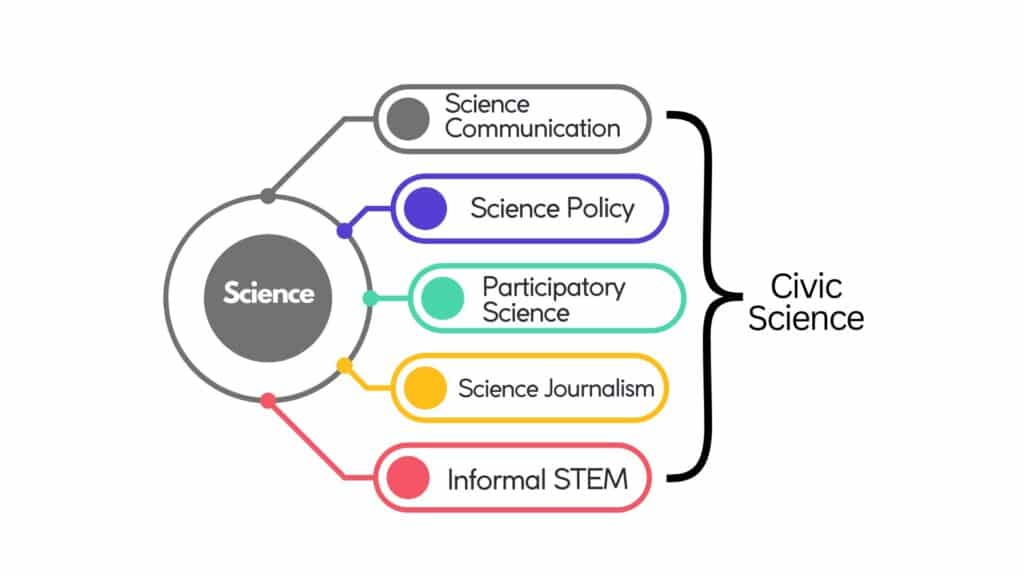
What is civic science? The answer to this question always invites this important follow-up question: Please tell me more. For me, civic science is an umbrella term encompassing science communication, public engagement, science policy, science journalism, informal science, participatory science, and related practices [1–4] (see Figure 1). Across these domains, practitioners and scholars are creatively working to strengthen dialogue pathways between scientists, local communities, policymakers, and other stakeholders to address societal challenges through collaborative, community-centered approaches. Yet, as other have noted [5,6], the knowledge emerging within civic science fields is often siloed within its respective communities. Structural, cultural, and incentive-based barriers limit the exchange of insights between research and practice, making it hard for practitioners to benefit from research, for researchers to learn from practice, and for communities outside these spaces to learn about and participate in the solutions being generated across the field.
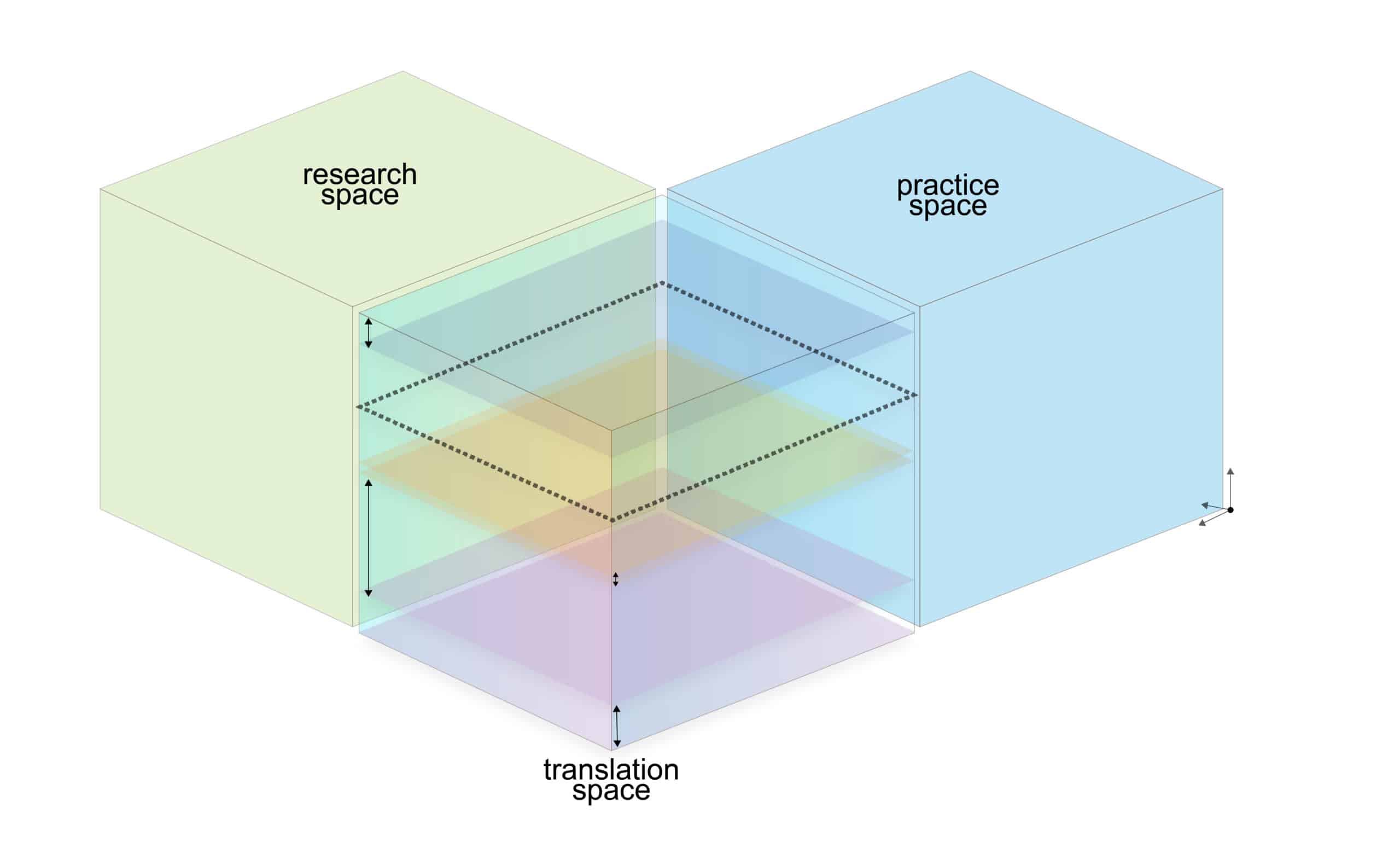
This contributes to a persistent issue: the proliferation of civic science activities has not been matched by structures that support the ongoing translation of insights across the vast landscape. More than ever, there is a need for approaches that can chronicle, interpret, and make these practices visible in real time (see Figure 2), to help prevent the loss of learning that occurs when domains operate in isolation. Civic science solutions journalism is proposed here as one such approach—an emerging practice that surfaces the solutions at the intersections of science and society, supports mutual learning, and helps ensure that promising actionable insights are not lost.
So with that framing in mind, what then is civic science solutions journalism?
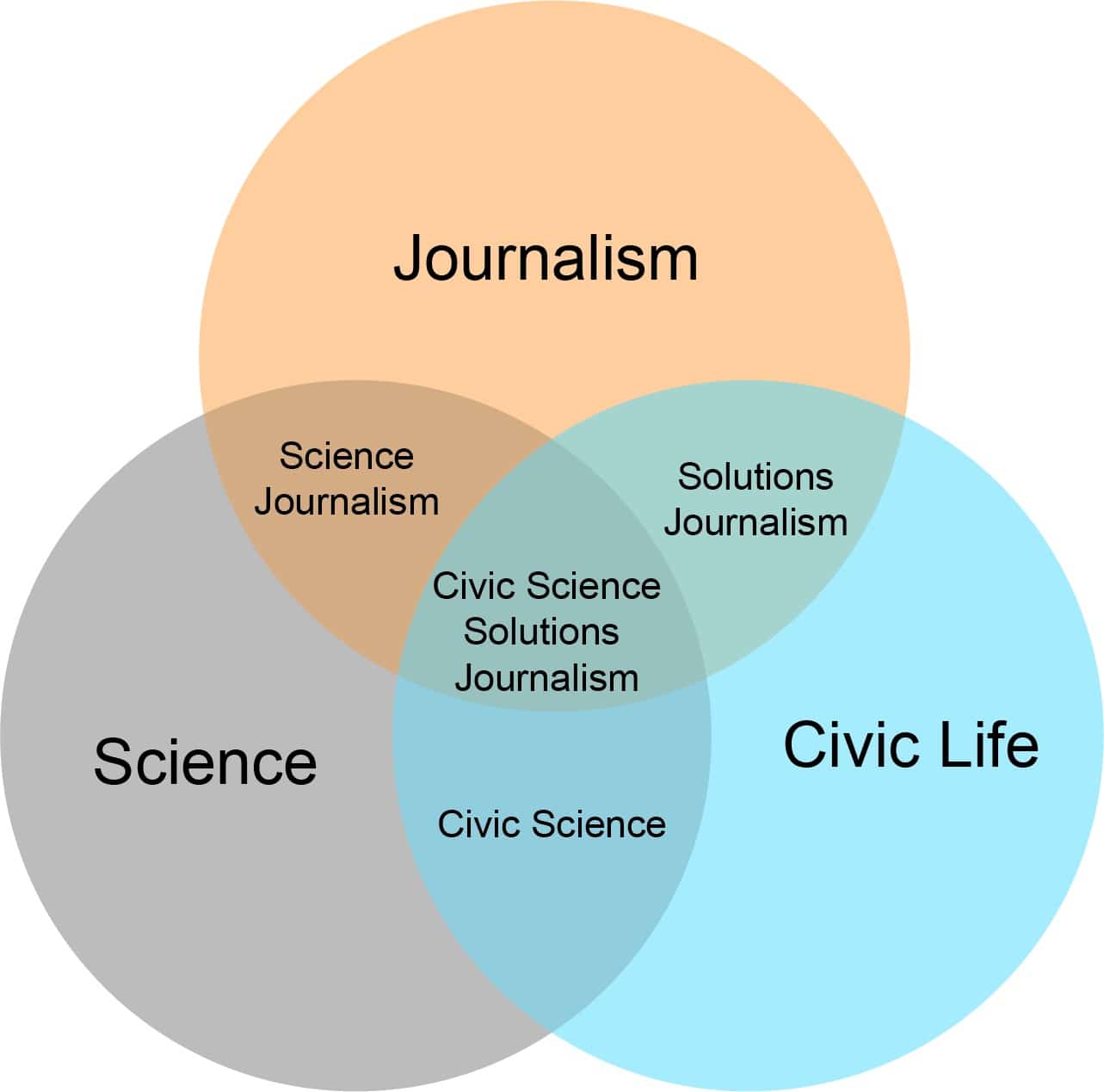
Well, I describe it as an emerging branch of the broader solutions journalism existing at the intersection of three areas—civic life, science, and journalism (see Figure 3). Grounded in ethnography, the practice offers a critical documentation of the developing landscape of scholarship and practice across civic science. In a nutshell, it’s about investigating the practice of civic science and the solutions being generated.
With that in mind, I believe civic science solutions journalists would be motivated to unearth insights across the landscape, including from science festivals, participatory science projects, science communication research, science policy work, and the broad spectrum of spaces where civic science practitioners work. Civic science solutions journalists would then examine the full range of activities from their conceptual stages to their execution. Their exploration might include covering the pathways in which artists and scientists are co-creating new knowledge, the impact of community citizen science projects, the launch of new science exhibits, the lessons learned from new research, exploring the experiences of practitioners that have gone unrecognized from conversations, dissecting the development of new civic science education initiatives, and so much more.
The potential topics for exploration are as diverse as the ecosystem of civic science. Ultimately, civic science solutions journalists will likely strive to illuminate and analyze the multidimensional activities within civic science and the new solutions they are generating.
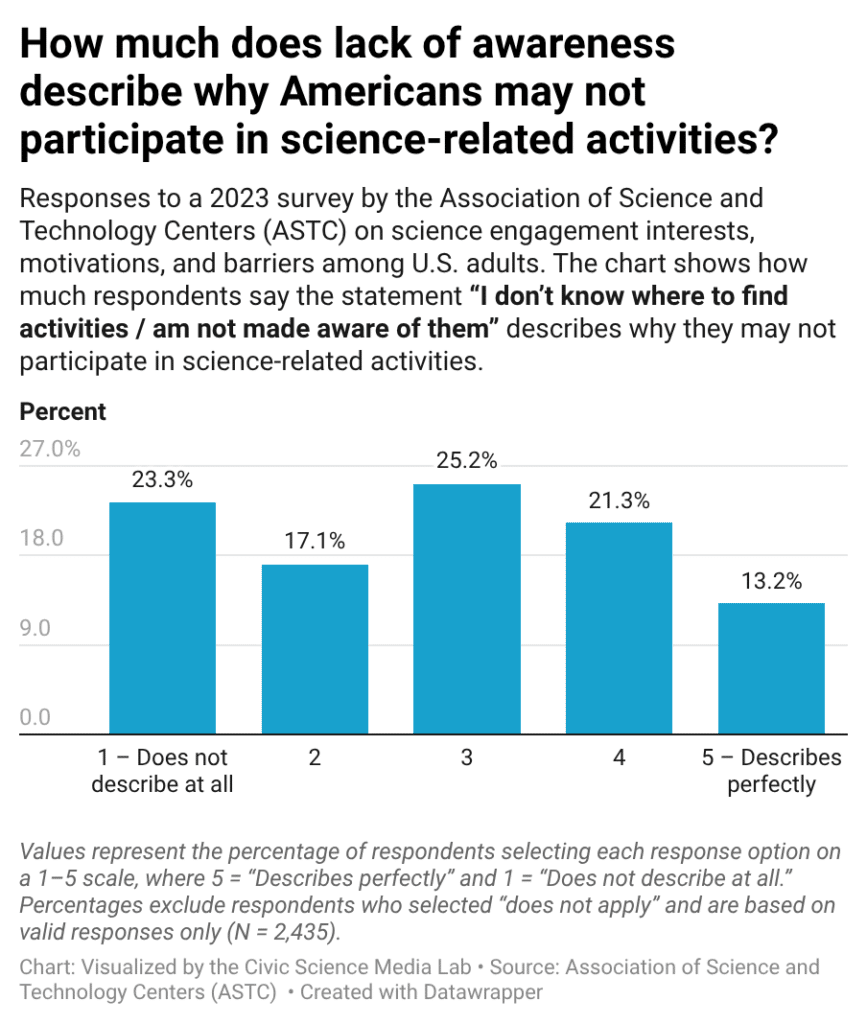
Yet, as civic science solutions journalism takes its first steps, important questions must be addressed. Among these is better articulating the core objectives, which will likely vary across stakeholders. Identifying the target audiences is also critical — should this journalism be targeted to those within the field (i.e., funders, scholars, practitioners, etc) or everyone? Growing evidence, such as that shown in Figure 4, suggests that the broader publics are also a major target audience.
Assessing the impact of such work presents another important consideration. At its core, such an assessment would likely require the ability to capture the follow-on actions taken by those who engage with the coverage. It is also worth considering the sustainability of this form of journalism, particularly within an already financially constrained field. For example, what type and level of support is needed to ensure its longevity and independence? Together, these questions and many others underscore the need for a strategic framework that can organize the practice, clarify its goals, and define its boundaries.
In summary, civic science solutions journalists have the potential to serve as a critical connective tissue among scholars, practitioners, and local communities. There is still a ton to figure out, but similar to the original 2018 imperative for civic science, I believe there is now a growing imperative for civic science solutions journalism.
Update Timeline
This is a living document. As new insights, examples, and references become available, we will continue integrating them into this piece.
Additional Reading
- Navigating the Future: Civic Science Career Roadmap . Civic Science Fellows, 2023.
- Christopherson, E. G., Scheufele, D. & Smith, B. The Civic Science Imperative . Stanford Social Innovation Review, 2018.
- Lane, N. F. Remarks by Dr. Neal F. Lane at AAAS Annual Meeting, 2/9/96 . National Science Foundation.
- Garlick, J. & Levine, P. Where civics meets science: building science for the public good through Civic Science. Oral Diseases 23, 692–696, 2017.
- Fischer, L., Barata, G. F., Scheu, A. M. & Ziegler, R. Connecting science communication research and practice: challenges and ways forward . Journal of Science Communication 23(02), E, 2024.
- Anjos, S., Russo, P. & Carvalho, A. Communicating astronomy with the public: perspectives of an international community of practice . Journal of Science Communication 20(03), A11, 2021.
What follow-on actions did the insights above spark for you?


Fanuel Muindi is a former neuroscientist turned civic science archivist and documentarian. He is a professor of the practice in the Department of Communication Studies within the College of Arts, Media, and Design at Northeastern University, where he leads the Civic Science Media Lab. Dr. Muindi received his Bachelor’s degree in Biology and PhD in Organismal Biology from Morehouse College and Stanford University, respectively. He completed his postdoctoral training at MIT.




Did You Know: A museum dedicated to the brain is being developed in Southern California?

Peer teaching as empowerment? Exploring NeuroBoricuas with Dr. Christian Bravo-Rivera

STEM Unbarred: What the initiative is learning about hands-on science for incarcerated youth

San Francisco Bay Area climate resilience group helps local communities talk about extreme heat

Did You Know: Kirtland’s Warbler Festival in Michigan is engaging the local community in celebrating and conserving the once-endangered songbird through educational events

Questions, biology-based environmental stewardship, and accessibility are at the center of Bio4Climate’s annual conferences
Did You Know: Kirtland’s Warbler Festival in Michigan is engaging the local community in celebrating and conserving the once-endangered songbird through educational events
San Francisco Bay Area climate resilience group helps local communities talk about extreme heat
STEM Unbarred: What the initiative is learning about hands-on science for incarcerated youth
Peer teaching as empowerment? Exploring NeuroBoricuas with Dr. Christian Bravo-Rivera
Did You Know: A museum dedicated to the brain is being developed in Southern California?
STEM Unbarred: What the initiative is learning about hands-on science for incarcerated youth

Exploring workforce needs and intergenerational learning in informal STEM education

Making a Mini-Forest: participatory science afforestation across the globe

18 months later, Casey Lardner from Genspace says, “we’ve been really focused on building systems”
Contact
Menu
Designed with WordPress