
CSML Audio Studio
Haley Davis shares how SeaKeepers is engaging the yachting community to support marine citizen science projects
“One of those big challenges has been a misconception within the scientific community that citizen science data is just no good.” — Haley Davis

In this episode of Science Engaged, I speak with Haley Davis, a data scientist at the International SeaKeepers Society, which is an ocean conservation nonprofit that advances marine research by engaging the yachting community. Davis explains how private vessels can serve as research platforms through citizen science programs and scientist-led expeditions, including contributions to the Seabed 2030 effort to map the world’s ocean floor.
She shares key insights with me on how distributed vessel participation expands data collection, why well-designed protocols enable non-scientists to gather usable data, and why many boat owners choose to support research. She also discusses practical challenges, including aligning expectations between scientists and yacht crews, protecting private vessels during fieldwork, and addressing skepticism about the quality of citizen-generated data.
Some of the takeaways
A major operational challenge is mismatched expectations between researchers and private yacht crews, since leisure vessels are not set up like rugged research boats.
There is persistent skepticism in parts of the scientific community about citizen science data quality, which she notes can be addressed by structuring collection so experts remain responsible for interpretation and validation.
Many vessel owners choose to participate because they want to give back and support ocean research, and she notes she has “never had a problem getting boats,” with owners often eager to be involved and contribute their time and platforms.
This episode is made possible by support from Schmidt Sciences and the UC Santa Cruz Science Communication Catalyst Grant. Special thanks to Fanuel Muindi for co-producing this audio program.
Here is our conversation:
Kristel Tjandra: Welcome to Science Engaged. I’m your host, Kristel Tjandra, and today I’m joined by our guest, Haley Davis from the International SeaKeepers Society, an ocean conservation nonprofit that facilitates marine research by engaging with the yachting community. Welcome, Haley.
Haley Davis: Hi! Thank you so much.
Kristel Tjandra: Haley, can you tell us a bit about what SeaKeepers does and what is your role at the organization?
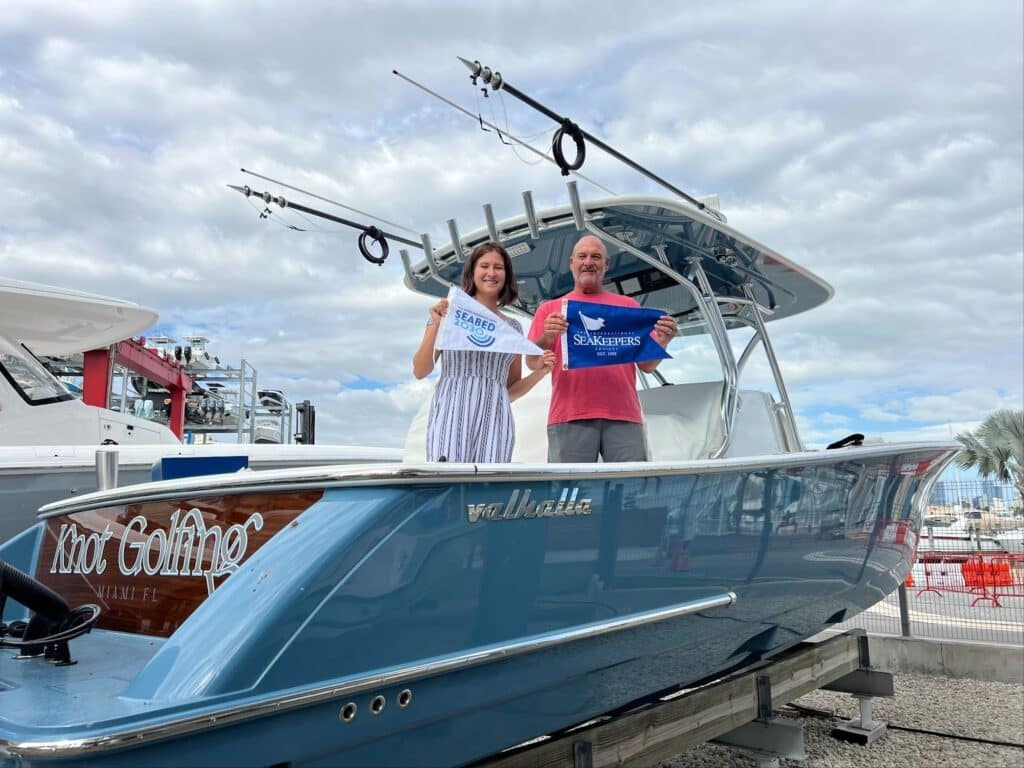
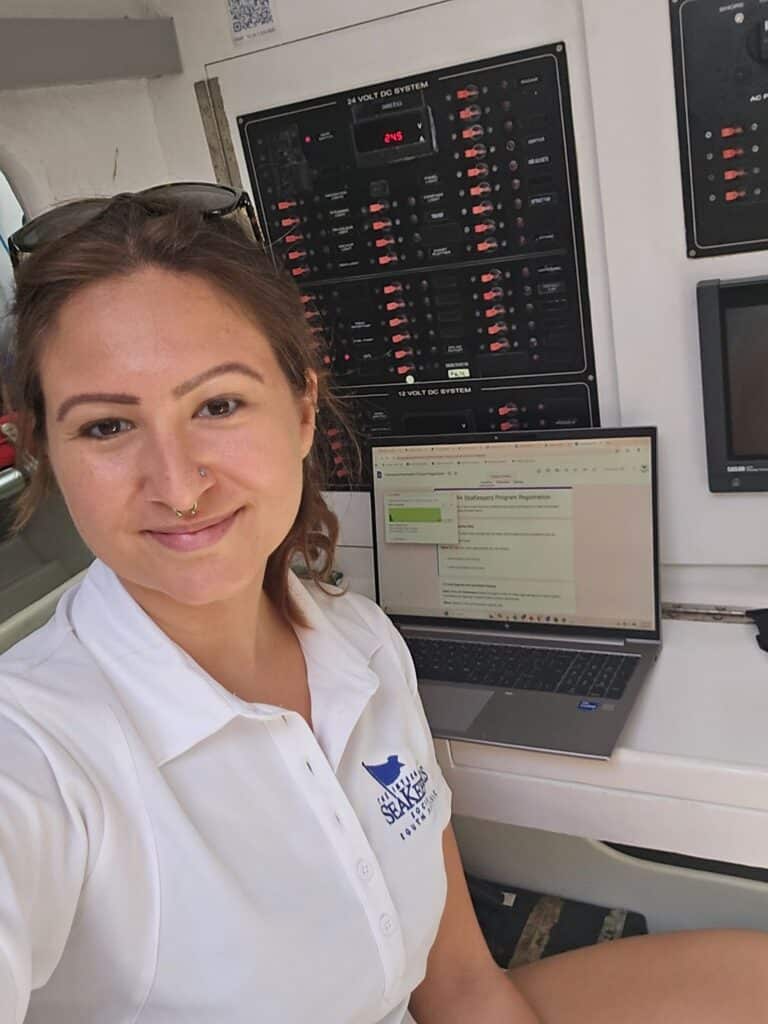
Haley Davis: So the International SeaKeepers Society is an organization that has an overarching goal of accomplishing scientific needs and research by utilizing the private yachting and vessel community, but we have about four main pillars, and this is scientist-led expeditions, citizen science programming, educational outreach and community engagement. And so these four different pillars are accomplished in a variety of different ways. I personally began my role as the citizen science manager, managing all of our citizen science engagement, where we would teach people who owned or were board vessels how to utilize scientific equipment themselves and to collect data or sightings or samples for scientists to analyze at a later point. And then I later became the data scientist, which kind of falls under the Citizen Science category, but I personally now manage all of our Seabed 2030 data, which is a program where we utilize private vessels to collect sea floor data and map our ocean floors.
Kristel Tjandra: That sounds exciting. How did the organization start?
Haley Davis: So in 1998, the International SeaKeeper Society was officially established after being conceived in 1997 in Monaco by six different yacht owners who were drawn to the notion of turning yachts into research platforms. Yachts and yacht owners were realizing that they’re often in places that are difficult to access, that are unique, and that scientists would really love to be able to understand better. And so this program, or this organization, kind of began with a dream of getting scientists into these places that privately owned vessels were able to go and had the resources to go to, that scientists didn’t always have the resources to get to. So there’s kind of this really cool dynamic between science and yachting, which I think a lot of people overlook. I always like to use the example of a yacht that wants to go on a vacation, or a yacht owner who wants to go on a vacation somewhere far away from where the yacht is currently docked. So let’s say there’s somebody who owns a yacht in South Florida who wants to go on a vacation around the Mediterranean. So the yachts oftentimes will sail across the Atlantic Ocean with a certain amount of crew on board. But usually the owner of the yacht is not on that boat because they have work that they need to be doing, or they need to be in other places. So that boat sails across the ocean with a skeleton crew, and then the owner of the boat meets them in the Mediterranean, goes on their vacation, and then leaves, and the boat comes back across the Atlantic Ocean, and on both of those huge transits, there’s space aboard the vessel, and they are already utilizing the fuel to get out into the middle of the Atlantic. At the same time, researchers spend a lot of time and money, a lot of grant applications, trying to get access to research boats that are already going to the middle of the Atlantic Ocean. It’s no small feat. And so if we can connect those two parties, we can kind of create a match made in heaven where science gets to be accomplished, and yacht owners and private vessels get to contribute back to the research community with things that don’t really strain their system too much. They operate around the systems that are already in place, which is cool. And then kind of early in our history, in 2001 five yacht owners, among them Paul Allen, collected some oceanic and atmospheric data utilizing a data collection device called the Seakeeper 1000 and this was one of our really early citizen science tools that people are familiar with, and we actually used to have to drill through holes into the ocean for this instrument to gain access to the water. Now, obviously, we’ve come a long way, and we use slightly less invasive citizen science projects, but this is kind of where SeaKeepers got its start. Is with these big instruments and really innovative, exciting collaborations between yachting and research.
Kristel Tjandra: Who funds the SeaKeepers?
Haley Davis: So, SeaKeepers primarily funds its programming through yacht and vessel donations, corporate sponsorships and partnerships with the marine industry. So when somebody donates a boat, the proceeds go straight into supporting our research expeditions, educational outreach and citizen science projects. We also get a lot of in kind support for some of our events, which is really awesome, and vessel owners offer their time and platforms in kind, oftentimes, so that our scientists can get out onto the water without having to take on the heavy cost of charters. So it’s a mix of philanthropy, practical collaboration and donations that keeps our programs running and our impact continually growing.
Kristel Tjandra: How many boat owners have participated in the SeaKeepers program so far, and where are these boats now?
Haley Davis: That’s a great question. I think all the time we probably have, I would guess, close to 400 or so vessels. We currently have 230 boats that have participated in seabed, 2030, but that doesn’t include scientist-led expeditions, which have been one of our longest-running programs. These boats are all over the world. Vessels can participate from anywhere that they are, from the Mediterranean to the Pacific to Southeast Asia, all over the world. We have programs that our boats can get involved in, whether that’s citizen science or scientist-led expeditions or one of our other pillars, like educational outreach or community engagement.
Kristel Tjandra: Earlier, you mentioned that you’re now a data scientist. I’m curious to hear about some of the research projects that scientists do with SeaKeepers and the yachting community, and also your own project with the Seabed 2030.
Haley Davis: That’s an awesome question, because our vessels are all over the world. Scientists really have access to a huge variety of different topics. They can pick from and study regions we’ve had things all the way from conch surveys, which is a marine gastropod to marine mammals, dolphins, surveys in different parts of the world. We’ve had researchers go to the Galapagos. We’ve had scientists doing shark research and shark expeditions. I even got to go aboard an expedition with some of our partners beneath the waves and do a Mola Mola research expedition, which is the oceanic sunfish. It’s the largest bony fish in the world. So we’ve gotten to do research all over and a ton of different topics, which is really cool. We oftentimes will look for boats with certain capacities or certain features that are most well suited to the kind of research being done. So if it’s a project that needs a lot of hands on, animal tagging or measurements, having boats that have swim platforms can be really helpful. But we as sea keepers get to kind of stand in that space where we have worked with enough vessels and enough scientists that we can oftentimes even foresee needs from each side that they may not foresee themselves if they haven’t worked with that partnership between private boats and science before. So we get to kind of stand in that space and help both parties to get the most out of their experience, which is awesome.
Kristel Tjandra: That’s exciting. Can you tell me a bit about what a typical expedition look like?
Haley Davis: Expeditions can range so widely, so sometimes we have expeditions. I guess our typical expedition is maybe a couple of days to a week long, and it involves scientists flying in from wherever they are and boarding the Vessel. The Vessel sets sail, and for multiple nights at a time, the boat is somewhere relatively offshore. They may moor up or anchor overnight, and the boat owners and operators and crew get to be on the same boat as the scientists, eating meals together, communing together, which is really cool. Sometimes that looks really different. I was on an expedition last year that was two weeks in the Bahamas, in a remote location called Little Inagua, which is one of the most remote islands of the Bahamas. And on that trip, we had to sail because there are no airports nearby the study site. We had to fly into an airport pretty far north, and then spent multiple days at sea sailing to the study site just to get there, and that was a little bit longer expedition. We’ve also had expeditions where it’s a smaller day vessel, and so we go out on day trip. Trips and come back and stay on land overnight, so not quite the exact same experience. But we obviously work with vessels of all shapes and sizes, so it really can be custom fit to both the vessel owner and the scientist needs, which is really nice.
Kristel Tjandra: Yeah, that sounds like a really match made so perfectly between scientists and yachting community. So how does SeaKeepers facilitate this exchange between the scientists and the boat owners?
Haley Davis: Yeah, so typically, this looks like, if you go to our website, I kind of jokingly say that we’re like, like, matchmakers. We’re like, the, I don’t know, the bumble of science and boating, where we actually have profiles of both vessels and research projects, and in each of those profiles, they list specificities about either the project or the boat that might be important to know. So this boat is going to be in this region. It’s available for this many days at a time. It has this many beds, or it has, it can carry this many people besides the crew. And then the science projects will say, you know, we are looking for a project of this length in this region, and we need a dive compressor so that we can go scuba diving. Or we need certain things like a dinghy to be able to access shallow water sites. So we basically have profiles for each of those different groups, and then people of the opposite group can come onto our website and look for boats or science projects that they’re interested in, and then they reach out to us and say, Hey, we’re really interested in a partnership with this scientist, or we’re interested in this project. Or sometimes they just say, hey, I’m interested in a project. Can you put my profile on your website so that it’s visible for other people? So we do, we kind of do it that way, where we have people come in and we publish profiles so that they can see each other,
Kristel Tjandra: Yeah, what are some of the challenges in terms of facilitate, facilitating those kind of exchanges? And how did sea keepers, you know, overcome it? If, yeah, overcome that those challenges,
Haley Davis: Yeah, there are a lot of unique challenges. I think within this I make it sound like it’s just this perfect match, which oftentimes it is, but sometimes you encounter situations where either researchers or vessel owners don’t fully understand what exactly the other entails. So a great example of that is as a researcher, a former researcher myself, as someone who did a lot of field science, I was very used to being on field research vessels. And field research vessels are kind of like the pickup trucks of the boating community, where they’re kind of meant to be, you know, handled. They’re meant to do the hard thing. If there’s a little ding on the deck or a little, you know, mud gets in a spot that it shouldn’t, it’s okay, and there’s no hard feelings about it. But obviously, when you’re going aboard somebody’s privately owned, you know, leisure boat or yacht, that’s a very different setting. So something that we’ve had in the past is researchers who aren’t quite used to maybe the needs and wants of a privately owned leisure boat, and then privately owned boats that aren’t exactly used to how messy science can be. So in the past, we’ve actually, as seed keepers, kind of jumped in the middle and said, Well, let us order some rubber mats that we can put down on the deck to protect it from the scientific equipment coming on board. Or maybe we, you know, manage bait being used for certain research projects in a specific way so that it doesn’t soak into or smell up certain parts of the boats. So things that maybe scientists aren’t used to, and that our pleasure boats and leisure boat owners aren’t quite used to about science, we get to kind of stand in that space and say, Hey, like there’s a happy medium. How can we accommodate both parties? So that’s a big challenge that we have faced in the past, and that has been it requires a lot of creativity to be able to overcome those challenges in the moment, which is pretty fun. You’re always kind of thinking on your toes, yeah.
Kristel Tjandra How would you describe, you know, the partnership between scientists and the boat community in our conversation, before we talk about you know data and how scientists need you know data that’s usable.
Haley Davis: So in another branch or another pillar of seed keepers are citizen science programming, there has been other kind of challenges that we’ve had to overcome. Um. Um, one of those big challenges has been a misconception within the scientific community that citizen science data is just no good. And that’s honestly a misconception that I had potentially even up until I started this job, is that citizen science data can’t be as high quality because the citizens aren’t trained scientists. And one thing that I found to be really interesting and enlightening is the way that we do Citizen Science here at sea keepers. And one of the big things that we focus on is trying to ensure that the citizen doesn’t have to be a full scientist to be useful. So there’s all sorts of things that we can do to encourage citizens to collect data that can then be analyzed by the experts and let the experts stay the experts. So a great example of this is when a net is towed behind a boat and a sample is collected. Our citizen scientists can take an image and send that image onto the experts to be identified. The citizen scientist doesn’t have to be identifying the organism to be useful. They’re already in a place seeing things that our scientists very rarely get to see. And the huge advantage of citizens in these programs is that citizens are where scientists wish they always could be, and that is on the water. We don’t get to be on the water as scientists every single day, but somebody does, and so utilizing that somebody, and getting in contact with that somebody, and then having them send either images or samples for analyzes or in the Seabed 2030 project, sending data over that’s being collected from an instrument, all of those things can allow the experts to stay the experts, but utilize the citizens for the fact that they’re in the water, on the water, seeing things that our scientists don’t get to see. Yeah.
Kristel Tjandra: Can you tell me more about what Seabed 2030 is?
Haley Davis: Yeah! Seabed 2030 is a United Nations decade Action Program under which sea keepers has a United Nations decade Action Project. And essentially this whole program was created for the UN ocean decade to try to map the whole ocean, map the sea floor, shape in its entirety by the year 2030 so seabed 2030, obviously, this is a very ambitious goal, but to date, we don’t have a map of the entire sea floor that’s open access that researchers around the world can see and utilize. So we are using crowdsourced bathymetry, which is a citizen science kind of tool to be able to collect and record and contribute data to this big, overarching project. So how we do that? What that looks like, practically, is a vessel comes to us and says, I would like to get involved in CBD 2030, and we send them a small data logger that plugs into their NEMA backbone, which is essentially where all the tools and technology on your boat are connected to each other so they can talk. And so it utilizes the existing depth finder and existing GPS that are already on a vessel, and it just listens to those things talk. And so this logger listens to the boat say, I’m in this location, the water is this deep. Well, now I’m in this location and the water is that deep. And so all of these little communications get recorded by this logger. And then at the end of a set amount of time, generally about three to six months, I will reach out, and I’ll say, Hey, do you have any data for us? And our citizen scientists can send us that data that’s been logged from their navigation system, and I can then upload it, I transform it, I, you know, quality control, make sure everything looks like it should, and then I send that on to the United Nations database that is collecting and compiling all of this data. So all of these things together end up creating a really cool Open Access map that you can view at the Data Center for Digital bathymetry online, and you can go to see how much we have contributed as seek keepers and as a global crowd sourced bathymetry group or community to this huge map that we’re trying to create. So far, I think we’re at about 27% mapped of the entire sea floor, which is really cool.
Kristel Tjandra: Yeah, that sounds like a cool and important project. So it seems like, you know, with the sea keepers interaction, it seems like the scientists can really benefit from the partnership, but what about the boat owners? What makes them want to get involved?
Haley Davis: Yeah, I actually get asked this question quite a lot, especially by other people who are in the Crowdsource bathymetry community. People ask, well, what would make a boat actually want to work with us if we started a crowdsource bathymetry program? How do we know that boats will come? And maybe I don’t have the best answer in the world to this, but my answer is that I have honestly never had a problem getting votes. People seem to love to be involved, to want to be involved, to want to give back. Oftentimes, people who are fortunate enough to own a yacht or a private vessel recognize that fortune and want to give back to the community in some ways, and oftentimes they are people who deeply love the ocean and want to spend their time taking care of the ocean in some way, shape or form. So it I’ve honestly always just had an abundance of people who really wanted to be engaged, who wanted to be involved and wanted to give back. So that’s something that I was surprised by when I first came into this position is just how many people were excited about the work that we’re doing and to participate.
Kristel Tjandra: What have you seen is the biggest contribution of SeaKeepers to the marine community?
Haley Davis: I think some of the biggest impacts that SeaKeepers have had on the marine engagement kind of sector is first of all on scientists. So as we bring scientists to places that are difficult to access, or give them access to people who are already in those locations, seeing rare encounters and rare experiences, we’re enriching the scientific community, which is really cool. At the same time, I think that it’s been interesting to see how being involved in science has changed the outlooks and mindsets, maybe of some of our crew and vessel owners, many of the people who want to get involved. Already have a propensity towards loving the ocean and wanting to know about the ocean, but there is oftentimes, maybe some challenges in understanding what science is really all about, how it works. And so once citizens get to be involved, either in science directly or by having scientists aboard their vessels, I’ve seen how it opens people’s minds and gets people so excited for the little things. Like, we have this one tube of mucus from this one animal, and it’s the most important thing, right? Like you see people really come to life and start to understand how even small or seemingly small things can be so important and so impactful to the way that we view and conserve and protect our oceans?
Kristel Tjandra: Yeah, if we have scientists and boat owners listening to this conversation, how can they take part in these activities?
Haley Davis: Great question. They can head on over to our SeaKeepers website, and they can head to the discovery vessel application. As a boat owner, this is where you’ll input your information to have your profile put on our website. And we’ll have a meeting with you about what kinds of projects you’re interested in, whether you want to do citizen science or scientist led expeditions. And then, as a researcher, you can head over to our website and look for our research application, where you can send us your proposal for your scientific project, and we’ll meet with you and chat about some of the requirements that you may have of a vessel. And then we can post that project on our website as well so that people can see it and hopefully reach out to get engaged, right?
Kristel Tjandra: Awesome, maybe just to close us off. What message do you have for people who are excited about this kind of project?
Haley Davis: I think the message that I have, I think that in the marine world, both as scientists and citizens, we can often think of ourselves as silos, as maybe the only person who is doing something like this, or the only person who shares this interest. And I think it’s more important than ever that we realize that we are really all one big community, the stakeholders that care about different features of the ocean, whether it’s the health of the coral reefs or the abundance of fish that they bring in, we are really all on the same team, and we all really do want the same thing for our oceans, which is to protect them and to be able to continue engaging with them and utilizing them for decades and centuries to come. So I think that involving the public is a great thing. I think there’s way more hands, eyes and minds that can go towards science than we necessarily give credit for, and so utilizing those resources as exactly what they are and. Um, Resources to access difficult locations or difficult samples is so important to the scientific community. So I’d say, reach beyond your immediate community. I would challenge you to look at other stakeholders in the marine space as collaborators and not competitors, and try to see how you can utilize each other to help further all of our goals at the same time, whether that’s through sea keepers or through other programs or other resources. I encourage you all to come together and and try to conserve our oceans for the future.
Kristel Tjandra: Thank you, Haley Davis, for being on the show.
Haley Davis: Yeah, thank you so much for having me. I really appreciate the chance to kind of talk about this incredible work and all of the hard work that scientists and citizens are doing around the world to help keep our ocean a safe place for everybody.
CREDIT
This episode is transcribed using Otter.ai. The podcast features soundtrack by Lukas Got Lucky / Success Story / Courtesy of www.epidemicsound.com
What follow-on actions did the insights above spark for you?





Did you know Boston’s Museum of Science is opening a Public Science Common? Here are some questions to consider

Did You Know: A museum dedicated to the brain is being developed in Southern California?

Peer teaching as empowerment? Exploring NeuroBoricuas with Dr. Christian Bravo-Rivera

STEM Unbarred: What the initiative is learning about hands-on science for incarcerated youth

San Francisco Bay Area climate resilience group helps local communities talk about extreme heat
San Francisco Bay Area climate resilience group helps local communities talk about extreme heat
STEM Unbarred: What the initiative is learning about hands-on science for incarcerated youth
Peer teaching as empowerment? Exploring NeuroBoricuas with Dr. Christian Bravo-Rivera
Did You Know: A museum dedicated to the brain is being developed in Southern California?
Did you know Boston’s Museum of Science is opening a Public Science Common? Here are some questions to consider
Did you know Boston’s Museum of Science is opening a Public Science Common? Here are some questions to consider
Did You Know: A museum dedicated to the brain is being developed in Southern California?
STEM Unbarred: What the initiative is learning about hands-on science for incarcerated youth

Exploring workforce needs and intergenerational learning in informal STEM education

Making a Mini-Forest: participatory science afforestation across the globe
Contact
Menu
Designed with WordPress