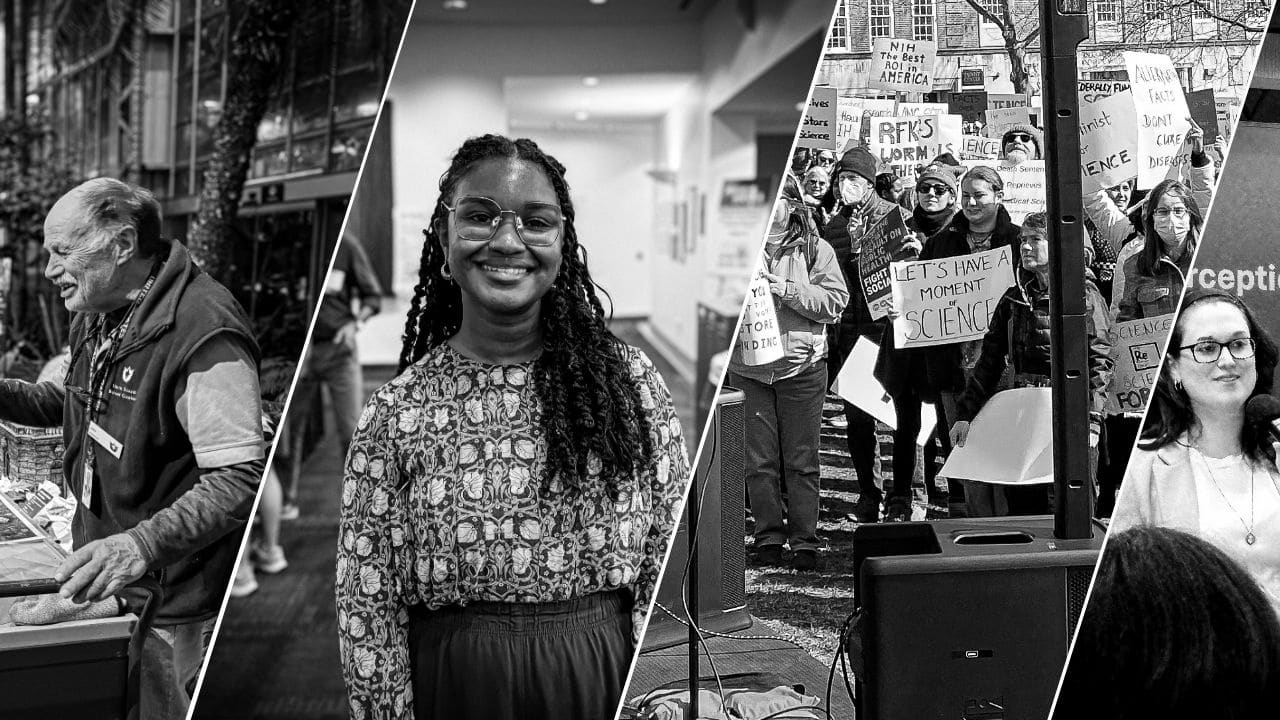
The saying goes that a picture is worth a thousand words. In addition to my ongoing ethnographic work in documenting the practice of civic science, I spent much of 2025 doing what I would describe as civic science photojournalism.
At its core, I envision civic science photojournalism capturing practitioners and community members in action across the landscape. For my practice, my photographs are largely in black and white, a deliberate choice meant to draw the viewer in and ultimately spark questions.
It is an experiment.
And it is also a bet. As civic science continues to evolve, I believe we would need photojournalists with dedicated civic science beats, not as a nice-to-have for the field, but as a way to document the rapid evolution of the work and make the developments across the landscape more visible to the broader public.
There have been a few encouraging signs that have motivated me to keep going with the experiment. For example, some of the work was selected for a group gallery show in Boston which was made possible through support from the Massachusetts Cultural Council.
Below are some of the photos from 2025.
During the Q&A portion of the ‘Science and Democracy’ panel discussion on January 9, 2025, co-hosted by Boston’s Museum of Science and The Boston Globe, Professors Danielle Allen and David Kaiser responded to an audience question on the temporal misalignment between science and democracy. The moderator, Tim Ritchie (President of the Museum of Science) expanded the question by asking: “The pace of technological change for something like #artificialintelligence, or the pace of technological change like for genetic engineering, these things are happening very quickly. The public wants to regulate in some way. Do we have the expertise to do so? How can the public have reasonable participation so that it actually counts for goodness?(CSML Photo/Fanuel Muindi/January 9, 2025)DJ Greta Margo spins tunes at Lithuania’s Energy and Technology Museum to showcase their exhibits through music. This was a special collaboration between our lab, Greta, and the museum. Listen and watch the music set here. (CSML Photo/Greta Margo Team/February 28, 2025)On March 7, 2025, Stand Up for Science rallies took place in Washington DC and 31 other cities. In Boston, correspondent Shannon Geary from our lab took this photo and conducted interviews at the rally as attendees explained why they were standing up for science. Many expressed that science is a lifelong passion and the driving force behind medical breakthroughs, environmental protection, and overall societal progress. Some warned that funding cuts and new policy decisions threaten to undo decades of advancement by stripping away critical scientific tools and insights. (CSML Photo/Shannon Geary/March 7, 2025)In March 2025, a science-art (more commonly known as SciArt) exhibit titled “Our Warming Planet: Visions of a Sustainable Future,” co-organized by Creative Malden and the Coffee Shop Artists in partnership with the city of Malden in Massachusetts, invited local artists to respond to Malden’s Climate Action Plan through mixed media works. Over 40 artists contributed more than 70 pieces, exploring themes from global environmental challenges to local sustainability efforts. I had the opportunity to witness the full arc of the exhibit—from its early planning stages to opening day—by engaging directly with organizers, artists, and attendees throughout. The open-ended call for submissions allowed artists to interpret the theme freely, leading to a wide range of creative responses. Participants included environmental advocates, educators, photographers, and several first-time exhibitors. Some were drawn to the urgency of the topic; others saw it as an opportunity to connect personal values with public dialogue. “This was written for me,” said one artist who had previously worked in climate advocacy and was seeking more direct ways to communicate through art. Another described the exhibit as a rare chance to use art as a “catalyst for change” in a public setting, noting that most of their climate-themed work had been displayed “guerilla-style” due to a lack of institutional support. One first-time contributor shared how the encouragement of friends helped her overcome imposter syndrome to submit: “I didn’t start making art until 2020 to keep my sanity,” she said, “and this show was kind of a way to enter the art world.” The exhibit drew strong public turnout from Malden and nearby towns, drawing a diverse mix of residents, city officials, and community leaders—including Malden’s Mayor (Gary Christenson), seen here delivering opening remarks at the exhibit. (CSML Photo/Fanuel Muindi/March 7, 2025)
Multimedia science communicator Niba Nirmal gives a short talk titled “Notes on Science Video Production: Workflow, Tips, and Challenges” at the 2025 annual Science Talk conference in Raleigh, North Carolina. The slide shows the organizations Niba has partnered with over the years. (CSML Photo/Fanuel Muindi/Apr 3, 2025) John Besley, (science communication researcher and the Ellis N. Brandt Professor at Michigan State University) looks on as he and Karen Peterman host a workshop titled “Designing and Evaluating Evidence-Based Science Communication Strategies” at the 2025 annual Science Talk conference. In the session, they provided an overview of the six elements of the SCRREE Framework for Public Engagement with Science. Besley writes that they focused on the cumulative and reciprocal elements of the framework “because of our sense is that we can often improve science communication efforts by (1) better embedding them within a longer-term strategy/engagement ecosystem, and (2) ensuring that both audiences and the scientific community benefit.” (CSML Photo/Fanuel Muindi/Apr 3, 2025)At the 2025 annual Science Talk conference in Raleigh, NC, Taylor Spicer, the newly appointed Executive Director of Engineers and Scientists Acting Locally sits down for an interview for the Questions of the Day program. Spicer provided a behind-the-scenes look at how ESAL fosters civic engagement among STEM professionals at the local level. She told me that “we are folks with STEM backgrounds, various career stages, ages, identities, who are coming together around a central interest and motivation to increase local civic engagement.” Rather than being prescriptive, she told me that ESAL supports a wide range of civic actions—from joining commissions to organizing cleanups—adapting to the interests of its growing 2,000-member network. As Spicer put it, “We try not to be prescriptive for any place, any person, but trust that members understand more about where they live and what communities need.” (CSML Photo/Fanuel Muindi/Apr 3, 2025) Stephanie Fine Sasse talks with attendees at the 2025 annual Science Talk conference after giving a talk titled “Unleashing Civic Imagination: Principles for bridging science with real-world issues.”Listening on the sidelines, questions ranged from defining key concepts to surfacing opportunities for collaboration and shared action. (CSML Photo/Fanuel Muindi/Apr 3, 2025)Attendees play the “Cooperation Game” exhibit at Exploratorium’s Unplug and Play event the annual conference of the Association of Science and Technology Centers in San Francisco. The game had the following instructions: “Your city is flooding! Work with others to move everyone to higher ground, where they will be safe.” The open-house event combined live music, food, and informal exploration, inviting attendees to move freely through the Exploratorium and engage with 700+ interactive exhibits spanning science and technology across multiple dimensions.(CSML Photo/Fanuel Muindi/Sept 6, 2025)The Association of Science and Technology Centers held its annual conference in San Francisco from September 5 to 8, 2025, bringing together science engagement professionals from museums, science centers, and allied organizations. The 2025 theme focused on connectivity. It was my first time attending the conference, but I felt very much at home and amongst friends. (CSML Photo/Fanuel Muindi/Sept 6, 2025)Dan Reicher (entrepreneur, investor, policymaker, lawyer and educator) and fellow panelist Brinda Adhikari (award-winning executive producer, showrunner and journalist) listen as moderator Krisan Uhlenbrock (not visible) frames a question during the Alan J. Friedman Science Center Dialogues session. (CSML Photo/Fanuel Muindi/Sept 6, 2025)
During a poster session at the 2025 Research!America National Health Research Forum in Washington DC, Jade Williams (above) from The Pettey Greene Program, shared with me some updates of their STEM Unbarred program. Since 2022, the program has reached more than 500 youth in a DC correctional facility, delivering over 15 STEM demos in biology, immunology, and ecology. Williams showcased that their ongoing analysis is showing significant increases in student content knowledge scores across science modules, indicating real learning gains. She further explained that students also connected lessons to personal experiences with measurable improvements in both engagement and knowledge. The program now aims to scale nationally. (CSML Photo/Fanuel Muindi/Sept 17, 2025)
Kyung LeBlanc, violin and guitar duo, play Bridgerton-inspired pop covers as part of the U.S. Botanic Garden’s “Season’s Greenings: Dino-Mite!” holiday exhibit, featuring plant-based dinosaur displays. The Conservatory is the “oldest continuously operating public garden in the United States.” Its stated mission: “inspire people to appreciate, study, and conserve plants to enrich society locally and globally.” What drew me to attend the showcase was the integration of music, which was featured throughout December with performers such as Skyline Jazz, Luck Penny, Sweet Something Jazz, and the Knox Engler Quartet. One of questions I would like to ask the Garden is the nature of the feedback they have received from attendees. (CSML Photo/Fanuel Muindi/Dec 30, 2025)
The U.S. Botanic Garden states that volunteers are a crucial part of their operations, with volunteers developing “new skills, exploring their personal interests, and connecting with the community.” Volunteers have two paths: working with people (public engagement) or working with plants (hands-on gardening). Captured above is one of the volunteers, Jeff, talking with visitors during the annual holiday display “Season’s Greenings.” His passion was palpable as I listede to the way he answeredquestions from visitors that stopped by his cart. (CSML Photo/Fanuel Muindi/Dec 30, 2025)
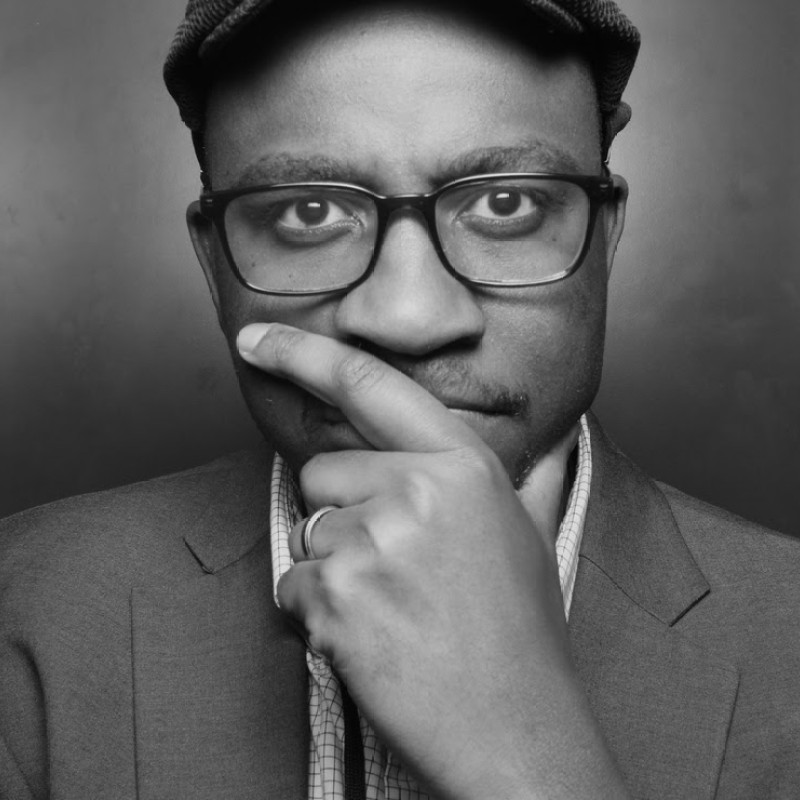
Fanuel Muindi is a former neuroscientist turned civic science archivist and documentarian. He is a professor of the practice in the Department of Communication Studies within the College of Arts, Media, and Design at Northeastern University, where he leads the Civic Science Media Lab. Dr. Muindi received his Bachelor’s degree in Biology and PhD in Organismal Biology from Morehouse College and Stanford University, respectively. He completed his postdoctoral training at MIT.
Navigating life's intricate fabric, choices unfold paths to the extraordinary, demanding creativity, curiosity, and courage for a truly fulfilling journey.