
Civic Science Observer
How U.S. adults perceive science in this moment: Actionable insights for public engagement practitioners from ASTC’s latest survey

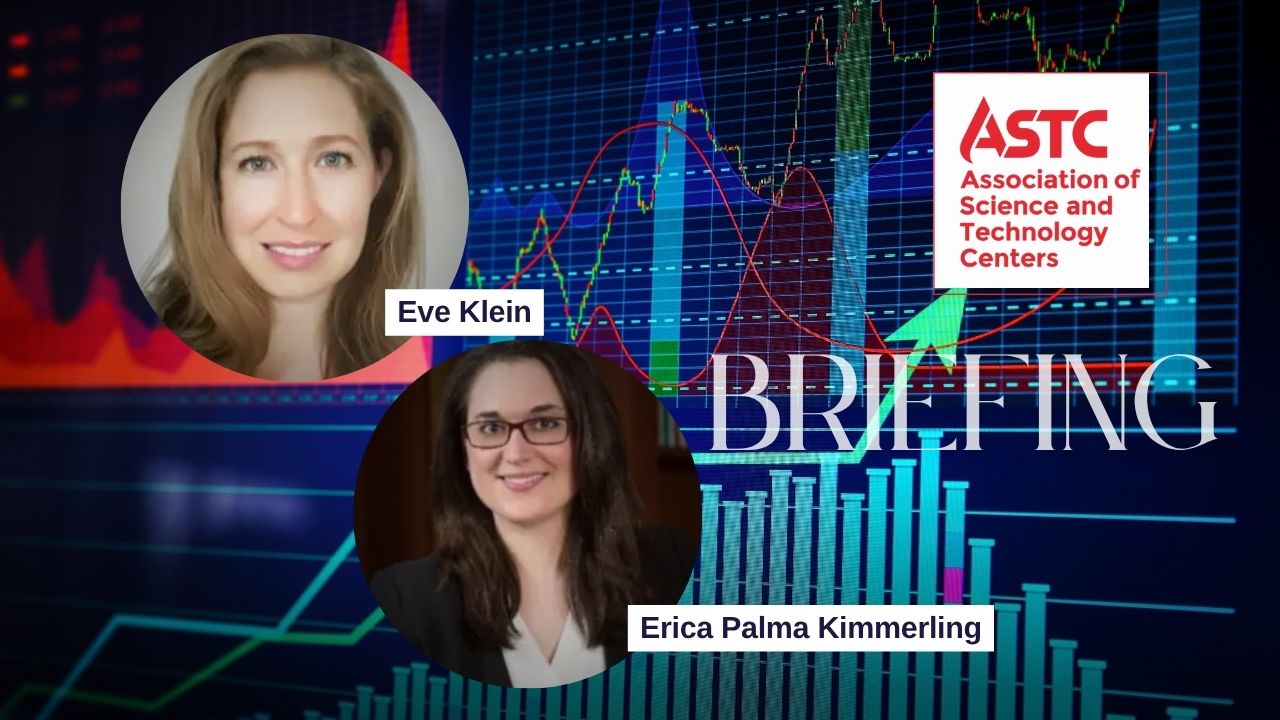
On May 6, I attended the Association of Science and Technology Centers (ASTC) public briefing that showcased data from their new national survey of 1017 U.S. adults (18 years of age or older) on how they perceive science in this moment. The virtual public briefing featured a 30-minute overview of the key insights from the data, followed by another 30 minutes of discussion. What I came for wasn’t just the data but, more importantly, the speakers’ call to action. Hosts Erica Kimmerling and Eve Klein didn’t just throw us the information from the survey. They offered insights for public engagement scholars and practitioners who are typically wondering: what do we do with this information?
This summary focuses on some of the notable actionable insights from my perch into what those working in the field can do now. You can contrast it with NPR’s take here.
“We see that people still value and rely on the outputs of science,” said Kimmerling, ASTC’s Senior Advisor on Science Policy. “But by and large, people often fail to connect the dots between federal investment in scientific infrastructure and the resources they depend on for crucial decisions.”
This disconnect—between science’s tangible presence in daily life and the public’s awareness of how it’s supported—was one of the briefing’s central points. ASTC’s data show that 94% of survey respondents use science-based information at least weekly, yet only 10% expressed concern that funding cuts could impact access to that information. “This is a critical and urgent role now for those of us who work in science engagement,” Kimmerling said, “to close these gaps in public understanding of how science and technology are enabled and impacted by federal policy.”
For practitioners, one clear message is that simply reiterating the importance of science is no longer sufficient. The survey showed that support for science remains high—over 70% agreed that science, medical research, and new technologies benefit “people like me.” As Eve Klein put it, “Engaging on the value of science might be less needed now than engaging on how science intersects with society and with personal decision making.” In short, engaging on the value of science is necessary but not sufficient.
Another group was brought to our attention: what one could call the “movable middle.” Klein noted that while 77% of respondents were aware of policy changes affecting science, only 15% could name specific details. Importantly, “almost a quarter of respondents say that they are unaware of cuts that could impact scientific talent, but they would be concerned if this were to be true.” Among other things, Klein and Kimmerling suggested that the engagement community should consider “connecting policy actions and changes to the tangible, lived experiences with science.”
ASTC’s survey data also point to areas of consensus that can be built upon. 89% of respondents support federal investment in STEM education. 86% believe scientific experts at federal agencies should make decisions without political interference. “These can provide us with foundations for building bridges across political divides,” Klein noted.
Institutions were encouraged to turn inward and audit how they communicate science’s public infrastructure. “So many science centers already have exhibits that are showcasing federal science, but don’t necessarily highlight that dimension of it,” Klein said. “How many…have exhibits about weather forecasting that may have a NOAA logo but don’t explain what that means?”
Kimmerling added that the moment calls for real-time responsiveness. “We’re hoping that the people that are providing rapid response funding or standing up programs and doing things in the moment can start to use some of this data to inform their decision making.”
Throughout the briefing, I kept thinking about all the practitioners, researchers, and institutions across the landscape of civic science who are already doing vital work to engage local communities. More often than not, the challenge isn’t only about starting new efforts. It is just as much about strategically synergizing the activities that are already underway. My sense is that stronger connective tissue is needed to coordinate fragmented efforts that could potentially enable what Kimmerling mentioned as a rapid response by practitioners and other stakeholders to new data as it comes out. This is essential, especially given that both prospective and current public engagement practitioners have to triangulate multiple data sources in real time to inform their practice.
One initiative that is helping to build that connective infrastructure is Research4Impact, led by associate professor Adam Seth Levine at the Bloomberg School of Public Health at Johns Hopkins University. Their matchmaking program connects researchers with practitioners and policymakers to co-create projects that address real-world challenges. Since 2018, the initiative states that it has facilitated over 350 new cross-sector collaborations. The lessons Research4Impact and other similar initiatives are learning from their work in facilitating such collaborations are important to track and disseminate.
Klein wrapped up the briefing by mentioning that the ASTC has more research in the pipeline. They hope to repeat the study and gather some longitudinal data. “We want to see how sentiment changes over time,” Klein stated. We really think some qualitative research is critical here to understand the complexity.”
So, more to come.
Additional data to explore
- ASTC Releases Data on Science Engagement Interests, Motivations, and Barriers among Adults in the U.S.
- Public Trust in Scientists and Views on Their Role in Policymaking
- Research!America – Can you name a living scientist?
 +
Add CSML on Google
+
Add CSML on Google

Fanuel Muindi is a former neuroscientist turned civic science ethnographer. He is a professor of the practice in the Department of Communication Studies within the College of Arts, Media, and Design at Northeastern University, where he leads the Civic Science Media Lab. Dr. Muindi received his Bachelor’s degree in Biology and PhD in Organismal Biology from Morehouse College and Stanford University, respectively. He completed his postdoctoral training at MIT.







Meaghan McKasy on using humor to spark conversations on tough scientific issues

Engineering stories for community impact: Lessons from a mission-driven filmmaker, Greg Hemmings

12 companies invest $180k to keep Letters to a Pre-Scientist free for students

SciArt behind the scenes: The hows, whys, and whats of the science artists — a research digest

How Georgia Tech’s Institute for Neuroscience, Neurotechnology, and Society is integrating lived experience into research and education
How Georgia Tech’s Institute for Neuroscience, Neurotechnology, and Society is integrating lived experience into research and education
SciArt behind the scenes: The hows, whys, and whats of the science artists — a research digest
12 companies invest $180k to keep Letters to a Pre-Scientist free for students
Meaghan McKasy on using humor to spark conversations on tough scientific issues
Engineering stories for community impact: Lessons from a mission-driven filmmaker, Greg Hemmings

What it takes to include Deaf voices in scientific research

Risa Schnebly’s journey to researching ecological grief and telling its stories

“Science is something that we do together.” Benjamin Richards on how OceanEyes collaborates with citizen scientists to monitor deepwater fish in Hawai’i

Melanie Brown: “If you listen, people want to share things that are important to them.”

Abby C. King on leveraging local wisdom and science to create a thriving environment: “Our communities are the most valuable renewable resources for a healthy planet.”
Contact
Menu
Designed with WordPress